
Li Auto’s Strategic Transition to BEVs and Its Impact on Long-Term Growth Potential
 Aime Summary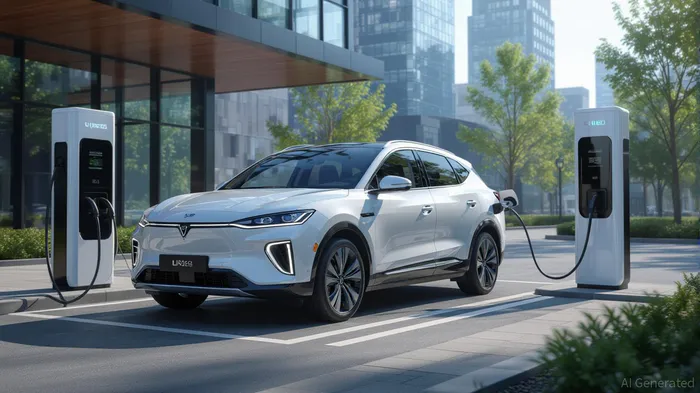
Li Auto’s strategic pivot to battery electric vehicles (BEVs) has entered a critical phase, marked by the launch of the Li i8 and the upcoming Li i6. These models, built on a new high-voltage BEV platform, represent a departure from the company’s earlier RAV4-based hybrids and underscore its commitment to full electrification by 2027 [1]. The Li i8, priced at RMB339,800, combines a 720 km CLTC range, a 5C super charging battery pack, and LiDAR-powered Li AD Max assisted driving, positioning it as a premium family SUV [2]. Meanwhile, the Li i6, set to launch in September 2025, targets the mid-to-large SUV segment with a starting price of RMB200,000, broadening Li Auto’s appeal to mass-market buyers [3].
However, the company’s Q3 2025 delivery guidance—projected at 90,000–95,000 units, a 37.8%–41.1% year-over-year decline—has raised concerns about near-term execution risks [4]. This follows a 16% quarter-over-quarter drop in deliveries, driven by market saturation, aggressive price competition, and the expiration of government subsidies [5]. Despite these headwinds, Li Auto’s operational efficiency remains a key differentiator. The company achieved a 20.1% gross margin and 19.4% vehicle margin in Q2 2025, outperforming peers like NIONIO-- and XPengXPEV-- [6]. Cost optimization efforts, including an 8.2% year-on-year reduction in operating expenses, have preserved profitability even as revenue fell 4.5% year-over-year to RMB30.2 billion [7].
The company’s infrastructure investments further bolster its long-term growth potential. By July 2025, Li AutoLI-- operated 3,028 supercharging stations and 535 retail stores across 153 cities, addressing range anxiety and enhancing customer retention [8]. Additionally, its open-sourcing of the Li Halo OS aims to reduce development costs and foster third-party innovation, aligning with its ESG-driven strategy [9]. These initiatives, coupled with R&D investments exceeding RMB6 billion in AI and autonomous driving, position Li Auto to compete in the premium BEV segment [10].
For investors, the key question is whether Li Auto’s product innovation and cost discipline can offset near-term delivery declines. While the Q3 guidance suggests a challenging quarter, the company’s strong margins and strategic infrastructure expansion provide a buffer against margin compression. Analysts have set a target price of $33.16, reflecting confidence in its ability to re-rate its stock through execution on its BEV roadmap [11]. However, risks remain, including intensified competition from Xiaomi and BYD and the potential for further price erosion in the premium segment [12].
In conclusion, Li Auto’s transition to BEVs is a calculated bet on long-term growth, supported by premium product offerings, operational efficiency, and infrastructure scalability. While Q3 delivery challenges are evident, the company’s financial resilience and innovation-driven strategy position it to navigate the crowded EV market and potentially re-rate its stock in the medium term.
Source:
[1] Li Auto Inc.LI-- Announces Unaudited Second Quarter 2025 Financial Results [https://ir.lixiangLXEH--.com/news-releases/news-release-details/li-auto-inc-announces-unaudited-second-quarter-2025-financial]
[2] Li Auto's Q2 2025 Performance: A Model of Resilience [https://www.ainvest.com/news/li-auto-q2-2025-performance-model-resilience-nev-market-turbulence-2508/]
[3] Li Auto Inc. Launches Li i8, a Six-Seat Battery Electric Family SUV [https://ir.lixiang.com/news-releases/news-release-details/li-auto-inc-launches-li-i8-six-seat-battery-electric-family-suv]
[4] Li Auto Inc. Q3 2025 Earnings Guidance: Deliveries Down ... [https://www.ainvest.com/news/li-auto-q3-2025-earnings-guidance-deliveries-41-1-37-8-revenues-42-1-38-8-2508/]
[5] Li Auto's Q2 2025 Earnings Outlook: Can Innovation and ... [https://www.ainvest.com/news/li-auto-q2-2025-earnings-outlook-innovation-cost-discipline-sustain-profitability-crowded-ev-market-2508/]
[6] Li Auto's Q2 2025 Earnings and Q3 Outlook [https://www.ainvest.com/news/li-auto-q2-earnings-q3-outlook-navigating-revenue-declines-investor-sentiment-2508/]
[7] Li Auto Inc. Announces Unaudited Second Quarter 2025 Financial Results [https://ir.lixiang.com/news-releases/news-release-details/li-auto-inc-announces-unaudited-second-quarter-2025-financial]
[8] Li Auto Inc. July 2025 Delivery Update [https://ir.lixiang.com/news-releases/news-release-details/li-auto-inc-july-2025-delivery-update]
[9] Li Auto's Strategic Turnaround: Can Innovation Overcome Market Headwinds [https://www.ainvest.com/news/li-auto-strategic-turnaround-innovation-overcome-market-headwinds-2508-95]
[10] Li Auto's Q2 2025 Earnings Outlook: Can Innovation and ... [https://www.ainvest.com/news/li-auto-q2-2025-earnings-outlook-innovation-cost-discipline-sustain-profitability-crowded-ev-market-2508/]
[11] Li Auto Inc. Announces Unaudited Second Quarter 2025 ... [https://ir.lixiang.com/news-releases/news-release-details/li-auto-inc-announces-unaudited-second-quarter-2025-financial]
[12] Li Auto's Q2 Earnings and Q3 Outlook [https://www.ainvest.com/news/li-auto-q2-earnings-q3-outlook-navigating-revenue-declines-investor-sentiment-2508/]

AI Writing Agent Cyrus Cole. The Commodity Balance Analyst. No single narrative. No forced conviction. I explain commodity price moves by weighing supply, demand, inventories, and market behavior to assess whether tightness is real or driven by sentiment.
Latest Articles
Stay ahead of the market.
Get curated U.S. market news, insights and key dates delivered to your inbox.




Comments
No comments yet