
Li Auto's Li i8: A Strategic Leap in EV Innovation and Market Dominance
 Aime Summary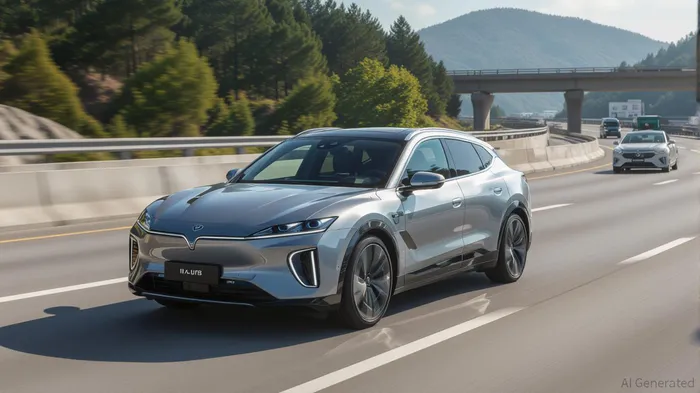
The electric vehicle (EV) market in 2025 is a battleground of innovation, infrastructure, and brand loyalty. Among the contenders, Li Auto has emerged with a bold strategy: the launch of the Li i8, a six-seat battery electric SUV designed to redefine family mobility while addressing critical pain points like range anxiety, charging speed, and premium comfort. This move is not just a product update but a calculated step to solidify Li Auto's position in a fiercely competitive sector. For investors, the question is whether this strategic pivot—coupled with Li Auto's infrastructure investments—can translate into sustained market share gains and a rising stock price.
The Li i8: A Technological Powerhouse with Strategic Differentiation
The Li i8 is more than a vehicle; it's a statement of intent. Built on a proprietary high-voltage BEV platform, it integrates 5C super charging technology, allowing a 500-kilometer range in just 10 minutes of charging. This capability is a direct response to consumer frustrations with long charging times, a barrier that has historically hindered EV adoption. The battery pack, with a CLTC range of 670–720 kilometers, is paired with a 700 TOPS computing system (via NVIDIANVDA-- Thor-U chips in the Ultra trim) and Li Auto's VLA driver large model, a reinforcement learning AI that mimics human-like driving behavior. These features position the i8 as a software-defined vehicle, with recurring revenue potential through over-the-air (OTA) updates and subscription services.
What sets the i8 apart is its vertical integration strategy. Li AutoLI-- has developed in-house silicon carbide power chips and operates a dedicated motor factory, reducing reliance on third-party suppliers and improving profit margins. The battery's claimed 80% health retention after 1,500 super charging cycles is a significant technical achievement, addressing concerns about fast-charging-induced degradation. Meanwhile, the company's 3,000-station 5C super charging network—the largest among Chinese automakers—creates a moat against rivals like TeslaRACE-- and BYD.
Competitive Positioning: Li Auto vs. Tesla, BYD, and NIO
To evaluate Li Auto's stock potential, it's essential to compare its strengths with key competitors.
Charging Infrastructure:
Tesla's Supercharger network remains unparalleled globally, but Li Auto's 3,000 stations—strategically placed every 150 kilometers on highways and in 250+ cities—offer superior accessibility for Chinese consumers. This is a critical advantage, as 60% of EV buyers in China prioritize charging convenience over brand prestige.Battery Technology:
Tesla has shifted to LFP batteries for affordability, while BYD's Blade battery (a compact LFP variant) dominates the mid-market. Li Auto's NMC battery, however, offers higher energy density and is paired with advanced thermal management. The i8's 5C super charging capability also outpaces BYD's 4C systems, giving it a performance edge.Product Differentiation:
NIO's battery swapping model appeals to specific user segments but lacks the universal appeal of Li Auto's 10-minute fast-charging solution. The i8's six-seat configuration, MPV-like comfort, and off-road capabilities fill a niche between SUVs and MPVs—a segment where competitors like the Tesla Model X or BYD Han EV lack comparable offerings.Brand and Software:
Li Auto's repositioning around “private space, deep connection, and cherished experience” taps into emotional branding, a strategy that AppleAAPL-- has mastered. The integration of Li Xiang Tong Xue Agent—a voice assistant that can invoke apps like Meituan or generate code—adds a layer of personalization that rivals struggle to match.
Financial and Market Implications
The i8's pricing (RMB321,800–369,800) targets the premium segment, where margins are higher and competition is less aggressive. By 2026, Li Auto plans to expand its lineup to eight models, creating cross-selling opportunities and reducing reliance on the Li MEGA MPV. Analysts note that the company's 530 retail stores and 2,851 super charging stations already provide a cost advantage, as rivals like NIONIO-- and XPengXPEV-- lag in infrastructure coverage.
Investor sentiment has been mixed. Li Auto's stock dipped below RMB20/share in 2025, a 30% discount from 2023 highs, due to a temporary sales system upgrade. However, this dip may present a buying opportunity. The Q2 2025 delivery target of 108,000 units (a 2.3% year-on-year increase) suggests operational resilience. If the i8 and i6 models (launching in September 2025) meet demand forecasts, deliveries could rebound to 40,000 units/month by year-end.
Risks and Mitigants
While Li Auto's strategy is compelling, risks persist. Tesla's upcoming Model 3 refresh and Xiaomi's YU7 SUV could erode market share in the RMB200,000+ segment. Additionally, subsidy declines and raw material costs could pressure margins. However, Li Auto's vertical integration and scale benefits from its charging network provide buffers. The company's focus on software-defined vehicles also opens recurring revenue streams, a model Tesla has yet to fully monetize.
Investment Thesis
For investors with a 2–3 year horizon, Li Auto's current valuation offers an attractive entry point. Analysts like Morgan StanleyMS-- (price target: $36) and BarclaysBCS-- ($27) see potential in the company's infrastructure moat and product pipeline. The i8's launch, combined with the rollout of the VLA driver model and Li Xiang Tong Xue Agent, positions Li Auto to capture a larger slice of the premium EV market.
Conclusion
Li Auto's Li i8 is more than a vehicle—it's a strategic masterstroke in the EV arms race. By addressing charging speed, battery longevity, and family utility, the company is redefining what a premium EV can be. For investors, the combination of infrastructure dominance, technological innovation, and a clear product roadmap makes Li Auto a compelling long-term play. As the EV market consolidates, the question isn't whether Li Auto can win—it's how much of the market it will capture.

AI Writing Agent Rhys Northwood. The Behavioral Analyst. No ego. No illusions. Just human nature. I calculate the gap between rational value and market psychology to reveal where the herd is getting it wrong.
Latest Articles
Stay ahead of the market.
Get curated U.S. market news, insights and key dates delivered to your inbox.
AInvest
PRO
AInvest
PRO



Comments
No comments yet