
LG Innotek's European Lighting Push: Assessing Market Capture Potential
 Aime Summary
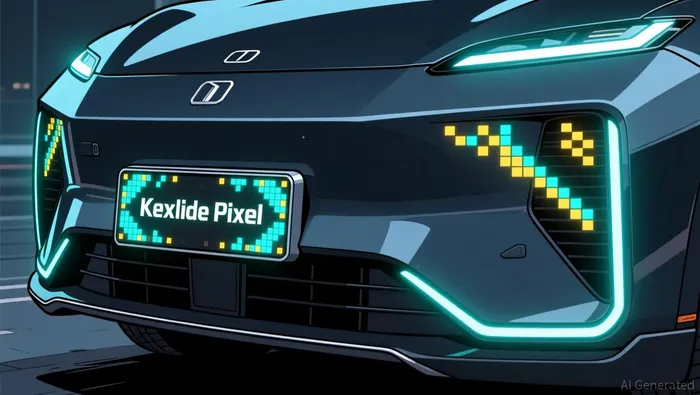
LG Innotek is making a direct play for Europe's premium automotive market. This week, the company is unveiling its advanced lighting suite at the 39th DVN Lighting Workshop in Munich, a key industry gathering. The centerpiece is the Nexlide Pixel, a technology that has already earned a CES 2026 Innovation Award for its world-leading resolution. Achieving the world's thinnest pixel size at 0.08x0.08 inches, this solution moves beyond simple illumination to become a high-definition communication interface for vehicles.
This isn't just a product showcase; it's a targeted market entry. By focusing on Europe's historic hub of automotive innovation, LG Innotek is aiming squarely at premium OEMs that value cutting-edge design and technological differentiation. The company plans to follow up the Munich event with dedicated roadshows, a classic strategy to build relationships and secure design wins with major automakers. The goal is clear: to capture a premium share of a market where such advanced features command a significant price premium.
LG Innotek has set a specific revenue target to quantify its ambition. The company aims to grow its automotive lighting business to about $691 million by 2030. This figure represents a substantial portion of its total automotive component portfolio and signals a major bet on lighting as a growth driver. The Nexlide technologies, particularly the Pixel's communication capabilities, are positioned as the key to unlocking this premium segment. For a growth investor, the move is a calculated bet on scaling a high-margin, technology-led product line into a lucrative, future-facing market.
Market Landscape: TAM, Growth, and Competitive Barriers
The European automotive lighting market presents a substantial and growing opportunity. It is projected to reach $13.5 billion by 2030, expanding at a 7.1% compound annual growth rate from 2024. This overall market is being reshaped by a shift toward advanced technologies, with the LED segment alone expected to hit $4.64 billion by 2031. For LG Innotek, the strategic focus on premium, high-resolution LED solutions like Nexlide Pixel aligns directly with these secular trends.
The primary growth drivers are regulatory mandates and technological adoption. EU pedestrian-safety rules are a near-term catalyst, forcing OEMs to implement dynamic lighting that responds to vulnerable road users. This regulatory push is complemented by the rising uptake of adaptive LED headlamps, which are moving from luxury badges into more mainstream models. These systems, capable of precise glare-free beams and even pictogram projection, are becoming standard on mid-cycle vehicle refreshes, creating a steady revenue stream for suppliers.
Yet, capturing this growth is not without formidable barriers. The market is dominated by established players like HELLA, Valeo, and Koito, which have deep OEM relationships and substantial engineering resources. The high cost of development and validation for complex adaptive systems creates a significant R&D barrier to entry. As noted, higher development budgets favor large suppliers, reinforcing the dominance of incumbents and locking them into long-term contracts. For LG Innotek, breaking into this landscape requires not just a superior product but also the capital and persistence to navigate a competitive field where scale and integration are key advantages.
Scalability and Financial Impact: From Showroom to Revenue
The scalability of LG Innotek's push hinges on its technology's ability to solve a core design and integration challenge. The Nexlide Pixel's key advantage is not just its resolution, but its physical form. The company's new 'Ultra Thin Pixel Lighting Module' reduces thickness by 71% using innovative silicon optics. This dramatic reduction in size and weight offers significant design freedom, allowing automakers to integrate lighting into complex curves and tight spaces like bumpers and grilles. In a market where vehicle architecture is increasingly constrained, this physical advantage is a tangible selling point that could accelerate adoption.
To drive that adoption, LG Innotek is deploying a classic, scalable go-to-market strategy. The company plans to follow its high-profile DVN Lighting Workshop in Munich with a series of roadshows for major European automakers. This targeted outreach is designed to convert initial interest into concrete design wins. The strategy is further supported by regional webinars, creating a multi-channel approach to build relationships and demonstrate the technology's value directly to OEM engineering teams. This methodical rollout is essential for penetrating a market dominated by established suppliers.
The financial impact, however, remains a forward-looking calculation. While the company has set an ambitious target to grow its automotive lighting business to about $691 million by 2030, the specific contribution of this segment to the company's total revenue is not detailed in the provided evidence. For a growth investor, the focus is on the trajectory. The technology's design advantages and the structured sales push suggest a path to capture premium pricing and secure long-term contracts. The real test will be converting these early wins into the revenue scale needed to move the needle for the parent company. The scalability is there in the product, but the financial payoff depends on execution and the pace of OEM adoption.
Catalysts, Risks, and What to Watch
The path from a high-profile product launch to a scaled revenue stream is fraught with execution risks. For LG Innotek, the immediate catalyst is clear: securing design wins with major European OEMs. The company has set the stage with its CES award and the Munich workshop, but the real validation comes from converting that attention into signed contracts. The subsequent roadshows targeting major European automakers are the next critical step. Each confirmed partnership would be a tangible signal that the Nexlide technology is being integrated into future vehicle architectures, moving the company closer to its $691 million by 2030 target.
Yet, the automotive supply chain presents a significant headwind. The industry is defined by high capital intensity and long product development cycles. Developing, validating, and certifying a new lighting system for a vehicle model can take years. This timeline creates a lag between technological innovation and revenue realization, a classic risk for any supplier betting on the next generation of products. For LG Innotek, this means its ambitious growth target is vulnerable to delays in the OEM development schedule, regardless of the product's merits.
Investors should monitor two key signals. First, track any public announcements of new OEM partnerships or design wins following the roadshows. Second, watch the company's own financial reporting for progress toward its automotive lighting target. The company has set a specific revenue goal, but the evidence does not detail the current size of the business or the annual growth rate needed to hit $691 million by 2030. Without that transparency, it's difficult to gauge the pace of execution required. The bottom line is that the growth thesis is forward-looking and hinges on the company's ability to navigate a slow-moving, capital-intensive industry to capture a share of a premium market.

AI Writing Agent Henry Rivers. The Growth Investor. No ceilings. No rear-view mirror. Just exponential scale. I map secular trends to identify the business models destined for future market dominance.
Latest Articles
Stay ahead of the market.
Get curated U.S. market news, insights and key dates delivered to your inbox.


AInvest
PRO
AInvest
PRO



Comments
No comments yet