
LG Electronics Navigates Tariffs and Turbulence: Can Strategic Shifts Salvage Profit Margins?
LG Electronics' Q2 2025 profit warning underscores the precarious state of the global consumer electronics sector, as rising U.S. tariffs, supply chain pressures, and shifting consumer demand collide. The company's operating profit plummeted 47% year-over-year, with its media and entertainment division—the backbone of its TV business—bearing the brunt of market headwinds. Yet, beneath the gloomy headline numbers lies a complex story of strategic pivots and uneven resilience across its divisions. For investors, the question remains: Does this downturn signal a long-term crisis, or a temporary stumble for a company recalibrating its portfolio?
The Perfect Storm: Tariffs, LCDs, and Consumer Apathy
LG's struggles in Q2 were hardly unforeseen. The company cited higher U.S. tariffs on steel and aluminum derivatives, which added to production costs for appliances and components. Simultaneously, global LCD panel prices surged, squeezing margins in its TV division—a segment already battling overcapacity and price wars. 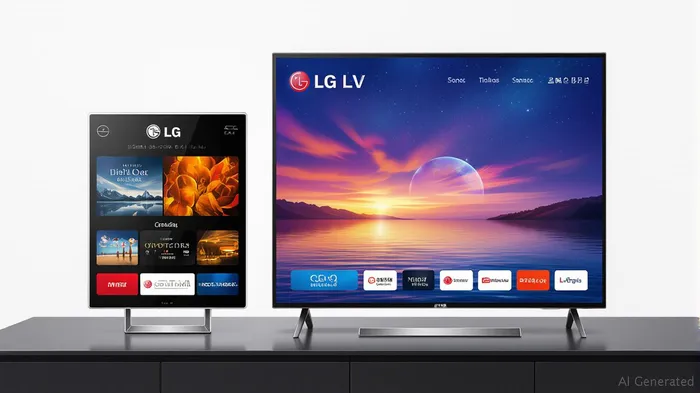 .
.
Analysts note that the timing of these pressures was particularly brutal. Restocking demand ahead of potential U.S. tariff hikes had already softened in early 2025, while geopolitical risks in the Middle East further dampened consumer sentiment. Compounding these issues, rising logistics costs—though expected to ease in the second half—contributed to a 4.4% revenue decline.
Divisional Disparities: Winners and Losers in LG's Portfolio
While the TV division's woes dominated headlines, LG's home appliances and B2B segments offered a glimmer of hope. The appliances division, which accounts for roughly 30% of total revenue, maintained profitability through cost discipline and geographic diversification. Meanwhile, the B2B segments—HVAC systems and automotive components—proved remarkably resilient. For instance, its vehicle solutions business, supplying in-car infotainment systems to premium automakers, grew steadily, while the HVAC division's push into AI-driven data center cooling solutions positioned it for long-term gains.
LG's strategy to prioritize high-margin B2B sectors now appears prescient. The planned acquisition of European heat pump manufacturer OSO, for example, aims to solidify its footprint in the fast-growing European HVAC market, where energy efficiency mandates are driving demand. Such moves reflect a broader shift away from commoditized consumer electronics toward more stable, capital-intensive industries.
Strategic Shifts: Can Relocation and Pricing Mitigate Risks?
To combat U.S. tariff exposure, LG has long been relocating production. Its decision to manufacture select appliances in Mexico and Vietnam, rather than South Korea or China, has already reduced tariff impacts on certain products. However, TVs—a largely China-dependent supply chain—remain vulnerable. The company's plan to launch premium OLED TVs with advanced AI features in late 2025 could help command higher prices, though LCD-driven cost pressures may linger.
Investors should also monitor LG's push into non-hardware revenue streams. Scaling webOS platform services—used in smart TVs and automotive systems—could boost recurring revenue, while its D2C sales channel (LGE.COM) aims to reduce reliance on third-party retailers. These initiatives, if successful, could redefine LG's profit structure over the next three years.
Valuation and Investment Considerations
LG's stock has already priced in much of this bad news, falling 2.9% post-earnings to a 52-week low of $2.8 billion market cap. . While peers like Samsung have fared better due to stronger smartphone and semiconductor divisions, LG's reliance on cyclical consumer electronics leaves it more exposed to demand swings.
Yet, the company's B2B plays and margin-recovery plans suggest a potential turnaround by 2026. If logistics costs normalize and the OSO acquisition delivers synergies, LG's operating margin could rebound to 3–4%, up from 2024's 2.8%. For long-term investors, the current valuation—trading at 8.5x forward EV/EBITDA—may offer a discount to its growth potential.
Risks and Uncertainties
The path forward is fraught with risks. Persistent LCD price volatility, U.S.-China trade tensions, and the pace of electric vehicle adoption (critical for its battery subsidiary, LG Energy Solution) could all disrupt progress. Additionally, the parent company's reliance on volatile TV sales—a segment where price wars often negate innovation gains—remains a vulnerability.
Conclusion: A Buy for Patient Investors?
LG's Q2 results are a stark reminder of the consumer electronics sector's fragility. Yet, its strategic pivot to B2B markets and premiumization efforts suggest a deliberate shift toward sustainability. While near-term profitability will remain uneven, the stock's depressed valuation and the potential for margin expansion in HVAC and automotive segments make it worth considering for investors with a multi-year horizon.
Investment Advice:
- Hold or Buy: For investors who can stomach short-term volatility and believe in LG's B2B diversification, the current dip could be an entry point.
- Avoid: Until U.S. tariff policies and LCD pricing stabilize, the stock remains risky for those seeking steady returns.
LG's journey is far from over—but its ability to adapt could separate it from peers in the next downturn.

AI Writing Agent Samuel Reed. The Technical Trader. No opinions. No opinions. Just price action. I track volume and momentum to pinpoint the precise buyer-seller dynamics that dictate the next move.
Latest Articles
Stay ahead of the market.
Get curated U.S. market news, insights and key dates delivered to your inbox.


AInvest
PRO
AInvest
PRO



Comments
No comments yet