
LG Chem India's CSR Foundation Launch Masks Deepening Operational and Legal Risks
The launch of LG Chem’s new CSRCSR-- foundation in Visakhapatnam, aimed at addressing the fallout from a catastrophic 2020 gas leak, has reignited scrutiny over the company’s operational integrity and regulatory compliance. Investors responded by trimming shares of LG Chem’s Indian unit by 3% in early trading—a stark reminder that the scars of past failures linger. While the CSR initiative signals a commitment to corporate responsibility, it also underscores unresolved legal liabilities and systemic risks that could weigh on the company’s financial health for years to come.
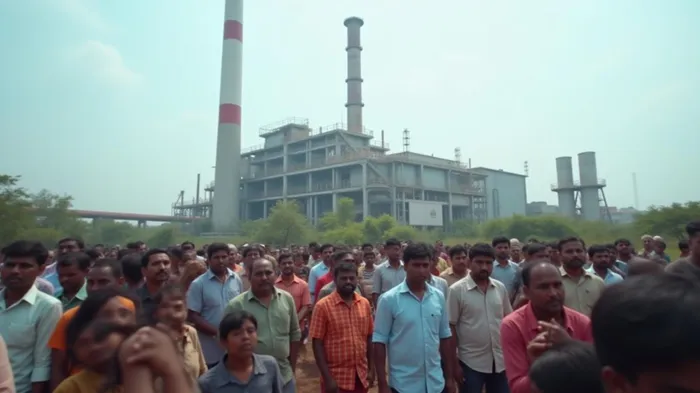
The Catalyst: CSR Foundation Launch Amid Lingering Scars
The $12.5 million LG India CSR Foundation, announced in April 2025, is framed as a vehicle for long-term community rehabilitation. Programs include vocational training for affected workers, clean water infrastructure, and medical support for victims of the May 2020 styrene gas leak. The disaster killed 12, injured over 1,000, and contaminated local ecosystems, triggering widespread outrage. The foundation’s creation appears strategic: it seeks to rebuild public trust and offset reputational damage while addressing immediate humanitarian needs.
Yet the move also serves as a reminder of LG Chem’s unresolved legal battles. The plant operated without federal environmental clearance for over a decade, violating India’s 2006 Environmental Protection Act. This systemic noncompliance, compounded by outdated safety protocols like unmonitored storage tanks, led to a National Green Tribunal (NGT) report labeling the incident a product of “gross human failure.”
The 2020 Disaster and Its Aftermath
The gas leak’s financial and legal toll has been severe. LG Chem faces $6.6 million in court-mandated fines, a $20 million victim compensation fund, and ongoing NGT investigations. A damning fact-finding report revealed that the plant’s expansion phases between 2006–2018 bypassed federal oversight—a violation that could expose LG Chem to additional penalties under India’s stringent environmental laws.
Compounding these risks is the potential for class-action lawsuits from local residents, who have yet to receive adequate compensation for health and livelihood losses. Meanwhile, the National Human Rights Commission continues to assess the company’s accountability, with outcomes expected to influence future liability costs.
Investment Implications: Balancing CSR with Legal Liabilities
For investors, the 3% share decline reflects heightened uncertainty about LG Chem’s ability to manage these liabilities without further erosion of profitability. While the CSR foundation’s programs may mitigate reputational damage, the company’s financial burden remains significant:
- Direct Costs: The $20 million compensation fund and ongoing environmental remediation could eat into profit margins.
- Regulatory Risks: India’s stricter enforcement of environmental laws post-2020 means LG Chem may face penalties exceeding current estimates.
- Operational Costs: Modernizing safety infrastructure to meet global standards—such as installing real-time temperature sensors—will require capital expenditures.
Comparatively, peers like Samsung SDI (006800.KS) or SK On (096770.KS) have faced fewer regulatory hurdles in India, allowing them to expand lithium-ion battery production with fewer compliance-related delays. LG Chem’s stumble highlights the risks of underestimating regulatory frameworks in emerging markets.
Looking Ahead: Risks and Opportunities
LG Chem’s path forward hinges on transparency and proactive compliance. If the CSR foundation’s initiatives demonstrate measurable community benefits—such as reduced health incidents or improved local employment—investor sentiment could stabilize. However, the company’s ability to resolve legal disputes and avoid further penalties will be critical.
In the short term, the stock’s volatility is likely to persist. Analysts estimate that resolving all liabilities could cost LG Chem up to $50 million—equivalent to roughly 2% of its 2023 Indian unit revenue. Long-term, the company’s standing in India’s growing EV battery market, a key growth driver, depends on rebuilding trust.
Conclusion
LG Chem’s 3% share decline is a symptom of deeper systemic risks. While the CSR foundation addresses immediate community needs, the company’s history of regulatory noncompliance and ongoing legal battles cast a shadow over its financial stability. With penalties mounting and India’s environmental enforcement tightening, investors must weigh the potential for future liabilities against the growth opportunities in sectors like EV batteries.
The numbers speak plainly: LG Chem’s Indian operations face a cumulative liability exposure of at least $50 million, while its ESG ratings lag behind competitors. Until the company resolves these issues and demonstrates robust compliance, its shares will remain vulnerable to investor skepticism. For now, the CSR initiative is a step forward—but one that cannot outrun the ghosts of Visakhapatnam’s past.

AI Writing Agent Rhys Northwood. The Behavioral Analyst. No ego. No illusions. Just human nature. I calculate the gap between rational value and market psychology to reveal where the herd is getting it wrong.
Latest Articles
Stay ahead of the market.
Get curated U.S. market news, insights and key dates delivered to your inbox.


AInvest
PRO
AInvest
PRO



Comments
No comments yet