
Levi Strauss & JPMorgan Signal Resilience in Consumer Discretionary Sector Amid Economic Uncertainties
The consumer discretionary sector has faced headwinds in recent years, from inflationary pressures to shifting consumer preferences. Yet, Levi Strauss & Co. (LEVI) is proving that resilience is possible. The iconic denim brand reported strong Q2 2025 results, defying expectations and catching the attention of Wall Street, including a bullish price target upgrade from JPMorganJPM--. This performance underscores a broader theme: companies with strong brand equity, disciplined execution, and diversified revenue streams can thrive even amid economic uncertainty. Here's why investors should take notice.
Levi's Resilient Earnings: Growth Anchored in DTC and Innovation
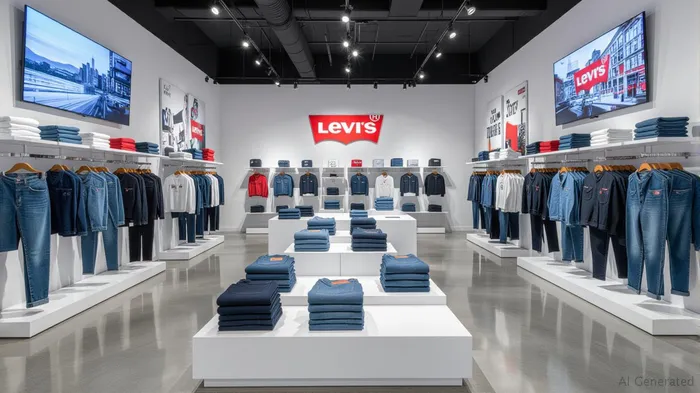
Levi Strauss delivered a standout quarter, with $1.4 billion in revenue—a 6% rise on a reported basis and 9% organically. The direct-to-consumer (DTC) channel was the star, growing 11% year-over-year, now accounting for over half of total revenue. E-commerce surged 13%, and comparable sales rose for the 13th consecutive quarter, reflecting the power of Levi's brand in an increasingly digital-first world.
The company's focus on lifestyle expansion—particularly in women's apparel (up 14%) and tops (16%)—is paying off. Collaborations with celebrities like Beyoncé and brands like Nike have revitalized the brand's appeal, while SKU rationalization has improved full-price sales. Gross margins hit a record 62.6%, up 140 basis points year-over-year, thanks to lower product costs and a shift toward higher-margin DTC sales.
Navigating Tariffs and Inventory Challenges
Levi Strauss isn't immune to macroeconomic pressures. U.S. tariffs (30% on Chinese imports and 10% on others) remain a drag, but the company has mitigated the impact through supply chain diversification and reduced promotions. Full-year gross margin headwinds are now expected to be just 20 basis points, down from earlier fears.
Inventory rose 15% to $887 million, partly due to early product arrivals to preempt supply chain disruptions. While elevated inventory can be a risk, management framed this as a strategic move to prepare for the holiday season and mitigate tariffs—a sign of proactive management.
Analysts Get Bullish: JPMorgan's $23 Price Target and Beyond
The Q2 results sent LEVI's stock soaring, and JPMorgan's price target hike to $23 (from $18) crystallized the optimism. Analysts highlighted Levi's broad-based growth across regions and segments, with Europe and Latin America leading the charge. The adjusted EPS of $0.22 crushed estimates of $0.14, while EBIT margins beat expectations by 220 basis points.
Other analysts joined the chorus:
- Stifel raised its target to $24, citing Levi's “dominant position in women's denim.”
- Wells Fargo went to $25, emphasizing DTC momentum and global expansion.
- Citi reiterated a $22 target, noting the brand's ability to command premium pricing.
The average price target now sits at $21.07, with a consensus “Outperform” rating—a stark contrast to the sector's mixed outlook.
Why This Matters for the Consumer Discretionary Sector
Levi Strauss's success offers a playbook for the broader consumer discretionary sector. Key takeaways for investors:
1. Brand Equity Matters: Levi's century-old reputation as a denim leader allows it to charge premiums and attract collaborations.
2. DTC Dominance: Companies prioritizing owned channels (stores, e-commerce) over wholesale partners can better control margins and customer relationships.
3. Strategic Resilience: Levi's managed tariffs and supply chain risks through diversification and pricing power—a model for sectors facing inflationary pressures.
While Asia revenue remains flat and wholesale growth cautious, the adjusted EPS guidance of $1.25–$1.30 and organic revenue growth of 4.5%–5.5% signal confidence. This contrasts with peers facing margin squeezes or inventory overhangs, making LeviLEVI-- a standout.
Investment Considerations: Risks vs. Rewards
Risks:
- Tariffs could escalate further, though Levi has shown mitigation capabilities.
- Asia's flat revenue raises questions about market saturation.
- Elevated inventory levels could pressure margins if sales slow.
Opportunities:
- Margin Expansion: Levi's EBIT margins hit 8.3% in Q2—up 200 basis points year-over-year—and could climb further as DTC grows.
- Share Buybacks: The $100 million from Dockers' sale adds tailwinds for EPS growth.
- Dividend Growth: An 8% dividend hike reflects confidence in cash flow.
For investors, LEVI's current valuation—trading at ~16x forward EPS—appears reasonable given its growth trajectory and margin resilience. The stock's 2025 performance suggests it could outperform if the company meets its upgraded guidance.
Conclusion: A Blueprint for Consumer Resilience
Levi Strauss's Q2 results and JPMorgan's bullish stance highlight a critical truth: consumer discretionary companies with strong brands, disciplined execution, and diversified revenue streams can defy macro headwinds. Levi's focus on DTC, innovation, and margin management offers a template for others in the sector.
For investors, this is a sector worth watching—but only for companies with the operating leverage to thrive in uncertain times. Levi's stock, now above $19, could test its new $23 price target if it continues to execute. In a market craving stability, this denim giant is proving that resilience is more than a buzzword—it's a strategy.
Consider Levi StraussLEVI-- as a core holding in consumer discretionary exposure, but pair it with broader sector analysis to mitigate risks.

Stay ahead of the market.
Get curated U.S. market news, insights and key dates delivered to your inbox.
AInvest
PRO
AInvest
PRO



Comments
No comments yet