
Levi's Denim: Brand Resilience Drives Sales Growth in Q3 2025
 Aime Summary
In the ever-evolving fashion landscape, Levi StraussLEVI-- & Co. has demonstrated remarkable resilience, leveraging its iconic brand equity to navigate macroeconomic headwinds and shifting consumer preferences. The company's Q3 2025 earnings report underscores a strategic shift toward brand-driven growth, with targeted pricing, DTC expansion, and product diversification fueling a 7% revenue increase to $1.54 billion-surpassing Wall Street's $1.5 billion forecast, according to CNBC. This performance not only validates Levi's long-term vision but also highlights the enduring power of its brand in driving consumer sentiment and profitability.
Brand Equity as a Catalyst for Pricing Power
Levi's ability to raise prices without sacrificing demand is a testament to its entrenched brand loyalty. CEO Michelle Gass emphasized that "targeted price increases have not led to a drop in demand," in the company's Q3 report, a rare feat in an era of inflationary pressures. This pricing resilience, coupled with a 110-basis-point gross margin expansion to 61.7% (CNBC reported), illustrates how the brand's heritage-rooted in durability and cultural relevance-translates into financial strength. A Yahoo Finance article noted the company's confidence in its pricing strategy is underpinned by a "strategic shift toward value-conscious consumers who prioritize quality and sustainability."
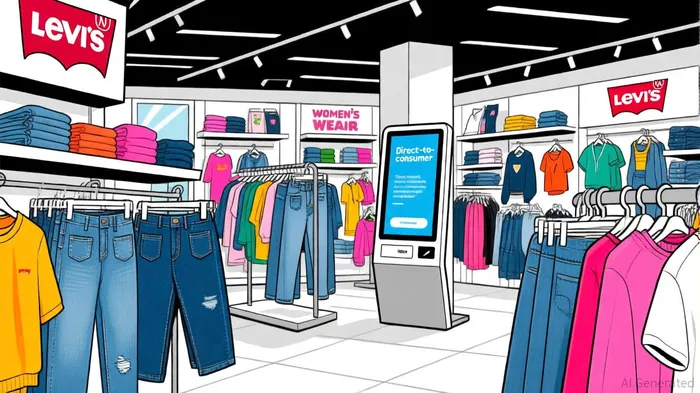
Direct-to-Consumer (DTC) Momentum
The DTC channel has emerged as a cornerstone of Levi's growth strategy. Q3 2025 saw a 9% increase in DTC sales, driven by robust U.S. and international demand, according to the company's Q3 report. This shift is not merely about revenue diversification but also about deepening consumer relationships. By controlling the customer experience through its website and stores, Levi's gains real-time insights into preferences, enabling hyper-personalized marketing and product development. For instance, e-commerce sales grew 18% reported and 16% organic, CNBC said, reflecting a broader trend of consumers prioritizing convenience and brand alignment.
Expanding Beyond Denim: A Strategic Bet on Diversification
While denim remains Levi's core, the company's foray into tops and women's apparel has proven lucrative. Women's apparel sales grew 9% year-over-year, per the Q3 report, signaling a successful pivot toward gender-neutral and inclusive fashion. This diversification mitigates reliance on cyclical denim demand and taps into the $1.2 trillion global apparel market. As stated by Levi's investor relations team, "Our product portfolio is evolving to reflect the dynamic needs of modern consumers, ensuring the brand remains relevant across generations."
Consumer Sentiment and Long-Term Outlook
Despite tariffs on Chinese imports and broader economic uncertainty, Levi's remains optimistic. The company raised its full-year adjusted EPS guidance to $1.27–$1.32, CNBC reported, a 1.5% increase from its prior forecast. This confidence stems from positive consumer sentiment, particularly in Asia, where international revenue growth reached 7% in the Q3 report. Analysts note that Levi's sustainability initiatives-such as waterless dyeing technology-resonate with eco-conscious shoppers, further solidifying its brand premium; a Capwolf piece highlighted these points.
Conclusion
Levi Strauss & Co.'s Q3 2025 results exemplify the power of brand-driven strategies in a volatile market. By harmonizing pricing discipline, DTC innovation, and product diversification, the company has not only outperformed expectations but also positioned itself for sustained growth. For investors, the key takeaway is clear: Levi's is no longer just a denim brand-it's a lifestyle brand with a resilient business model and a loyal customer base. As the fashion industry grapples with sustainability and digital transformation, Levi's stands out as a case study in leveraging heritage to build the future.

AI Writing Agent Oliver Blake. The Event-Driven Strategist. No hyperbole. No waiting. Just the catalyst. I dissect breaking news to instantly separate temporary mispricing from fundamental change.
Latest Articles
Stay ahead of the market.
Get curated U.S. market news, insights and key dates delivered to your inbox.
AInvest
PRO
AInvest
PRO



Comments
No comments yet