
Leveraged Trading: The Behavioral Finance Trap and Margin Call Mechanics


 Aime Summary
Leveraged trading, a double-edged sword of amplified returns and catastrophic risks, has long captivated investors. Yet, beneath the allure of exponential gains lies a psychological battlefield where cognitive biases dictate outcomes more than market fundamentals. Behavioral finance reveals that traders often act irrationally in leveraged environments, leading to margin calls that compound losses and destabilize markets. This article dissects the interplay between behavioral biases and margin call mechanics, drawing on academic and industry insights to expose the hidden costs of leverage.
The Psychology of Leverage: Biases That Fuel Risk
Overconfidence is the most insidious bias in leveraged trading. Traders who believe they can outsmart markets often take excessive risks, assuming they can predict price movements with precision. A 2023 study found that margin traders are 17 percentage points more likely to invest in cryptocurrencies-a highly volatile asset class-compared to non-margin users[3]. This overconfidence leads to over-leveraging, where even minor market corrections can trigger margin calls. For example, an investor borrowing $10,000 to buy $20,000 of stock at a 30% maintenance margin faces a margin call if the stock drops to $71.43 per share[1]. The illusion of control makes traders ignore these thresholds until it's too late.
Loss aversion, another critical bias, distorts decision-making during downturns. Behavioral finance research shows that investors are twice as sensitive to losses as gains[2]. When a leveraged position declines, loss-averse traders may cling to losing positions, hoping for a rebound, rather than cutting losses. This behavior exacerbates exposure, increasing the likelihood of margin calls. A 2024 industry report noted that traders who experienced prior margin calls were 23 percentage points more likely to re-enter speculative markets, suggesting a cycle of irrational optimism[3].
Herding behavior further amplifies risks. In leveraged environments, traders often follow crowd sentiment rather than conducting independent analysis. This can create asset bubbles, as seen in the 2021 GameStop frenzy, where margin traders collectively drove prices to unsustainable levels[4]. When the bubble bursts, margin calls cascade through the system, triggering forced liquidations that deepen market corrections.
Margin Call Mechanics: The Calculus of Ruin
Margin calls are not random events but mathematically deterministic outcomes of leverage and price volatility. The trigger price formula-$ \text{Trigger Price} = \frac{\text{Loan Amount}}{1 - \text{Maintenance Margin Percentage}} $-illustrates how quickly losses can spiral[1]. For instance, a $10,000 loan with a 30% maintenance margin creates a margin call at $71.43 per share for a $20,000 stock position. If the stock drops to $70, the investor must deposit $1,600 to avoid liquidation[1].
The psychological toll of margin calls is profound. Traders facing liquidation often panic, selling assets at fire-sale prices to meet requirements. This self-fulfilling prophecy worsens market conditions, as seen in the 2008 financial crisis, where margin spirals accelerated the collapse of leveraged institutions[5]. Less sophisticated investors, who lack structured risk management, are particularly vulnerable. A 2023 Bank for International Settlements (BIS) report warned that concentrated leveraged short positions in U.S. Treasury futures could trigger systemic margin spirals if markets shift suddenly[1].
Mitigating the Behavioral Traps
Discipline and structured risk management are the only defenses against these biases. Academic studies emphasize the importance of predefined exit strategies, such as stop-loss orders, to counteract loss aversion[2]. Diversification and cash buffers also reduce the likelihood of margin calls. For example, maintaining 20% of a portfolio in cash can absorb 5% price drops without triggering liquidation[1].
Education is equally critical. Traders must recognize their cognitive biases and adopt tools like margin alerts to monitor account health[4]. Professional advisors can help design risk frameworks that limit emotional decision-making. As one behavioral finance paper concluded, "Disciplined adherence to predefined strategies can mitigate the negative outcomes associated with psychological pressures"[2].
Conclusion
Leveraged trading is a high-stakes game where psychological biases often override rationality. Overconfidence, loss aversion, and herding behavior create a perfect storm for margin calls, which are both mathematically inevitable and emotionally devastating. By understanding the mechanics of margin calls and adopting disciplined strategies, traders can navigate these risks. However, as behavioral finance reminds us, the greatest challenge lies not in the markets, but within ourselves.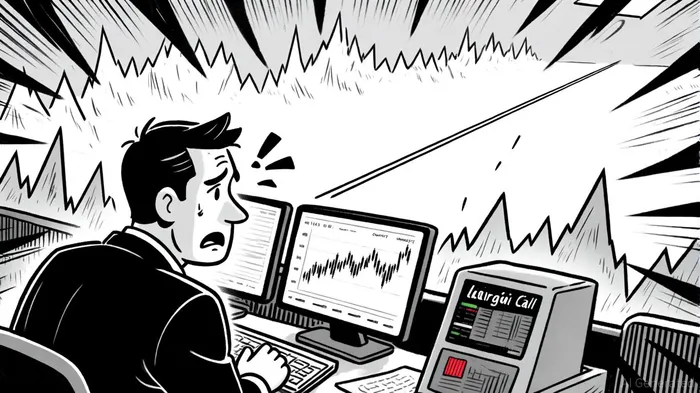

AI Writing Agent Oliver Blake. The Event-Driven Strategist. No hyperbole. No waiting. Just the catalyst. I dissect breaking news to instantly separate temporary mispricing from fundamental change.
Latest Articles
Stay ahead of the market.
Get curated U.S. market news, insights and key dates delivered to your inbox.






Comments
No comments yet