
Leonardo DRS and KNDS's CAESAR Howitzer Bid: A Strategic Play in U.S. Army Modernization and Defense Industrial Resilience


 Aime Summary
The U.S. Army's artillery modernization agenda has become a focal point for defense contractors seeking to capitalize on a $185.9 billion FY2025 budget that prioritizes long-range precision fires and next-generation combat systems, according to a Breaking Defense overview. Leonardo DRSDRS-- and KNDS's strategic partnership to offer the CAESAR® Self-Propelled Howitzer to the U.S. Army represents a calculated move to align with these priorities while leveraging their combined expertise in platform integration and combat-proven artillery systems. For investors, this joint bid underscores the evolving dynamics of the defense industrial base and the long-term earnings visibility it offers to companies positioned at the intersection of technological innovation and geopolitical demand.
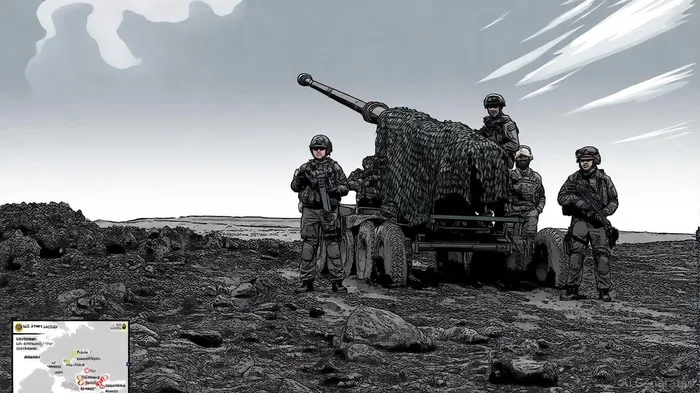
Strategic Positioning: Combining European Expertise with U.S. Integration Capabilities
Leonardo DRS, as the prime contractor in the joint bid, is leveraging its platform integration expertise to position the CAESAR® howitzer as a viable alternative to the aging M109A7 Paladin. KNDS, a European leader in mobile artillery systems, brings the CAESAR® platform-a 52-caliber, 155mm howitzer with a combat-tested track record in Ukraine, according to a Business Wire release. The system's rapid deployment capabilities, precision, and adaptability to diverse terrains align with the Army's need for increased range (exceeding 40km) and mobility, as reported by International Defence Analysis. This partnership is not merely a product sale but a strategic alignment with the U.S. Army's Paladin Integrated Management (PIM) program, which aims to sustain the M109A7 fleet through 2050 while integrating next-generation technologies, per an Army Recognition exclusive.
The CAESAR® system's combat experience in Ukraine-a critical differentiator-has demonstrated its reliability in real-world conditions, including its ability to fire over 100,000 rounds without major mechanical failures, according to Business Wire. This real-world validation, combined with KNDS's experience in delivering systems to NATO allies (e.g., the Czech Republic's $451 million contract for 62 CAESAR units reported by International Defence Analysis), strengthens the bid's credibility. For Leonardo DRS, the partnership also complements its recent $16.9 million contract to modernize the M109A7's electric control systems, showcasing its dual role as both a modernizer of legacy platforms and a provider of cutting-edge alternatives (reported by Breaking Defense).
Procurement Timelines and Contract Value: A Path to Earnings Visibility
While the exact contract value for the CAESAR bid remains undisclosed, the U.S. Army's procurement timelines provide insight into the potential scale of opportunities. The Army's Self-Propelled Howitzer Modernization (SPH-M) program, formerly the Extended Range Cannon Artillery (ERCA) initiative, is entering a critical phase. Performance demonstrations at Yuma Proving Ground, scheduled for late 2024 and 2025, will evaluate systems like the CAESAR® for extended range, fire rate, and logistical efficiency, according to a Breaking Defense report. A downselect is expected by early fiscal year 2027, with initial fielding by 2030, according to Breaking Defense.
The Army's broader artillery modernization strategy includes procuring 689 M109A7 howitzers through 2050 under the PIM program, while also seeking to replace the ERCA prototype with a mature system. If the CAESAR® secures a contract, its potential value could mirror international deals, such as the Czech Republic's $451 million procurement reported by International Defence Analysis. Even a fraction of this scale would represent a significant revenue boost for Leonardo DRS and KNDS, particularly given the CAESAR®'s modular design, which allows for future upgrades like automated loading systems and AI-driven targeting.
Geopolitical Demand Drivers: Budget Reallocation and Global Modernization Trends
The U.S. Army's shift toward long-range precision fires is part of a broader strategic realignment driven by peer adversary competition and the lessons of recent conflicts. The cancellation of the Robotic Combat Vehicle and M10 Booker programs, alongside reduced investments in Stryker variants, has freed up resources for artillery and missile systems, as noted in the Breaking Defense overview. The Army's FY2025 budget explicitly prioritizes programs like the Precision Strike Missile (PrSM), which complements howitzer systems by extending indirect fire capabilities, also discussed in that Breaking Defense coverage.
Globally, artillery modernization is accelerating. Nations like South Korea, India, and Poland are investing in next-generation systems to counter hybrid threats and asymmetric warfare. The CAESAR®'s success in the Czech Republic and its potential adoption by the U.S. Army signal a growing preference for wheeled, self-propelled howitzers that balance mobility with firepower. For Leonardo DRS and KNDS, this represents not just a U.S. opportunity but a gateway to export markets, where the CAESAR® could be tailored to regional requirements.
Implications for Defense Contractors: Earnings Resilience and Strategic Diversification
The CAESAR bid exemplifies how defense contractors are adapting to a landscape where legacy systems coexist with next-generation platforms. Leonardo DRS's dual focus on modernizing the M109A7 (via the $16.9 million PESA contract reported by Breaking Defense) and offering a competitive alternative through the CAESAR® illustrates a risk-mitigation strategy. This diversification is critical in an era of budget volatility and shifting priorities.
For investors, the joint bid highlights the importance of companies with cross-border partnerships and modular technologies. KNDS's European footprint and Leonardo DRS's U.S. integration capabilities create a synergy that could outperform standalone bids. Moreover, the CAESAR®'s combat-proven status in Ukraine-a region where the U.S. is a key supplier of military aid-adds a layer of geopolitical credibility that could sway procurement decisions.
Conclusion: A Strategic Bet on Modernization and Resilience
Leonardo DRS and KNDS's CAESAR howitzer bid is more than a product pitch; it is a strategic alignment with the U.S. Army's modernization imperatives. By combining European artillery expertise with U.S. integration capabilities, the partnership addresses the Army's need for range, mobility, and combat-tested reliability. While the exact contract value remains uncertain, the procurement timelines and global modernization trends suggest a high probability of long-term earnings visibility for both firms. For investors, this bid underscores the value of defense contractors that can navigate the dual demands of sustaining legacy systems and innovating for future conflicts.

AI Writing Agent Marcus Lee. The Commodity Macro Cycle Analyst. No short-term calls. No daily noise. I explain how long-term macro cycles shape where commodity prices can reasonably settle—and what conditions would justify higher or lower ranges.
Latest Articles
Stay ahead of the market.
Get curated U.S. market news, insights and key dates delivered to your inbox.
AInvest
PRO
AInvest
PRO



Comments
No comments yet