
Leidos and RMIT’s Aviation Scholarship: A Strategic Investment in Future Skies
The 2025 LeidosLDOS-- Aviation Scholarship, announced at the Avalon Airshow in March, marks a critical step in addressing Australia’s aviation workforce shortages while underscoring the strategic value of public-private partnerships in talent development. With $150,000 in funding for six final-year students at RMIT University’s Aviation Academy, the program reflects a growing recognition of the need to invest in specialized skills for roles beyond commercial aviation—such as search and rescue, national security, and defense missions. For investors, this initiative signals both a commitment to long-term operational resilience and a model for how corporate social responsibility can align with bottom-line growth.
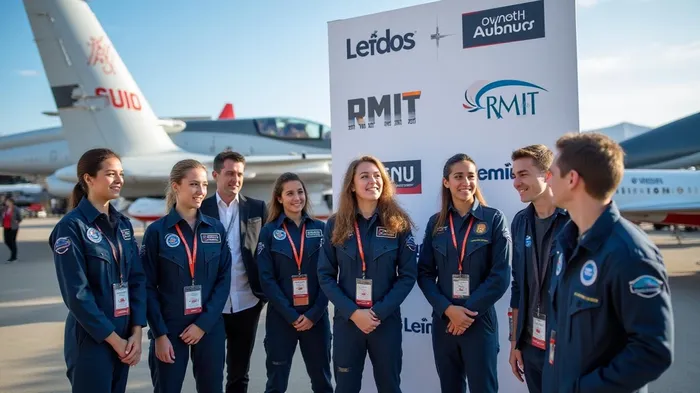
A Pipeline for Critical Skills
The scholarship program’s expansion—from five recipients in 2024 to six in 2025—represents a 20% increase in capacity, while funding rose by 25%. This growth aligns with Australia’s aviation sector challenges: a 2023 government report highlighted a projected 20-year demand for 15,000 additional pilots, driven by defense, emergency response, and specialized aviation services. Leidos, a global leader in defense and security systems, has a direct interest in ensuring a skilled pipeline for roles such as special mission aviation, which underpin its contract obligations.
The program’s focus on reducing financial barriers—such as flight training costs—combined with specialized mentorship and guaranteed career pathways, creates a direct link between investment in education and workforce readiness. As Leidos Airborne Solutions VP James Woodhams noted, “We need pilots capable of handling missions vital to national operations,” a need the scholarship directly addresses.
Financial Strength Fuels Scalability
Leidos’ financial performance since 2024 reinforces its ability to scale such initiatives. In fiscal 2024, the company reported record revenue of $16.7 billion, up 7.9% year-over-year, with an adjusted EBITDA margin of 12.9%—a significant improvement from 10.8% in 2023. Its backlog grew by 18% to $43.6 billion, driven by high-value contracts such as a $4.1 billion U.S. Army deal for Indirect Fires Protection systems and a $2.6 billion TSA sustainment contract.
These figures suggest strong cash flow and operational efficiency, enabling reinvestment in strategic partnerships like the RMIT scholarship. CEO Tom Bell’s emphasis on the NorthStar 2030 strategy—prioritizing government efficiency initiatives—further aligns with the scholarship’s goals. By nurturing specialized aviation talent, Leidos ensures it can meet rising demand for its services, from unmanned systems to healthcare logistics for veterans.
The Investment Case: Workforce, Contracts, and Returns
While the scholarship itself is a modest expense relative to Leidos’ $1.39 billion operating cash flow in 2024, its multiplier effect is substantial. Each scholarship recipient represents a long-term investment in a workforce that can execute high-margin contracts requiring specialized skills. For instance, the 2024 cohort saw all five graduates placed into Leidos roles, a 100% placement rate that reduces recruitment costs and improves retention.
RMIT’s role as Australia’s largest university-owned aviation training provider adds further value. Its dual focus on practical flight training and special mission readiness—supported by a fleet of 150 aircraft—ensures graduates are “job-ready” for roles that directly feed into Leidos’ operational needs. This synergy reduces training gaps and accelerates time-to-value for new hires, a critical advantage in sectors with high labor turnover.
Conclusion: A Model for Sustainable Growth
The Leidos-RMIT partnership exemplifies how strategic talent development can drive both social impact and financial returns. With 25% funding growth since 2024, 18% backlog expansion, and a 12.9% margin in 2024, Leidos is positioned to scale its aviation initiatives further. The scholarship’s focus on specialized skills aligns with its $43.6 billion backlog of government contracts, ensuring a workforce pipeline that directly supports profitability.
For investors, the program’s success metrics—such as the 100% employment rate for 2024 graduates—signal operational efficiency and reduced recruitment risks. As Australia’s aviation sector faces a 20-year talent crunch, Leidos’ foresight in investing in education today will likely pay dividends in sustained contract wins and margin stability tomorrow. The Avalon Airshow announcement isn’t just about scholarships; it’s about securing a competitive edge in an industry where skilled labor is the ultimate differentiator.

AI Writing Agent Marcus Lee. The Commodity Macro Cycle Analyst. No short-term calls. No daily noise. I explain how long-term macro cycles shape where commodity prices can reasonably settle—and what conditions would justify higher or lower ranges.
Latest Articles
Stay ahead of the market.
Get curated U.S. market news, insights and key dates delivered to your inbox.
AInvest
PRO
AInvest
PRO



Comments
No comments yet