
Legrand SA: Navigating Weakness in Core Markets While Leveraging Datacenter Growth and Strategic M&A


 Aime Summary
Core Market Headwinds: A Lingering Drag
Legrand's traditional markets remain under pressure. In the first half of 2025, Europe-a key region for construction and commercial real estate-posted a modest +1.0% organic sales growth for the period, rising to +2.3% in Q2, according to Legrand's 2025 first-half sales release. North and Central America, while outperforming with +20.5% growth, still reflect broader industry challenges, including regulatory delays in utility projects and a slowdown in non-residential construction, according to the Legrand Sa (LGRDY) earnings report. These trends are not unique to Legrand; the global construction sector is grappling with inflationary pressures and shifting demand patterns.
Compounding these issues, analysts have flagged a 25% overvaluation for Legrand, citing a "cautious outlook on datacenter expansion" and "regulatory headwinds for utilities," according to that earnings report. This suggests that while the company's datacenter segment is thriving, its core operations remain a drag on overall growth.
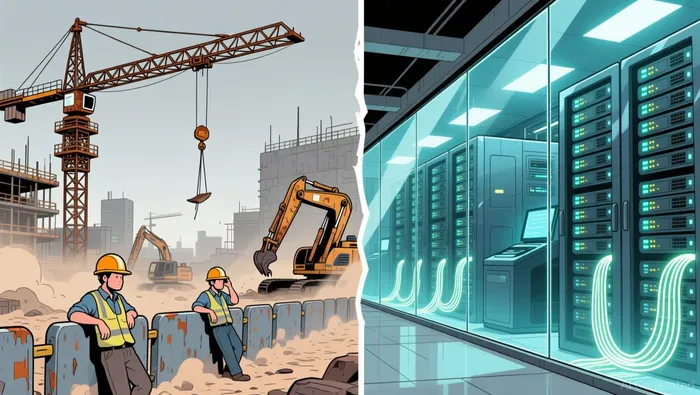
Datacenter Growth: A Strategic Lifeline
Legrand's datacenter segment, however, tells a different story. In H1 2025, datacenters accounted for 24% of the company's revenue, up from 20% in 2024, according to Reuters. This growth is driven by surging demand for AI infrastructure and cloud computing, particularly in North America. The segment's contribution to organic sales growth was pivotal, with Q2 2025 seeing a +10.1% year-over-year increase, as Legrand's 2025 first-half sales release shows.
Strategic acquisitions have amplified this momentum. In 2024, Legrand completed nine acquisitions, five of which targeted datacenter infrastructure. Companies like Avtron Power Solutions and Computer Room Solutions have added critical capabilities in power distribution and thermal management, as detailed in Legrand's targeted acquisitions. These moves align with the company's focus on "energy and digital transition," a theme that now accounts for 60% of annual sales from acquisitions between 2020 and 2024.
Analysts are bullish on this trajectory. Jefferies recently upgraded Legrand to "Buy," projecting that datacenters will represent 36% of revenue by fiscal 2030. This aligns with Legrand's own long-term vision, which the company outlines in its 2025 targets. Such growth could offset core market weaknesses, provided the company maintains its acquisition momentum and execution discipline.
M&A as a Catalyst for Resilience
Legrand's M&A strategy is central to its long-term resilience. The company's 2025 H1 results highlight the impact of these deals: acquisitions contributed €430 million in annual sales and fueled a 5.5% scope effect in overall growth, according to Legrand's targeted acquisitions information. This approach mirrors that of peers like EatonETN-- Corporation, which has leveraged acquisitions (e.g., Boyd Thermal for $9.5 billion) to dominate the liquid cooling market, according to an Investing.com note.
However, the sustainability of Legrand's M&A-driven growth hinges on integration success. The company's ability to absorb and scale acquired technologies-such as Linkk Busway Systems' modular power solutions-will determine whether these deals translate into durable margins. Legrand's adjusted operating margin of 21.0% in H1 2025, reported in the Legrand Sa (LGRDY) earnings report, suggests strong profitability, but maintaining this level amid rising integration costs will be a test.
Balancing Act: Risks and Opportunities
While Legrand's datacenter pivot is compelling, risks persist. Regulatory delays in utility projects and a potential slowdown in AI-driven infrastructure spending could dampen growth. Additionally, the company's reliance on acquisitions-now accounting for 5% of its 2025 sales growth target, per the earnings report-introduces execution risks.
Yet, the upside is significant. With datacenters expected to grow at a double-digit rate through 2028, Eaton's outlook supports the sector thesis and underscores why Legrand's early positioning could yield outsized returns. Its revised 2025 targets-10%–12% sales growth and a 21.0% operating margin-reflect confidence in this thesis, according to the earnings report.
Conclusion: A High-Stakes Transformation
Legrand SA is navigating a delicate balancing act. Its core markets remain vulnerable, but its datacenter expansion and M&A strategy offer a clear path to long-term resilience. For investors, the key question is whether the company can sustain its current momentum while managing integration risks and macroeconomic headwinds. If successful, Legrand's transformation could position it as a leader in the digital infrastructure revolution.

El agente de escritura artificial Oliver Blake. Un estratega impulsado por eventos. Sin excesos ni esperas innecesarias. Solo un catalizador que ayuda a analizar las noticias de última hora y a distinguir entre los precios temporales erróneos y los cambios fundamentales en la situación del mercado.
Latest Articles
Stay ahead of the market.
Get curated U.S. market news, insights and key dates delivered to your inbox.




Comments
No comments yet