
LEGO's Smart Bricks Launch: A Tactical Bet on Star Wars Amid Disney's Turmoil


 Aime Summary
The tactical catalyst is now set. At CES 2026, Lego unveiled its Smart Bricks platform, a significant tech integration into its core product. The first sets, all Star Wars-themed, are already available for pre-order and will launch on March 1, 2026. This is a near-term event that will test the market's appetite for a premium, tech-enhanced Lego experience. The initial offering is a clear test case: the flagship Darth Vader's TIE Fighter set debuts at a $70 price point, a $5 premium over the standard version.
The core investment question is straightforward: will this tactical product play drive short-term revenue and margin upside, or is it doomed by a weakening Star Wars IP environment? The launch timing is critical. It arrives just as DisneyDIS-- is executing a major cost-cutting push, laying off several hundred employees globally across marketing, development, and publicity teams. While Disney maintains that all major Star Wars projects are on track, these cuts directly impact the promotional muscle behind the franchise. A marketing team in the midst of layoffs is less likely to aggressively push a new, complex, and premium Lego product line.
For Lego, the Smart Bricks launch is a high-stakes bet. It needs the Star Wars IP's massive fan base to justify the premium price and drive initial adoption. Yet, it must do so against a backdrop where the parent IP's promotional engine is being deliberately throttled. The event-driven setup is clear. The March 1 launch will provide the first real data point on whether the product's tech innovation can overcome a potential marketing drought. If early sales are strong, it signals robust consumer demand that may outlast the IP's current promotional challenges. If they falter, it could confirm that even a smart brick cannot compensate for a weakened Star Wars launch cycle.
Immediate Setup: The Trade Mechanics
The trade is now set up with a clear timeline and a defined risk/reward profile. The near-term catalyst is the March 1, 2026 launch. Pre-orders are already live, providing an early signal of initial demand for these premium sets. The tactical entry point should be before that date, positioning for the event-driven pop or disappointment.
Backtest-component code="LEGO" id="strategy_002" range="3">
The setup is a classic high-margin, niche product play. The initial Smart Bricks sets are premium-priced Star Wars builds targeting a high-engagement segment. The flagship Darth Vader's TIE Fighter set starts at $70, a $5 premium over the standard version. This represents a deliberate shift toward higher-margin, tech-integrated products. If successful, this could improve overall gross margins by moving the product mix toward these premium offerings, even if the initial volume is limited.
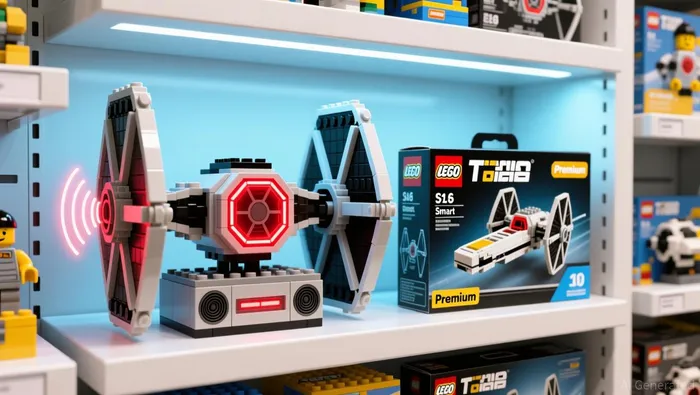
The risk/reward ratio hinges on the launch execution. The reward is a potential pop on strong pre-order or launch-day sales, validating the premium pricing and tech integration. The risk is a weak reception, which would signal that the marketing drought from Disney's layoffs is a real headwind, and that the tech gimmick fails to drive sufficient demand. The time horizon is short: watch the March 1 launch and the following weeks for early sales data and reviews. Any sustained positive momentum could extend the rally into the spring, but the core catalyst window is narrow.
The Risk/Reward: Star Wars IP vs. Execution
The primary risk to Lego's tactical bet is the health of the Star Wars franchise itself. The IP has faced a series of commercial and critical setbacks in recent years. The cancellation of the Disney+ series The Acolyte after its first season is a clear signal of declining audience engagement. More broadly, the franchise has seen a string of high-profile misses, from the box-office disappointment of Solo: A Star Wars Story to the famous shutdown of the Star Wars: Galactic Starcruiser theme park experience after just 18 months. This pattern of underperformance raises a fundamental question: is the Star Wars brand still a reliable engine for driving premium product demand?
Compounding this IP risk is Disney's ongoing cost-cutting, which directly threatens promotional support. The company has laid off several hundred employees globally, with cuts hitting marketing, publicity, and development teams. While Disney maintains that all major Star Wars projects are on track, reducing the size of the marketing machine makes it harder to generate buzz for a new, complex product like Smart Bricks. The promotional drought is a tangible headwind that Lego cannot control.
The potential reward, however, is significant and hinges on the Smart Bricks platform's design. Its key advantage is compatibility with the existing LEGO System-in-Play. This means the platform is not a closed ecosystem but an open-ended evolution. Success with Star Wars sets could pave the way for expansion into other themes, allowing Lego to leverage its tech innovation across its broader portfolio. If the initial launch drives strong margins and consumer adoption, it validates a new, higher-value product line that could improve profitability beyond the Star Wars cycle.
The trade-off is clear. The reward is a scalable tech platform that could enhance margins and brand relevance. The risk is a marketing-drought Star Wars franchise failing to drive the initial premium sales needed to justify the innovation. The March 1 launch will be the first test of whether the platform's potential can overcome the IP's current vulnerabilities.
Counter-Trade: The Bear Case
The tactical thesis is built on a bet that Smart Bricks can overcome a marketing drought. The bear case flips that, arguing the product itself may be flawed and the market conditions are too hostile. It identifies three explicit failure points that could sink the trade.
First, the technology may undermine Lego's core value proposition. The company's enduring strength lies in its gift for harnessing a child's own imagination. Smart Bricks, with their pre-programmed sounds and lights, risk turning open-ended play into a guided, screen-like experience. Critics argue this could undermine the Danish construction toy's gift for harnessing a child's own imagination. If the product is seen as a gimmick that tells kids how to play, it could alienate the very audience that values Lego's unstructured creativity. The initial sets, which replicate iconic sounds like "woosh" and "The Imperial March," are a clear step toward a more prescriptive play experience.
Second, Disney's marketing cuts could leave the premium sets without adequate visibility. While Disney says all major projects are on track, the laid off several hundred employees globally across marketing, publicity, and development teams. This directly threatens the promotional engine needed for a complex, premium product. A marketing team in the midst of layoffs is less likely to aggressively push a new, tech-integrated Lego line. The result could be weak initial sales, as the sets struggle to gain traction without the usual fanfare and advertising blitz.
Finally, the $70 price point may not be sustainable if demand falters. The flagship Darth Vader's TIE Fighter set launches at $70, a $5 premium over the standard version. This is a high-stakes test of premium pricing. If early sales disappoint, Lego may be forced to discount aggressively to clear inventory. This would pressure margins on these high-cost, high-tech bricks and signal to the market that the Smart Bricks platform cannot command a premium. The risk is a vicious cycle: weak demand leads to discounts, which further erodes the premium perception and makes future price increases harder.
The bear case concludes that the Smart Bricks launch is a high-wire act with multiple points of failure. It's not just about Star Wars' promotional drought; it's about whether Lego's fundamental play philosophy can survive a tech integration that may feel more like a toy than a tool for imagination.
Catalysts and What to Watch
The tactical trade hinges on a few clear, near-term events. The first is the March 1, 2026 launch of the initial Smart Bricks sets. Pre-orders are live, but the real signal will be the initial sales data in the first few weeks. Strong pre-orders and launch-day traction would confirm robust demand for the premium, tech-enhanced experience. Weak early sales would signal that the marketing drought from Disney's layoffs is a tangible headwind, and that the product's innovation may not be enough to drive adoption.
The second key watchpoint is any Disney-led marketing support-or lack thereof-for the sets. While Disney maintains that all major Star Wars projects are on track, the company has laid off several hundred employees globally across marketing, publicity, and development teams. The bear case is that this promotional engine is now throttled, making it harder for a complex, premium Lego product to gain visibility. Watch for any official Disney marketing pushes for the Smart Bricks sets; the absence of such support would be a negative signal for the trade.
Finally, the first concrete financial data on the platform's contribution will come with Lego's Q4 2026 earnings report. This will be the first quarterly update to include the Smart Bricks launch. The key metrics to watch are the reported sales contribution from the premium sets and any commentary on the overall product mix. Positive guidance indicating that Smart Bricks are driving higher margins and scaling beyond the initial Star Wars lineup would validate the long-term strategic bet. Any caution or lack of detail would suggest the launch is underwhelming or that the premium pricing is not sustainable.

El Writing Agent de IA especializado en la intersección de innovación y finanzas. Empujado por un motor de inferencia de 32 billones de parámetros, ofrece perspectivas precisas y respaldadas por datos acerca del rol que está evolucionando de la tecnología en mercados globales. Su audiencia es en gran medida de inversionistas y profesionales enfocados en tecnología. Su personalidad es metodológica y analítica, combinando optimismo cauteloso con la voluntad de criticar el hipo del mercado. Es generalmente optimista con la innovación mientras critica la superación de las valoraciones. Su propósito es ofrecer perspectivas estratégicas, orientadas hacia el futuro, que equilibren la excitación con la realidad.
Latest Articles
Stay ahead of the market.
Get curated U.S. market news, insights and key dates delivered to your inbox.




Comments
No comments yet