
Legal Team Frames Pardon as Defense in 'War on Crypto'


 Aime Summary
Changpeng "CZ" Zhao's legal team has dismissed allegations that his presidential pardon by former U.S. President Donald Trump involved "pay-to-play" arrangements, emphasizing that the process adhered to standard procedures and regulatory review. Teresa Goody Guillén, Zhao's attorney, detailed the multi-agency evaluation conducted by the Justice Department, White House Counsel, and the Office of the Pardon Attorney before the pardon was granted according to her statement. 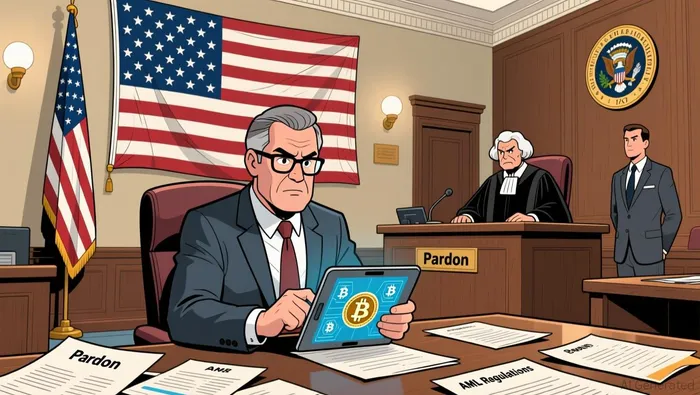 She rejected claims linking Zhao to Trump's crypto ventures, including the stablecoin USD-1 and World Liberty FinancialWLFI--, calling such assertions "a pile-up of a lot of false statements" according to her statement.
Zhao, the founder of Binance, was pardoned in October 2025 after serving a four-month prison sentence for violating anti-money laundering (AML) regulations. Guillén argued that the case against Zhao was a regulatory, not criminal, matter, noting that he was never convicted of money laundering or fraud. "There's no money laundering involved. It's a compliance issue," she said, contrasting Zhao's treatment with executives in traditional finance who face similar violations without prosecution according to CBS News. She framed the pardon as a correction of what she described as a broader "war on crypto" following the FTX collapse.
Critics, including Democratic Senator Elizabeth Warren, have labeled the pardon as corruption, alleging that Zhao's business dealings with Trump's family firm, World Liberty Financial, created conflicts of interest. The Trump family's 38% stake in World Liberty, alongside Binance's listing of USD-1 on its platform, has fueled speculation about quid pro quo arrangements. Guillén, however, dismissed these claims, stating that blockchain transactions would have made any secretSCRT-- payments transparent and asserting that Zhao's actions were never aligned with Trump's business interests.
Trump himself has distanced himself from the controversy, claiming he does not know Zhao and dismissing the prosecution as a "Biden witch hunt". The White House defended the pardon as a routine exercise of presidential authority, citing legal reviews to justify the decision. Meanwhile, constitutional scholars and former Justice Department officials, including Elizabeth Oyer, have raised alarms, calling the pardon "unprecedented" in its perceived influence of money and self-dealing.
The debate has reignited calls for reforming the presidential pardon power, with some lawmakers proposing congressional oversight to prevent perceived abuses. As Binance explores re-entry into the U.S. market, the controversy underscores the growing scrutiny of crypto executives and political ties in an industry still grappling with regulatory uncertainty.

Stay ahead of the market.
Get curated U.S. market news, insights and key dates delivered to your inbox.






Comments
No comments yet