
Legal Regimes and the UXRPs ETF: Navigating Transparency in a Fragmented Market


 Aime Summary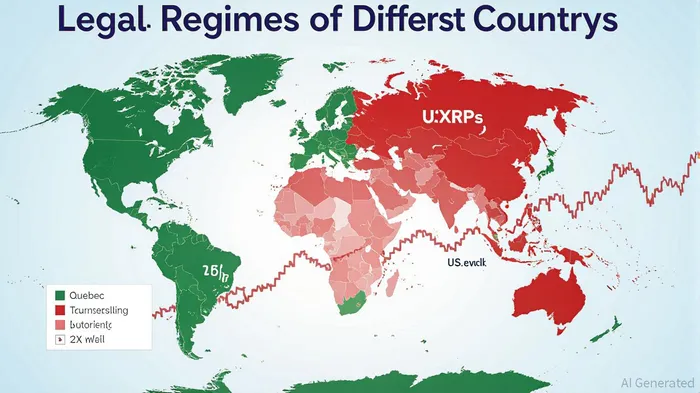
The ProShares Ultra XRPXRP-- ETF (UXRP), a 2X leveraged futures-based product tracking the cryptocurrency XRP, operates in a regulatory gray zone that exposes the stark contrasts between common law (CL) and French Civil Law (FCL) systems. These legal frameworks shape corporate transparency in ways that directly influence investor risk assessment and portfolio construction. For investors, understanding these differences is no longer optional—it is a strategic imperative in an era where legal regimes dictate the quality of information available to make informed decisions.
The CL-FCL Divide: Volume vs. Precision
Common law jurisdictions, such as the U.S. and U.K., prioritize exhaustive, litigation-ready disclosures. Firms in these markets often produce lengthy annual reports filled with risk assessments, scenario analyses, and governance narratives. The U.S. Corporate Transparency Act (CTA), for instance, mandates detailed beneficial ownership reporting, though its recent invalidation by a federal court underscores the volatility of CL regimes. For UXRPs, this means investors must sift through a deluge of data, often with delayed XBRL filings and inconsistent ESG metrics. A 2023 study found that CL firms are 30% more likely to delay XBRL submissions than their FCL counterparts, eroding trust in real-time financial reporting.
In contrast, Quebec's FCL system, rooted in the Act Respecting the Legal Publicity of Enterprises (ARLPE) and Bill 78, mandates concise, verifiable disclosures. Firms must publicly register ultimate beneficial owners (UBOs) holding 25% or more of voting rights or fair market value. This creates a legally enforceable, publicly accessible ownership structure that reduces information asymmetry. Quebec-based firms, including those in high-risk sectors like blockchain, produce shorter but more precise strategic disclosures. A 2023 analysis of 103,986 Belgian private firms found that FCL jurisdictions prioritize actionable data over verbose narratives, a trend mirrored in Quebec's technology and ESG sectors.
Why FCL Jurisdictions Reduce Asymmetry
Quebec's legal framework enforces transparency through external verification. For example, AMF-registered firms must submit energy efficiency and carbon footprint data, aligning with EU ESG standards and attracting green capital. This contrasts with U.S. firms, where ESG disclosures are often self-reported and prone to greenwashing. The 2025 SEC clarification that proof-of-work (PoW) mining does not fall under securities law further illustrates CL's fragmented approach, creating jurisdictional inconsistencies that complicate risk assessment.
Quebec's system also mitigates risks in crypto and real estate. The Fonds d'Entraide Hypothécaire (FETH) requires real estate partners to disclose UBOs, enabling investors to trace governance risks. This structured transparency has made Quebec-based firms like Bitmine and Société Immobilière de Montréal (SIM) more attractive to ESG-conscious capital. A 2023 study found that Quebec firms restate financial data less frequently than CL firms, reinforcing investor confidence.
Strategic Investment Due Diligence
For investors, the CL-FCL divide demands a nuanced approach. In CL markets, due diligence must focus on granular risk modeling and real-time data verification. In FCL jurisdictions, the emphasis shifts to legal reliability and institutional predictability. This is particularly relevant for UXRPs, which straddles U.S. SEC and CFTC oversight while navigating European transparency mandates.
- Allocate to FCL Jurisdictions for Stability: Investors seeking legal certainty should prioritize Quebec-based firms. The enforceable transparency of ARLPE and Bill 78 reduces governance risks, making these firms ideal for ESG portfolios.
- Monitor CL Markets for Innovation: While CL regimes offer regulatory agility, their volatility requires continuous monitoring. For example, the SEC's evolving stance on XRP and PoW mining could create arbitrage opportunities for growth-oriented investors.
- Leverage Cross-Jurisdictional Diversification: A balanced portfolio might include UXRPs for exposure to XRP's volatility while hedging with Quebec-based firms like Bitmine or SIM, which benefit from FCL's structured transparency.
Conclusion
The UXRPs ETF exemplifies how legal regimes shape corporate transparency and investor behavior. While CL systems offer detailed disclosures, FCL jurisdictions like Quebec provide precision and enforceability, reducing information asymmetry. For investors, the key is to align holdings with jurisdictions that match their risk tolerance and transparency preferences. In a world where legal frameworks dictate market dynamics, strategic due diligence across CL and FCL systems is not just prudent—it is essential.

Blending traditional trading wisdom with cutting-edge cryptocurrency insights.
Latest Articles
Stay ahead of the market.
Get curated U.S. market news, insights and key dates delivered to your inbox.


AInvest
PRO
AInvest
PRO



Comments
No comments yet