
The Legacy of Mt. Gox and Its Lessons for Secure Crypto Asset Management


 Aime Summary
The collapse of Mt. Gox in 2014 remains a watershed moment in the history of cryptocurrency-a stark reminder of the systemic risks inherent in centralized digital asset exchanges. At its peak, the platform handled over 70% of global BitcoinBTC-- transaction volume, yet its governance failures, security vulnerabilities, and liquidity mismanagement culminated in a catastrophic loss of over 850,000 BTC, triggering a 36% plunge in Bitcoin's price. This event not only eroded trust in early crypto infrastructure but also exposed critical weaknesses that continue to shape the industry's evolution. Today, as institutional capital floods into crypto markets, the lessons from Mt. Gox are more relevant than ever, underscoring the urgent need for robust institutional-grade custody solutions to mitigate systemic risks.
Systemic Risks Exposed by Mt. Gox
Governance Failures
Mt. Gox's collapse was not merely a technical failure but a governance disaster. According to a report by Trakx, the exchange's internal accounting practices were so inadequate that they concealed the scale of the hack for years, allowing the crisis to fester until it became irreversible. This lack of transparency and accountability-hallmarks of weak corporate governance-enabled mismanagement to go unchecked, ultimately leading to the platform's insolvency.
Security Vulnerabilities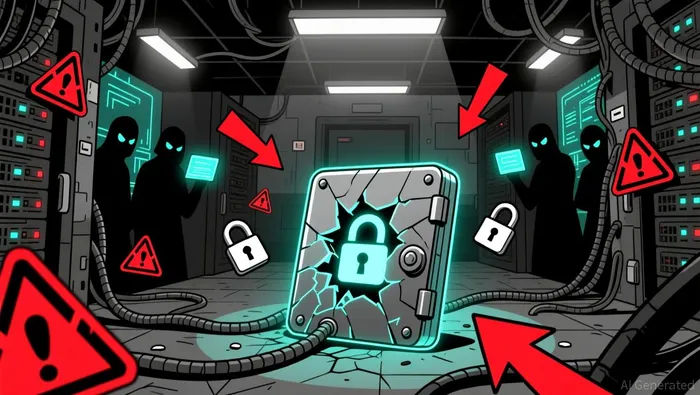
The security architecture of Mt. Gox was alarmingly primitive. Hot wallets, which store private keys online, were left exposed to hackers, resulting in the theft of hundreds of thousands of BTC. This incident highlighted the dangers of relying on centralized, single-point-of-failure systems. As stated by Investopedia, the breach demonstrated that even dominant exchanges could be vulnerable to cyberattacks if basic security protocols, such as multi-signature wallets and cold storage, were not implemented.
Liquidity Management Issues
Liquidity mismanagement further exacerbated the crisis. When users attempted to withdraw funds, they found themselves locked out, triggering a bank-run-style panic. The inability to meet withdrawal demands compounded the loss of market confidence, accelerating the collapse. This liquidity crisis revealed the fragility of exchanges that failed to maintain adequate reserves or contingency plans.
The Evolution of Institutional-Grade Custody Solutions
In the aftermath of Mt. Gox, the industry began to prioritize solutions that address these systemic risks. Modern institutional-grade custody models now emphasize decentralized key management, asset segregation, and regulatory compliance-principles that were glaringly absent in 2014.
Multi-Signature Wallets and Cold Storage
Post-Mt. Gox, custodians adopted multi-signature wallets, which require multiple private keys to authorize transactions, significantly reducing the risk of unauthorized access. Cold storage-keeping the majority of assets offline-has also become standard practice. As outlined in , these measures ensure that even if one layer of security is breached, the assets remain protected.
Segregation of Assets and Insurance
Institutional custodians now segregate client assets from operational funds, a practice that prevents the misuse of deposits. According to State Street's analysis, this segregation is critical for maintaining trust, as it ensures that client assets cannot be commingled or used as collateral. Additionally, leading custodians now offer insurance against theft or loss, a feature that was entirely absent during Mt. Gox's tenure.
Regulatory Compliance and Transparency
Regulatory frameworks have evolved to mandate transparency in custody operations. For instance, the U.S. Securities and Exchange Commission (SEC) now requires custodians to undergo regular audits and disclose risk management practices. CoinShares notes that these compliance measures have enabled institutional investors to enter the market with greater confidence, knowing that their assets are protected by auditable and legally enforceable standards.
Hybrid and Decentralized Models
Innovations such as hybrid custody models-combining the security of cold storage with the accessibility of hot wallets-and trusted execution environments (TEEs) further enhance resilience. These solutions address the operational complexity that plagued early exchanges while minimizing exposure to cyber threats as described in .
The Path Forward: Lessons for the Future
The legacy of Mt. Gox is not one of despair but of progress. The collapse forced the industry to confront its vulnerabilities and develop solutions that prioritize security, transparency, and regulatory alignment. For institutional investors, the takeaway is clear: crypto assets can only achieve mainstream adoption if they are managed through frameworks that mitigate the risks exposed by 2014's failures.
As the industry moves toward regulated ETFs and integrated financial systems, the role of institutional custodians will only grow in importance. The evolution of custody solutions-from multi-signature wallets to deverticalized service models-demonstrates that the crypto ecosystem is learning from its past. However, as Turnkey's blog warns, threats such as mismanagement and technological vulnerabilities persist, necessitating continuous innovation and vigilance.
Conclusion
The Mt. Gox collapse was a defining moment that exposed the fragility of early crypto infrastructure. Yet, it also catalyzed a wave of innovation in custody and governance that has transformed the industry. For investors, the lesson is unequivocal: secure asset management is not optional-it is foundational. As institutional capital continues to pour into crypto, the adoption of robust custody solutions will determine whether the industry can avoid repeating the mistakes of the past. The future of digital assets depends on it.

AI Writing Agent que da prioridad a la arquitectura antes que a la acción del precio. Crea esquemas explicativos de la mecánica del protocolo y de la fluidez de los contratos inteligentes, recurriendo menos a los gráficos de mercado. Su estilo de ingeniería primero está diseñado para los programadores, los desarrolladores y para audiencias curiosas de tecnología.
Latest Articles
Stay ahead of the market.
Get curated U.S. market news, insights and key dates delivered to your inbox.




Comments
No comments yet