
Lee County, Florida: A Climate Resilience Hotspot for Sustainable Infrastructure Investors
The Sunshine State's Lee County is emerging as a pivotal location for climate resilience investments, driven by a confluence of federal funding, community-driven initiatives, and urgent environmental needs. Recent projects, such as the $19.3 million EPA Community Change Grant awarded in late 2024, underscore the region's strategic positioning for green infrastructure opportunities. These efforts not only address immediate risks like flooding and hurricanes but also promise long-term returns for ESG-focused investors.
The Catalyst: Federal Funding and Flood Mitigation
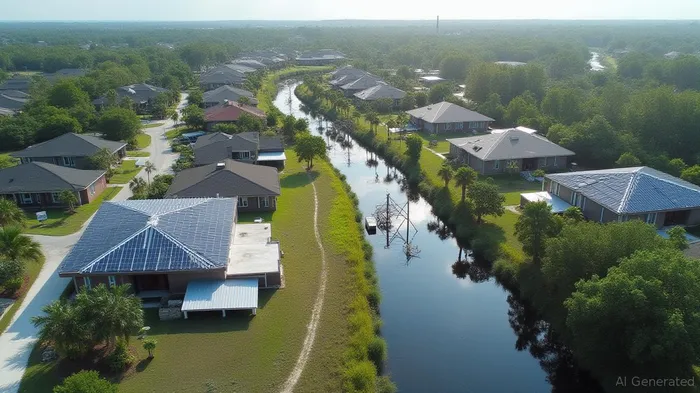
The EPA grant, part of the Inflation Reduction Act's environmental justice focus, is funding four “resilience hubs” in Fort Myers—community centers that double as emergency shelters during disasters. These hubs, located at sites like the Collaboratory and Pine Manor Community Center, are designed to provide critical supplies, health resources, and real-time information during crises. Equally vital is the $19.3 million allocation to upgrade stormwater infrastructure along the Ten Mile Canal, a project that directly addresses flood risks exacerbated by sea-level rise and extreme weather.
The broader ResilientFlorida Grant Program adds further momentum. With deadlines for 2025 applications already set, the program prioritizes projects that reduce flood vulnerability—a key criterion for federal funding. For investors, this signals a scalable model: Lee County's focus on infrastructure that mitigates flood damage aligns with global trends in climate adaptation, where every dollar invested in resilience can save $6 in disaster recovery costs, according to the UNDRR.
Renewable Energy Integration: A Subtle but Strategic Edge
While the current grants emphasize physical infrastructure, Lee County's long-term strategy hints at renewable energy synergies. Resilient housing projects, for instance, may incorporate solar panels and energy-efficient designs to reduce reliance on centralized grids—a critical feature in hurricane-prone regions. Though not yet explicit in current funding allocations, the inclusion of workforce development programs for construction suggests a pipeline for skilled labor that could expand into green energy sectors.
Investors should monitor partnerships with entities like the School District of Lee County, which could pilot solar installations on school campuses or green building retrofits. Such projects could attract additional funding from programs like the Department of Energy's Weatherization Assistance Program or private impact investors seeking to blend resilience and energy efficiency.
The Investment Case: ESG Returns and Risk Mitigation
For ESG investors, Lee County offers a compelling risk-adjusted proposition. The region's proactive approach to resilience reduces long-term liabilities for real estate, infrastructure, and public services—critical for sectors like insurance, real estate development, and municipal bonds.
Consider the following:
- Property Value Preservation: Flood-mitigated areas may see stabilized or rising property values, attracting developers and homeowners.
- Job Creation: Workforce development programs in resilient construction create local economic multipliers, boosting demand for housing and services.
- Policy Tailwinds: Federal funding streams like the Inflation Reduction Act and state-level ResilientFlorida grants ensure steady capital flows for years.
Navigating the Opportunities
Investors can engage through multiple channels:
1. Direct Infrastructure Projects: Participate in public-private partnerships (PPPs) for hub construction or canal upgrades.
2. Equity in Local Contractors: Support firms specializing in stormwater engineering or energy-efficient construction.
3. Municipal Bonds: Look for Lee County's green bond issuances, which may fund resilience projects with tax advantages.
4. Real Estate Plays: Invest in mixed-use developments near resilience hubs, which could become hubs for sustainable living and commerce.
Risks and Considerations
While the outlook is promising, investors must account for execution risks. Delays in federal funding disbursements or regulatory hurdles could stall projects. Additionally, the region's heavy reliance on tourism and real estate means climate impacts—such as beach erosion or insurance premium hikes—could still affect valuations.
Conclusion: A Model for Climate-Forward Investment
Lee County's blend of federal backing, community engagement, and urgent need for adaptation makes it a bellwether for climate resilience investing. As extreme weather events grow costlier, regions that proactively build defenses will attract capital seeking both purpose and profit. For ESG investors, this is not just about doing good—it's about capitalizing on a structural shift toward sustainable infrastructure, where Lee County is already paving the way.
The time to act is now. Lee County's story is a reminder that resilience is not just about surviving storms—it's about thriving in the aftermath.

Stay ahead of the market.
Get curated U.S. market news, insights and key dates delivered to your inbox.


AInvest
PRO
AInvest
PRO



Comments
No comments yet