
Leavitt: Energy industry will benefit from Trump's actions
Leavitt: Energy industry will benefit from Trump's actions
Energy Industry Response to Trump Administration Policies: A Mixed Outlook
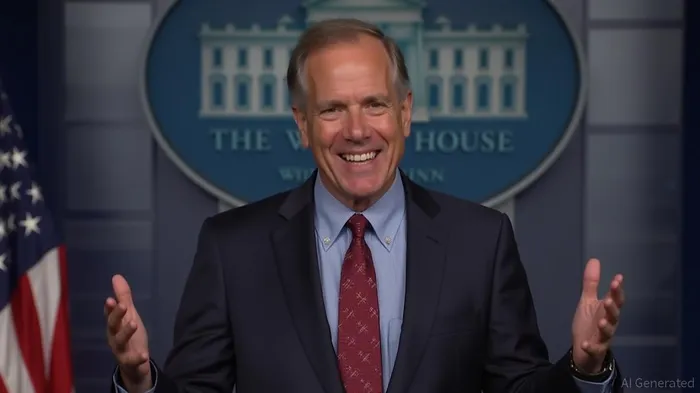
White House Press Secretary Karoline Leavitt asserted that "high energy prices are a choice," emphasizing that Trump's policies aim to reduce costs through deregulation and expanded fossil fuel production according to Leavitt's statement. The Department of Energy (DOE) has highlighted a range of actions under the administration, including record U.S. oil and natural gas output, reduced gas prices, and streamlined permitting processes as reported by the DOE. For instance, U.S. crude oil production reached 13.6 million barrels per day in 2025, with total oil and liquid fuels output exceeding 24 million barrels daily—surpassing combined production from Russia and Saudi Arabia according to Energy Department data.
The administration has also prioritized deregulation, proposing the elimination of 47 regulations estimated to save consumers $11 billion annually as detailed in Energy Department announcements. Additionally, the DOE has reversed Biden-era policies, such as halting hydroelectricity restrictions in the Columbia River Basin and supporting coal plant operations as reported by the DOE. These measures align with Trump's executive order directing the Department of Defense (DoD) to purchase electricity from coal-fired plants, a move intended to bolster domestic energy production according to Climate News reports.
However, critics argue that increased reliance on coal and fossil fuels could undermine long-term energy security and climate resilience. The DoD's $5.1 billion climate risk mitigation budget, as reported by the Government Accountability Office, underscores the financial challenges posed by extreme weather and infrastructure vulnerabilities according to Climate News analysis. Environmental advocates also question the economic and strategic viability of coal, noting that solar and battery storage solutions offer cost-effective alternatives for military bases as Climate News reported.
The administration's focus on reshoring critical mineral supply chains and advancing nuclear energy—through investments in uranium enrichment and small modular reactors—represents a dual strategy to enhance energy independence and reduce foreign reliance according to Energy Department announcements. Yet, the cancellation of $13 billion in Green New Deal funds and the termination of social cost of carbon calculations have drawn scrutiny for potentially slowing climate-related regulatory reviews as stated in White House actions.
While the Trump administration frames its policies as a pathway to energy dominance and affordability, stakeholders remain divided on the balance between short-term economic gains and long-term sustainability risks. Investors are advised to monitor evolving regulatory shifts and their sector-specific implications.
Stay ahead of the market.
Get curated U.S. market news, insights and key dates delivered to your inbox.


AInvest
PRO
AInvest
PRO



Comments
No comments yet