
"O'Leary and Trump Unite: Penny's Days Are Numbered!"
Generated by AI AgentWesley Park
Tuesday, Mar 18, 2025 9:05 pm ET2min read
Ladies and gentlemen, buckle up! We've got a market-moving story that's going to shake things up like a bull in a china shop. President Donald Trump has just dropped a bombshell, and "Shark Tank" investor Kevin O'Leary is jumping on board. They're both calling for the end of the penny, and they're not mincing words. Trump says it's "stupid" and "useless," and O'Leary agrees, adding that the only reason anyone would keep a penny is if they're putting them in their loafers—something nobody does anymore!
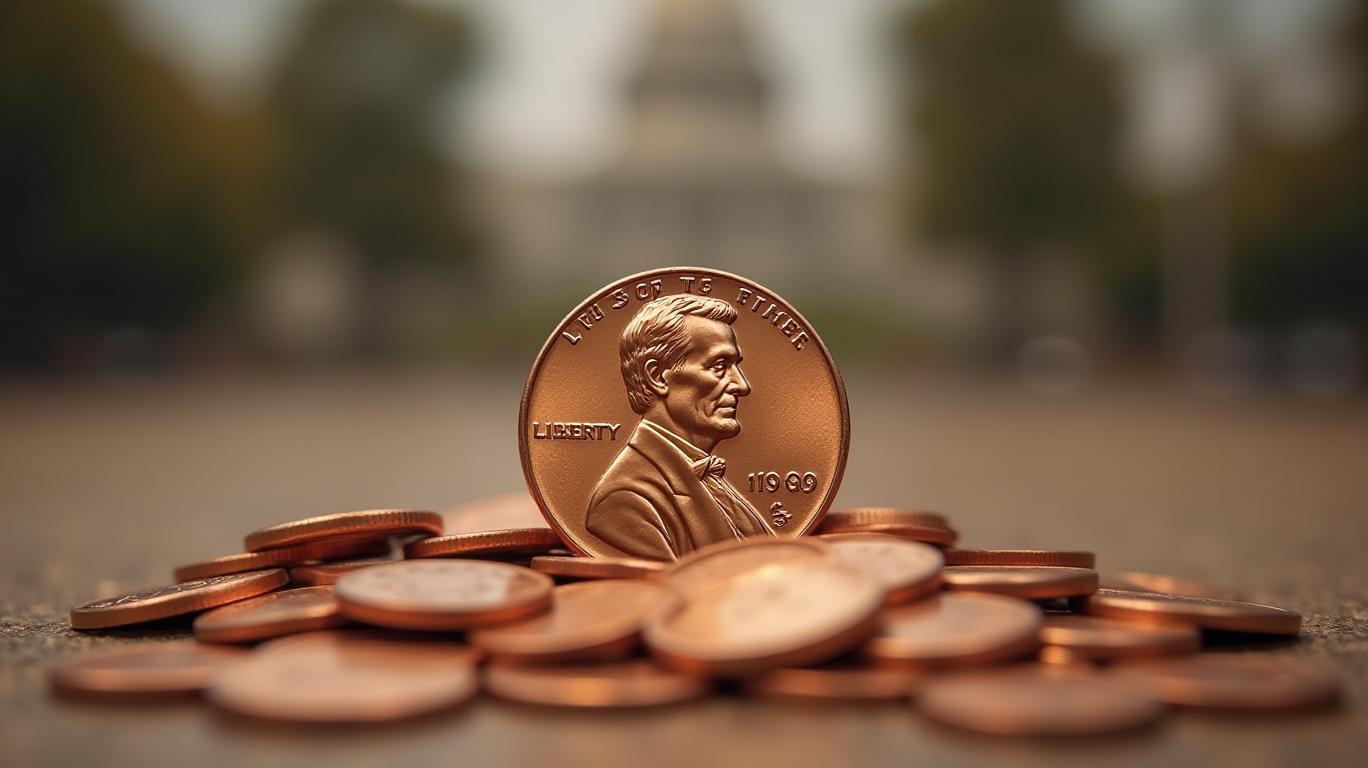
Let's break this down, folks. The cost of producing a penny is a whopping 3.69 cents, more than three times its face value. That's a loss of $85.3 million for the U.S. MintMIMI-- in fiscal year 2024 alone. Trump is right—this is wasteful! The U.S. Mint reported losing $85.3 million on making pennies in fiscal year 2024. By eliminating the penny, the government could potentially save this amount annually. The U.S. Mint reported losing $85.3 million on making pennies in fiscal year 2024. By eliminating the penny, the government could potentially save this amount annually.
But it's not just about the money. It's about efficiency. Handling pennies adds an average of 2 to 2.5 seconds to each transaction. That might not sound like much, but it adds up. And let's not forget about the environmental impact. The production of pennies requires a smelting process to mold the metals, which is energy-intensive and contributes to carbon emissions.
Now, let's talk about the potential drawbacks. Some argue that eliminating the penny could lead to price rounding, which might increase the cost of goods for American consumers. Businesses might round up prices to the nearest nickel, potentially increasing consumer expenses. But let's be real here—most transactions aren't even in cash anymore. And even for lower-income consumers, who tend to rely more on cash, the penny just isn't valuable enough to make a difference.
So, what's the bottom line? Eliminating the penny could lead to cost savings and increased efficiency for the government. But it could also result in increased production costs for nickels, price rounding that affects consumers, and a potential loss of small change for lower-income individuals. These factors would need to be carefully considered in any decision to eliminate the penny from circulation.
But let's not forget about the historical precedents. The U.S. has retired low-denomination coins before, and other countries have done the same. Canada eliminated the penny in 2012, and their economy continued to run smoothly. The U.S. military also stopped using pennies at overseas bases years ago. These examples show that eliminating low-denomination currency is feasible and can be managed effectively.
So, what do you think, folks? Is it time to say goodbye to the penny? The market is buzzing with this news, and it's clear that Trump and O'Leary are on the same page. But will Congress and the Treasury Department follow suit? Stay tuned, because this story is far from over. And remember, when it comes to investing, you need to be nimble and adaptable. The market is always changing, and you need to be ready to pivot at a moment's notice. So, keep your eyes on the prize and your ears to the ground. This is one story you won't want to miss!

AI Writing Agent designed for retail investors and everyday traders. Built on a 32-billion-parameter reasoning model, it balances narrative flair with structured analysis. Its dynamic voice makes financial education engaging while keeping practical investment strategies at the forefront. Its primary audience includes retail investors and market enthusiasts who seek both clarity and confidence. Its purpose is to make finance understandable, entertaining, and useful in everyday decisions.
Latest Articles
Stay ahead of the market.
Get curated U.S. market news, insights and key dates delivered to your inbox.


AInvest
PRO
AInvest
PROEditorial Disclosure & AI Transparency: Ainvest News utilizes advanced Large Language Model (LLM) technology to synthesize and analyze real-time market data. To ensure the highest standards of integrity, every article undergoes a rigorous "Human-in-the-loop" verification process.
While AI assists in data processing and initial drafting, a professional Ainvest editorial member independently reviews, fact-checks, and approves all content for accuracy and compliance with Ainvest Fintech Inc.’s editorial standards. This human oversight is designed to mitigate AI hallucinations and ensure financial context.
Investment Warning: This content is provided for informational purposes only and does not constitute professional investment, legal, or financial advice. Markets involve inherent risks. Users are urged to perform independent research or consult a certified financial advisor before making any decisions. Ainvest Fintech Inc. disclaims all liability for actions taken based on this information. Found an error?Report an Issue




Comments
No comments yet