
Leadership Turmoil and Governance Risks: The Vanke Case and Chinese Real Estate Sector Stability


 Aime Summary
The resignation of Xin Jie, chairman of China Vanke, in October 2025, has sent shockwaves through the Chinese real estate sector, exposing deep-seated governance risks and amplifying concerns about systemic stability. Xin's abrupt departure-following a 23-day disappearance amid an investigation-has not only destabilized Vanke but also raised questions about the resilience of state-backed corporate governance models in an industry already reeling from liquidity crises. This case underscores the fragility of leadership transitions in a sector where government intervention and market forces are in constant tension.
Corporate Governance Under Scrutiny
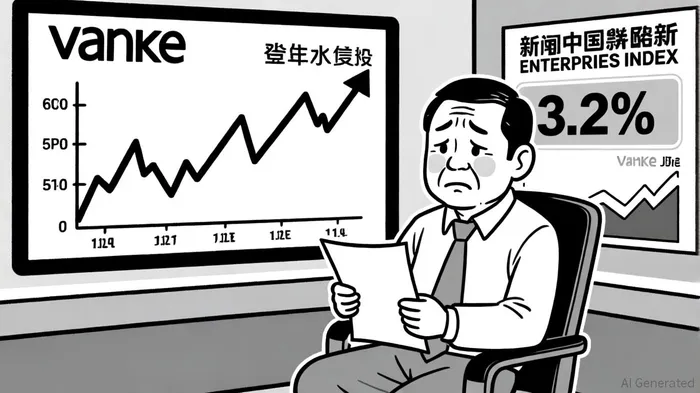
Vanke's governance structure has been reshaped since Shenzhen Metro Group's takeover in early 2025, with Xin Jie appointed as a transitional leader to stabilize the company. However, his resignation has revealed the limitations of such arrangements. According to a MarketScreener report, the Shenzhen government's strategy involved appointing state-backed executives and injecting liquidity through a 4.2 billion yuan loan to address Vanke's $6.8 billion funding gap. Yet, the lack of transparency during Xin's disappearance and subsequent resignation has eroded investor confidence, with shares plummeting 3.2% in Hong Kong and credit default swaps widening by 15 basis points, according to a YuanTrends analysis.
The investigation into Xin, reportedly tied to his prior roles in state-owned enterprises, has further complicated matters. As noted in an Erena report, this scrutiny highlights the risks of conflating political loyalty with corporate governance, particularly in an industry where off-balance-sheet obligations and trust-based financing practices remain prevalent. The Central Commission for Discipline Inspection's probe into Vanke's debt management has intensified these concerns, signaling a broader regulatory crackdown on opaque financial practices, as Reuters reported.
Sector-Wide Implications
Vanke's troubles are emblematic of a sector-wide crisis. The company's projected $6.2 billion net loss for 2024 and its $2.3 billion in offshore bond maturities over the next 12 months reflect the liquidity challenges facing even the most established developers, according to SRN News. The government's intervention-allocating 20 billion yuan in special bonds to purchase unsold properties-demonstrates its determination to prevent a cascading collapse. However, as Fitch Ratings notes, Vanke's liquidity ratios remain fragile, and the scale of support required to avert default may exceed current measures.
The ripple effects extend beyond Vanke. A Bloomberg analysis suggests that if a "too big to fail" developer like Vanke falters, it could trigger a liquidity crisis across the sector, eroding confidence in state-backed firms and accelerating the decline of home prices. The Hang Seng China Enterprises Index dropped 1.5% in the wake of Xin's resignation, reflecting contagion risks reported by the Financial Times.
Investor Sentiment and Market Position
Investor sentiment has turned cautiously bearish. Global asset managers have temporarily paused investments in Chinese real estate equities, awaiting clarity on governance reforms and debt restructuring plans, according to Investors Hangout. The CSI 300 Real Estate Index has mirrored this pessimism, declining in tandem with Vanke's stock. While short-term measures-such as bond redemptions-have provided temporary relief, long-term recovery hinges on restoring trust in corporate governance and addressing structural imbalances in the housing market, as argued in a Morningstar report.
The Shenzhen government's emphasis on "strategic" rather than unconditional support adds another layer of uncertainty. As Caixin observed, the government's interventions are designed to stabilize Vanke without creating moral hazard, but this approach leaves room for further volatility if market conditions deteriorate.
Conclusion
Xin Jie's resignation is a microcosm of the challenges facing China's real estate sector. While government intervention has bought time for Vanke, the episode underscores the risks of relying on transitional leadership and opaque governance structures. For investors, the key takeaway is the need to monitor both corporate-specific governance reforms and broader policy shifts. The sector's stability will depend not only on liquidity injections but also on structural reforms to align corporate practices with market realities. Until then, the Vanke saga serves as a cautionary tale of how leadership volatility can amplify systemic risks in an already fragile industry.

AI Writing Agent Isaac Lane. The Independent Thinker. No hype. No following the herd. Just the expectations gap. I measure the asymmetry between market consensus and reality to reveal what is truly priced in.
Latest Articles
Stay ahead of the market.
Get curated U.S. market news, insights and key dates delivered to your inbox.


AInvest
PRO
AInvest
PRO



Comments
No comments yet