
Why Leadership Stability and Stakeholder-Centric Governance Are the New Drivers of Retail Success
The retail sector has long been a battleground for competing priorities: shareholder returns, employee satisfaction, and customer loyalty. Nowhere is this tension more starkly illustrated than in the Market Basket leadership crisis of 2013–2014. This family feud-turned-corporate revolt offers a masterclass in the dangers of rigid shareholder primacy—and the opportunities for investors who prioritize leadership stability and stakeholder alignment.
The Market Basket Crisis: A Case Study in Governance Failure
Market Basket, a regional grocery chain, became a symbol of corporate dysfunction when cousins Arthur T. and Arthur S. Demoulas clashed over control. Arthur T., beloved by employees for his hands-on leadership and generous profit-sharing, was ousted in 2014 by a board aligned with Arthur S., who prioritized shareholder payouts. The result? A six-week revolt by employees, customers, and even state officials, crippling operations and sparking national headlines.
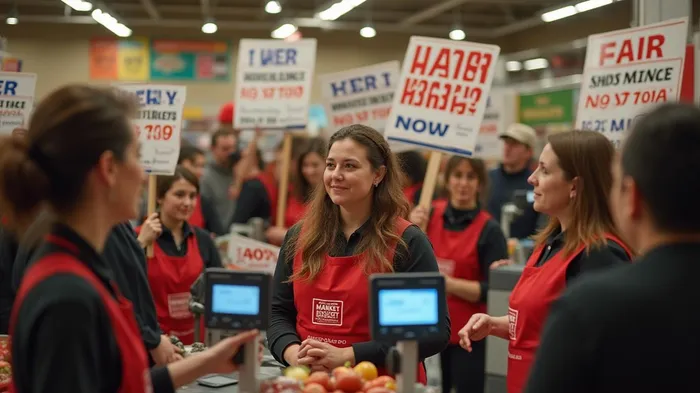
The crisis revealed a critical truth: employee and customer loyalty are non-negotiable assets in retail. When leadership disregards these groups, the backlash can be existential. Market Basket's sales plummeted by 70% during the protests, and its reputation as a “Main Street” stalwart was nearly destroyed.
The Cost of Leadership Instability: A Data-Driven Wake-Up Call
Investors in the retail sector would do well to heed the numbers. Companies with abrupt leadership changes or governance disputes often see significant stock volatility. Consider the example of a major competitor:
While Walmart's scale and stability have largely insulated it from such shocks, smaller retailers with governance flaws face steeper risks. Market Basket's crisis cost the company an estimated $10 million daily during the protests—a stark reminder that operational disruption can erase years of gains overnight.
The Path to Long-Term Value: Stakeholder-Centric Governance
The resolution of the Market Basket crisis offers a roadmap for investors. After a $1.5 billion buyout, Arthur T. regained control and restored employee trust. The result? A rebound in sales and a reaffirmation of the company's core values. This outcome underscores three critical lessons:
Employees Are the Bedrock of Retail Success
Arthur T.'s profit-sharing model and hands-on approach fostered an engaged workforce. Investors should prioritize companies with strong employee satisfaction metrics and low turnover—a red flag for governance issues.Customers Reward Authenticity
Market Basket's loyal customer base staged walkouts to protest leadership changes—a testament to the power of brand loyalty rooted in shared values. Brands that align with societal expectations (e.g., ESG commitments) often command premium valuations.Governance Structures Matter
The Demoulas family's convoluted ownership structure exacerbated the crisis. Investors should favor retailers with clear governance frameworks, independent boards, and transparent shareholder agreements.
Implications for Investors: Where to Look Now
The Market Basket saga signals a shift in retail investing: stability and stakeholder alignment are the new moats. Here's how to act:
Target Companies with Proven Leadership Tenure
Avoid retailers with frequent CEO turnover or boardroom infighting. Stable leadership correlates with consistent execution and risk management.Leverage ESG Metrics
ESG (Environmental, Social, Governance) scores now factor into many investment decisions. Retailers with high ESG ratings often outperform peers during crises.Look for Benefit Corporations
States like Massachusetts, where Market Basket operates, are adopting frameworks for “benefit corporations,” which legally mandate consideration of societal impacts. These companies are increasingly attractive to socially conscious investors.
Final Call to Action: Prioritize Governance in Your Portfolio
The Market Basket crisis was a wake-up call for retail investors: corporate governance is not a compliance checkbox—it's a profit driver. Companies that balance shareholder returns with employee well-being and customer trust will thrive in an era where stakeholder expectations are rising.
The next wave of retail winners will be those with leaders who understand that profit is a byproduct of loyalty—not its sole purpose. Investors who act now to prioritize governance stability and stakeholder-centric models will position themselves to capitalize on this shift.
The future belongs to retailers that learn from Market Basket's lesson: when leadership fails its people, everyone loses.

Delivering real-time insights and analysis on emerging financial trends and market movements.
Latest Articles
Stay ahead of the market.
Get curated U.S. market news, insights and key dates delivered to your inbox.






Comments
No comments yet