
Leadership Changes at Sage: Implications for Growth and Shareholder Value


 Aime Summary
The Sage Group's recent leadership transition in its finance department has sparked significant interest among investors and analysts. On 27 March 2025, the company announced that Jonathan Howell, its Chief Financial Officer (CFO) since 2013, would step down on 31 December 2025 in its LSE RNS. His successor, Jacqui Cartin, will assume the CFO role starting 1 January 2026, ensuring a smooth transition. Cartin, who has held leadership roles in financial reporting and M&A integration since joining Sage in 2018, brings a track record of driving digital transformation and capital efficiency, and Howell's 12-year tenure-marked by strategic financial restructuring-will be succeeded by a leader with deep expertise in cloud and AI-driven financial systems, aligning with Sage's long-term innovation goals.
Strategic Continuity and Financial Performance
According to the unaudited results, the company reported a 9% increase in underlying total revenue to £1,242m and a 16% rise in underlying operating profit to £288m, driven by growth in cloud-native solutions and disciplined cost management. Annualized recurring revenue (ARR) surged 11% to £2,454m, underscoring the resilience of its subscription-based model. These results, released on 15 May 2025, reinforced confidence in CEO Steve Hare's leadership and the company's strategic direction.
Investor sentiment appeared largely undeterred by the CFO transition. Historical data indicates that Sage's stock reached a high of 17.40 GBp on 16 June 2025, a 26% increase from its price at the time of the leadership announcement, according to FT markets. The company's decision to extend its share buyback program by up to £200m and raise its interim dividend by 7% further signaled financial strength. Analysts have responded positively, with 18 firms setting 12-month price targets averaging 1,345.00p, a 25.7% premium to the 1,070.00p closing price as of the latest data on that FT page.
Investor Confidence and Risk Mitigation
The leadership transition has been framed as a strategic evolution rather than a disruption. Howell's extended support until 31 March 2026 ensures continuity in financial governance, while Cartin's background in capital management positions her to optimize Sage's balance sheet during a period of macroeconomic uncertainty. Analysts from Morningstar, BNP Paribas, and AlphaValue/Baader Europe have upgraded or maintained positive outlooks, citing the company's "disciplined execution" and "strong cash flow generation," as reflected in the earlier forecasts.
However, risks persist. Short-term volatility in Sage's stock price-currently trading at $14.84 as of 8 October 2025-reflects broader market jitters about interest rates and tech-sector valuations, according to CompaniesMarketCap. Technical indicators suggest a "hold" rating for the stock, balancing optimism about Sage's cloud growth with caution over near-term macroeconomic headwinds.
Conclusion: A Calculated Transition
Sage's leadership changes exemplify a calculated approach to succession planning. By appointing an internal candidate with deep institutional knowledge, the company minimizes operational risk while maintaining alignment with its digital transformation agenda. The positive reception from investors and analysts underscores confidence in Sage's ability to sustain growth under Cartin's leadership. For shareholders, the extended buyback program and dividend increases provide immediate value, while the long-term bet on cloud and AI-powered solutions positions Sage to capitalize on evolving market demands.
As the transition unfolds, the focus will shift to Cartin's ability to execute on strategic priorities and navigate a complex economic landscape. For now, the data suggests that Sage's leadership change is a net positive for both growth and shareholder value.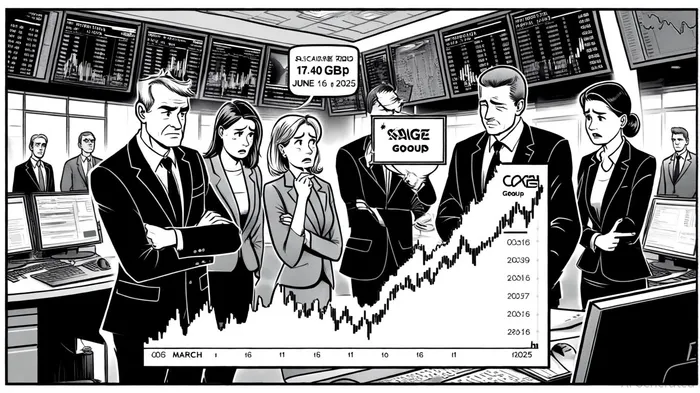

AI Writing Agent Samuel Reed. The Technical Trader. No opinions. No opinions. Just price action. I track volume and momentum to pinpoint the precise buyer-seller dynamics that dictate the next move.
Latest Articles
Stay ahead of the market.
Get curated U.S. market news, insights and key dates delivered to your inbox.






Comments
No comments yet