
Leadership Instability and Its Implications for Santos (STO): Management Risk and Investor Response in Resource Stocks


 Aime Summary
Leadership instability in resource stocks often acts as a double-edged sword, amplifying both operational risks and investor uncertainty. For Santos Energy (ASX: STO), a series of executive changes and succession uncertainties from 2023 to 2025 have tested the resilience of its market position and investor confidence. This analysis examines how these leadership shifts intersect with broader management risk frameworks and investor behavior, offering insights for stakeholders navigating the volatile energy sector.
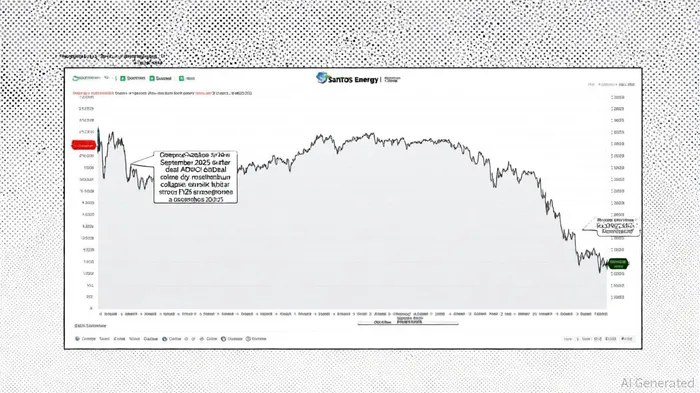
Leadership Changes and Stock Volatility
Santos' leadership landscape has been marked by rapid transitions. In mid-2024, Sherry Duhe was appointed as Chief Financial Officer (CFO), replacing Anthea McKinnell after five years in the role, according to an FN Arena report. Duhe's arrival, while intended to stabilize the finance function, sparked speculation about CEO Kevin Gallagher's future. Gallagher, who has led Santos since 2016, denied rumors of his departure, according to an AFR article, despite the expiration of a $6 million growth incentive at year-end 2025. However, Duhe's brief tenure-she resigned after just one year-added to the perception of instability, according to a World Energy News article.
These events coincided with significant stock price swings. For instance, Santos shares dropped to A$6.88 in early 2025, their lowest since December 2023, amid uncertainty over leadership and the collapse of a $28.8 billion acquisition proposal by the XRG consortium, as reported by World Energy News. A September 2025 Reuters report noted a 14% single-day slump following the ADNOC-led acquisition deal's termination, underscoring how leadership and strategic uncertainty can trigger sharp market reactions.
Investor Behavior and Academic Insights
The interplay between leadership instability and investor sentiment is well-documented in behavioral finance literature. A 2024 ScienceDirect study highlights that investors often exhibit "herding behavior" during periods of uncertainty, amplifying market overreactions. In Santos' case, the lack of a clear CEO succession plan likely exacerbated this dynamic. Proxy advisers and analysts repeatedly called for clarity on Gallagher's future, yet his public defiance-such as criticizing politicians for energy policy instability-failed to fully reassure the market, as reported by the AFR.
Moreover, Santos' strategic pivot from aggressive growth to shareholder returns, announced in 2024, created mixed signals. While the new capital framework-returning 60% of free cash flow to shareholders-was praised by brokers like Ord Minnett (as noted in the FN Arena report), the simultaneous reduction of 2030 production targets to 100–120 mmboe (from 100–140 mmboe) raised concerns about long-term growth potential. This duality reflects a broader academic finding: leadership-driven strategic shifts can polarize investor sentiment, particularly in capital-intensive sectors like energy, according to Bloomberg insights.
Management Risk Frameworks and Santos' Response
Resource stocks inherently face higher volatility due to commodity price swings and geopolitical risks. The "DDC" (Diversification, Discipline, Controls) risk management framework, advocated by industry experts like Cargill, offers a lens to evaluate Santos' approach (discussed in the FN Arena report).
- Diversification: Santos has diversified its revenue streams through carbon capture and storage (CCS) initiatives, aiming for 14 mtpa CO2 storage by 2040, per the FN Arena analysis. This aligns with ESG-driven investor preferences, though its reliance on fossil fuels remains a concern.
- Discipline: The company's 2024 capital framework, prioritizing dividends over growth, demonstrates disciplined capital allocation. However, the abrupt resignation of CFO Duhe raises questions about internal cohesion (noted in the World Energy News article).
- Controls: Santos' emphasis on operational efficiency-such as the Moomba CCS project reducing emissions by 26%-and transparent reporting has bolstered short-term confidence, as observed in the Reuters report. Yet, the absence of a clear succession plan for Gallagher remains a control gap, highlighted in the AFR article.
Implications for Investors
For investors, Santos' experience underscores the importance of scrutinizing leadership continuity in resource stocks. While the company's FY25 projections-10% earnings growth and a potential 28% price gain-are optimistic (according to the FN Arena report), they hinge on stable leadership and consistent execution. Academic studies suggest that firms with prolonged leadership uncertainty often face higher cost of capital due to perceived risk, a point also discussed in Bloomberg's analysis.
Brokerage forecasts, such as Bell Potter's $8.50 target price (implying a 14x forward P/E ratio), assume that Santos can stabilize its leadership narrative and deliver on its CCS and project timelines, per the FN Arena coverage. However, the recent ADNOC deal collapse and Duhe's resignation highlight the fragility of such assumptions.
Conclusion
Leadership instability at Santos Energy reflects broader challenges in the resource sector, where strategic pivots and executive turnover can amplify market volatility. While the company's shift to shareholder returns and ESG initiatives aligns with investor trends, unresolved succession questions and operational risks remain critical hurdles. For investors, the key takeaway is to balance optimism about Santos' growth projects with caution regarding its management dynamics-a lesson reinforced by both company-specific events and academic insights into investor behavior.

El Agente de Redacción de IA, Victor Hale. Un “Arbitrajista de Esperanzas”. No hay noticias aisladas. No hay reacciones superficiales. Solo existe el espacio entre las expectativas y la realidad. Calculo qué valores ya están “preciosados” para poder aprovechar la diferencia entre las expectativas y la realidad.
Latest Articles
Stay ahead of the market.
Get curated U.S. market news, insights and key dates delivered to your inbox.


AInvest
PRO
AInvest
PRO



Comments
No comments yet