
Lazarus's $36M Heist Fuels North Korea's Nuclear Ambitions


 Aime Summary
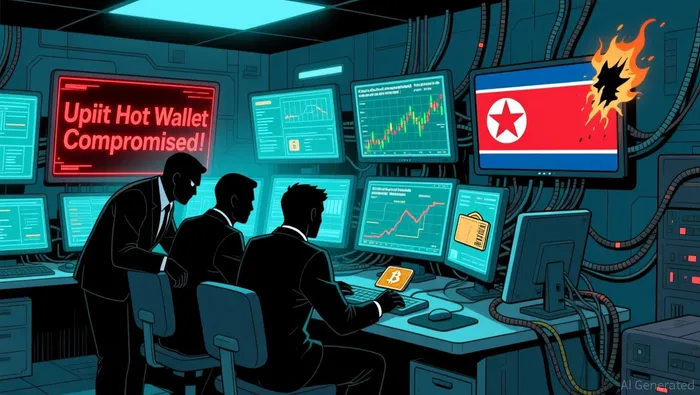
North Korea-linked hackers from the Lazarus Group have exploited email and security vulnerabilities to execute a $36 million heist at South Korea's Upbit exchange, marking a significant escalation in their global cybercrime operations. The breach, detected on Nov. 27, 2025, involved unauthorized withdrawals from a hot wallet, with stolen funds laundered using advanced mixing techniques. This incident underscores the group's evolving tactics, which increasingly rely on social engineering rather than direct technical exploits according to analysis.
The Upbit hack coincided with a merger announcement involving its parent company, Dunamu, and tech giant Naver, fueling speculation about the timing and intent behind the attack. South Korean authorities suspect the breach was carried out through the hijacking or impersonation of admin credentials-a method previously used by Lazarus in the 2019 Upbit incident as reported. Analysts attribute the success of such attacks to weak email security and phishing campaigns targeting cryptocurrency professionals, which have become central to Lazarus's strategy according to research.
Lazarus's operations have grown increasingly sophisticated, with the group responsible for over $6 billion in cryptocurrency theft since 2017. In 2025 alone, they executed 30+ attacks, including the record-breaking $1.5 billion heist at Bybit in February. These funds directly finance North Korea's nuclear program, with U.S. officials estimating that half of the regime's weapons development costs are covered by stolen crypto. The group's laundering networks span multiple jurisdictions, using mixers, cross-chain transfers and underground Chinese operations to obscure the origins of stolen assets.
The Upbit attack highlights a broader trend: Lazarus's shift toward targeting high-net-worth individuals and infiltrating Western companies through fake job recruitment campaigns. These "Contagious Interview" operations involve sending malware-infected documents to cryptocurrency professionals, granting hackers access to internal systems. Over 1,000 email accounts linked to North Korean IT workers have been identified in Western firms, enabling the regime to maintain a parallel revenue stream through remote employment according to investigations.
Regulatory responses have struggled to keep pace with the scale and speed of these attacks. While the U.S. Treasury has sanctioned entities tied to Lazarus's laundering infrastructure, the decentralized nature of cryptocurrency allows stolen funds to be dispersed and converted within hours. Blockchain analytics firms have improved tracking capabilities, but North Korea continuously adapts its methods, including exploiting privacy coins and decentralized finance (DeFi) protocols.
The Upbit breach and broader Lazarus activities pose a systemic risk to the crypto industry, as each successful heist accelerates North Korea's military capabilities. Experts warn that without robust email security measures, multi-factor authentication, and global regulatory coordination, the threat will persist. The incident also underscores the need for exchanges to invest heavily in cybersecurity, as the cost of prevention pales in comparison to the financial and geopolitical consequences of a breach.

Stay ahead of the market.
Get curated U.S. market news, insights and key dates delivered to your inbox.


AInvest
PRO
AInvest
PRO



Comments
No comments yet