
Laurent Vinatier Released in Prisoner Exchange with Russia for Basketball Player
 Aime Summary
- Laurent Vinatier, a 49-year-old French researcher, was freed from Russian prison in a prisoner exchange after being convicted of failing to register as a foreign agent.
- He was released in exchange for Russian basketball player Daniil Kasatkin, who was detained in France and wanted by the U.S. for alleged involvement in ransomware attacks.
- The FSB reported that Vinatier had been pardoned by President Vladimir Putin, who had previously pledged to review the case following a request by a French journalist.
Vinatier was arrested in June 2024 and sentenced to three years in prison after being convicted of violating Russia’s foreign agent laws. During his trial, he admitted to being unaware of the requirement to register as a foreign agent and expressed regret.
Kasatkin, 26, was arrested in France in June 2024 and denied the accusations against him. He had been detained at the request of U.S. authorities, who believed he was involved in ransomware attacks against over 900 companies.
The prisoner exchange reflects a broader pattern of diplomatic swaps between Russia and Western nations. 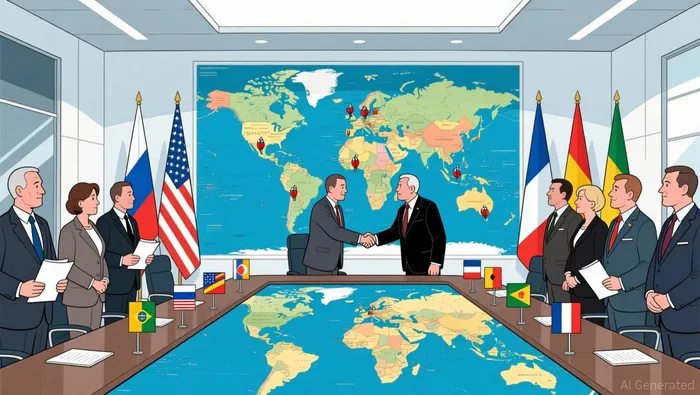 August 2024 saw one of the largest prisoner exchanges since the Cold War, with 24 individuals released.
French President Emmanuel Macron announced Vinatier’s release, calling him 'free and back in France'. Russia’s FSB noted that the case against Vinatier was dismissed due to his 'active repentance'.
Before his arrest, Vinatier worked for the Centre for Humanitarian Dialogue, a Swiss-based conflict mediation organization. At his trial, he expressed admiration for Russia and even recited a verse by Russian poet Alexander Pushkin.
The exchange also highlights the intersection of cybercrime, politics, and international relations. While no verdict was issued in Kasatkin’s case, the diplomatic resolution underscores the role of prisoner swaps in resolving complex legal disputes.
Franco-Russian relations have been strained since Russia’s invasion of Ukraine in February 2022. France has supported Ukraine’s military efforts but has also maintained an openness to diplomatic engagement with Russia.
What Were the Legal and Political Implications of the Swap?
Vinatier’s arrest and conviction were widely criticized as 'extremely harsh' by French authorities. His release followed a broader pattern of prisoner exchanges between Russia and the West, which include the August 2024 swap involving 24 individuals.
Russia has used foreign nationals detained in its territory as leverage to secure the release of its citizens arrested abroad. This case is another example of how geopolitical tensions can influence legal proceedings and international diplomacy.
How Did the Parties Involved Respond to the Exchange?
French President Macron described the release of Vinatier as a 'huge relief' and praised his return to France. Vinatier’s lawyer, Frederic Belot, also expressed relief over the outcome.
Russia’s FSB stated that Vinatier had been pardoned and that his case was dismissed due to 'active repentance'. Meanwhile, Kasatkin denied the allegations against him, claiming he was using a second-hand device controlled by cybercriminals.
The U.S. had sought Kasatkin’s extradition, but he was instead returned to Russia as part of the exchange. No court judgment was issued, and the legal claims remain unresolved.
What Broader Geopolitical Context Surrounded the Swap?
The prisoner exchange took place amid heightened tensions between Russia and the West, particularly following Russia’s invasion of Ukraine in 2022. France has supported Ukraine’s military efforts while also seeking diplomatic solutions to the conflict.
Russia’s use of the foreign agent law to target individuals working for foreign non-profits has been criticized as a tool to suppress dissent and control information. Vinatier’s case highlights how international researchers and scholars can become entangled in geopolitical disputes.
The Office of Foreign Assets Control (OFAC) has also been updating its sanctions related to Russia, including changes to its sanctions list and general licenses. These updates reflect the ongoing evolution of U.S. policy in response to Russian actions and international tensions.

Blending traditional trading wisdom with cutting-edge cryptocurrency insights.
Latest Articles
Stay ahead of the market.
Get curated U.S. market news, insights and key dates delivered to your inbox.


AInvest
PRO
AInvest
PRO



Comments
No comments yet