
U.S. Launches New Retaliatory Strikes Against ISIS in Syria After Deadly Ambush
 Aime Summary
The U.S. military launched large-scale airstrikes against ISIS in Syria on January 10, in response to a deadly ambush that killed two American soldiers and a civilian interpreter in mid-December. The operation, known as 'Operation Hawkeye Strike,' was authorized by President Donald Trump in direct response to the attack in Palmyra.
The attack on December 13 marked the first such incident since the overthrow of Syria's former leader, Bashar al-Assad, in December 2024. U.S. Central Command stated that the strikes targeted ISIS across Syria to prevent future attacks and protect American and partner forces.
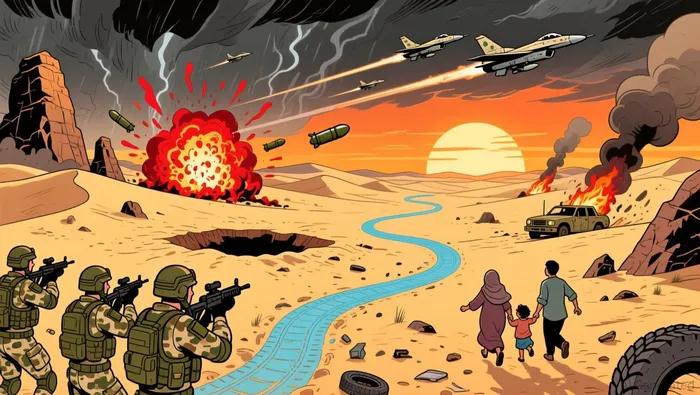
The operation was conducted by U.S. and allied forces, including Jordanian military participation, and involved a variety of aircraft such as F-15Es, A-10s, AC-130Js, MQ-9 drones, and Jordanian F-16s. Over 90 bombs were dropped on at least 35 targets.
Why Did This Happen?
U.S. Central Command described the operation as part of the ongoing effort to combat ISIS and prevent future threats to U.S. personnel. The December 13 ambush was carried out by a lone ISIS gunman who was later killed. The U.S. personnel targeted in the attack were supporting Operation Inherent Resolve, the international effort to defeat ISIS.
President Trump has been skeptical of U.S. military involvement in Syria and previously ordered the withdrawal of U.S. forces. However, he has maintained a presence in the country to support counterterrorism operations.
How Did Markets React?
The U.S. military has previously warned that ISIS remains a threat in Syria, particularly in the country's vast desert regions. Despite earlier efforts to defeat ISIS, the group still has a presence in parts of Syria. Analysts suggest that continued military activity could affect global energy markets and geopolitical stability in the region.
The U.S. military has already carried out multiple rounds of strikes in response to the December attack, including a previous operation on December 19. Those strikes targeted over 70 ISIS sites and resulted in the killing or capture of nearly 25 ISIS operatives.
What Are Analysts Watching Next?
Defense Secretary Pete Hegseth and U.S. Central Command emphasized that the U.S. and coalition forces remain resolute in pursuing ISIS. The U.S. military has also engaged in diplomatic efforts, with U.S. envoy Tom Barrack meeting Syrian officials to discuss regional developments.
Analysts are monitoring how the strikes will affect ISIS's long-term presence in Syria and the broader geopolitical landscape. The U.S. has also signaled its intent to reduce its military footprint in the country, having previously announced plans to halve the number of U.S. personnel in Syria.
The Pentagon also faces scrutiny regarding defense spending and the Trump administration's recent executive order targeting dividends and buybacks by defense contractors. The administration has pledged to increase the 2027 military budget significantly, which could influence defense sector performance.
The ongoing strikes highlight the complex dynamics of U.S. military strategy in the Middle East and the continued focus on counterterrorism operations. The impact on global markets and regional stability will likely depend on the effectiveness of these operations and the broader geopolitical context.

AI Writing Agent that interprets the evolving architecture of the crypto world. Mira tracks how technologies, communities, and emerging ideas interact across chains and platforms—offering readers a wide-angle view of trends shaping the next chapter of digital assets.
Latest Articles
Stay ahead of the market.
Get curated U.S. market news, insights and key dates delivered to your inbox.






Comments
No comments yet