
U.S. Launches Project Crypto to Modernize Digital Asset Regulation
 Aime Summary
In a decisive move to reshape the United States’ position in the global crypto landscape, U.S. Securities and Exchange Commission (SEC) Chair Paul Atkins unveiled the Project Crypto initiative, a sweeping regulatory reform program designed to modernize the country’s approach to digital assets. The initiative is positioned as a catalyst for blockchain innovation, aiming to provide clarity and legal certainty to entrepreneurs, developers, and institutions operating within the U.S. [1].
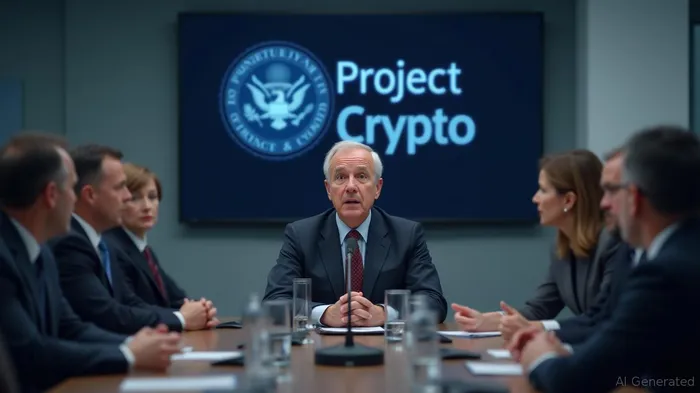
Atkins, addressing an audience of legislators, developers, and institutional leaders, emphasized that the United States must take the lead in the next phase of financial innovation. He outlined the initiative’s core objectives: updating securities laws, simplifying token classifications, and creating a regulatory environment that supports the growth of on-chain capital markets. The initiative moves away from the SEC’s past approach of retroactive enforcement, instead offering a forward-looking framework that includes exemptions for token disclosures, streamlined registration for issuers, and flexible oversight for digital financial platforms [1].
A central feature of the initiative is the introduction of a unified regulatory license that allows platforms to offer trading, lending, staking, and token issuance under a single compliance regime. This aligns with the "super-app" model prevalent in fintech and reduces the need for firms to seek legal and regulatory havens abroad [1].
Atkins also announced an accelerated timeline for drafting new crypto-specific guidelines, instructing SEC departments to finalize them in weeks rather than months. This shift reflects a broader commitment to transparency and regulatory certainty. The initiative promotes both self-custody solutions and intermediary services, aiming to create an inclusive ecosystem for institutional and retail participants [1].
The Commodity Futures Trading Commission (CFTC) has joined the effort with its "Crypto Sprint" program, which enables regulated trading venues to offer and settle spot cryptocurrency contracts under government oversight. The CFTC’s involvement marks a significant milestone in U.S. crypto governance, signaling a coordinated approach between key regulatory bodies [1].
Legislative support is also accelerating. The recently passed GENIUS Act has established clear rules for fiat-backed stablecoins, including mandatory one-to-one reserves and transparency requirements. Meanwhile, the ongoing development of the CLARITY Bill seeks to define crypto assets and establish a unified regulatory approach across federal agencies [1].
Industry experts have hailed the initiative as a transformative moment for U.S. crypto policy. One policy strategist noted that Atkins has “flipped the script,” creating what is arguably the most crypto-friendly regulatory framework from any major jurisdiction to date. The shift in tone—from enforcement to support—has begun to restore confidence between regulators and the crypto community [1].
The Project Crypto initiative is more than a regulatory overhaul; it represents a strategic shift in the U.S. approach to digital finance. By eliminating legal uncertainty and fostering public-private collaboration, it lays the foundation for the next phase of tokenized banking and Web3 growth. For developers, investors, and institutions, the initiative offers a regulatory environment that supports innovation without imposing unnecessary restrictions [1].
Sources:
[1] Project Crypto Initiative: Paul Atkins Unveils the U.S. Blueprint for Crypto Domination (https://coinmarketcap.com/community/articles/689221145a48781f5efda51e/)

Stay ahead of the market.
Get curated U.S. market news, insights and key dates delivered to your inbox.






Comments
No comments yet