
U.S. Launches Airstrikes on Iranian Nuclear Sites, Iran Retaliates with Missile Attacks on Israel
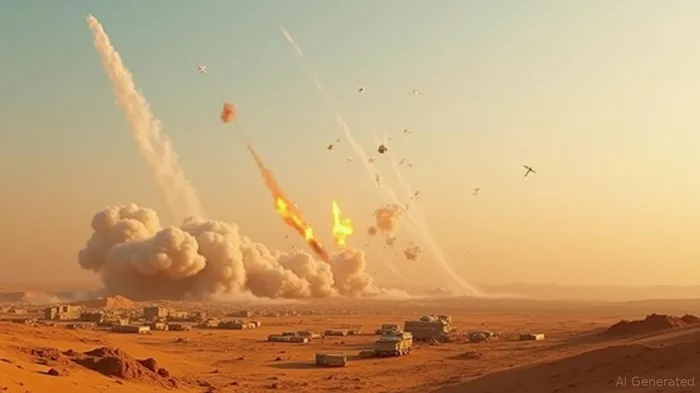
The United States, under the leadership of President Donald Trump, launched a series of airstrikes on three key Iranian nuclear facilities—Fordo, Natanz, and Isfahan—on the evening of June 21, 2025. The operation, named "Operation Midnight Hammer," was aimed at destroying Iran's nuclear enrichment capabilities and halting the perceived nuclear threat posed by Iran. The strikes were carried out using B-2 SpiritFLYY-- bombers armed with GBU-57 Massive Ordnance Penetrators (MOPs) and submarine-launched Tomahawk missiles. The B-2 bombers took off from Whiteman Air Force Base in Missouri and dropped a total of 14 MOPs on the two primary nuclear target areas, while the Tomahawk missiles targeted the Isfahan site. The operation was described as an "incredible and overwhelming success" by Defense Secretary Pete Hegseth, with initial assessments indicating that all three sites sustained severe damage. The strikes did not target Iranian troopsTROO-- or civilians, and the U.S. had warned Iran against retaliating, stating that any response would be met with force far greater than what was witnessed during the operation.
Prior to the strikes, Iran had pledged to retaliate if the U.S. joined the Israeli assault, which began with airstrikes on Iranian nuclear sites and military targets on June 13. In response to the U.S. strikes, Iran fired around 30 missiles at Israel early Sunday morning, with four missiles breaching Israel's missile defense systems and causing injuries and extensive damage. The U.S. had reached out to Iran diplomatically to convey that the strikes were a one-time operation and that regime change was not the goal. This diplomatic effort was part of a broader strategy to avoid escalating tensions further. The U.S. also alerted Israel ahead of the strikes, and Israeli Prime Minister Benjamin Netanyahu praised President Trump for conducting the operation, emphasizing the importance of strength in achieving peace.
Iranian officials, including Foreign Minister Abbas Araghchi, condemned the U.S. strikes as a brutal act of aggression and vowed to defend their independence and sovereignty. The Iranian Revolutionary Guard Corps (IRGC) also issued a statement, vowing "regrettable responses" to the U.S. strikes and warning that the presence of U.S. military bases in the region would not deter Iran from retaliating. The international community, including Russia, strongly condemned the U.S. attacks, calling them an irresponsible violation of international law that could significantly increase the risk of a broader conflict in the Middle East. Homeland Security officials in the U.S. were monitoring for potential physical and cyber reprisals from Iran, given the heightened threat level and the crossing of the "red line" in Iran's response doctrine.
The response from U.S. lawmakers was mixed. Some Republicans expressed support for the strikes, while others criticized the president for not seeking congressional authorization. Democratic leaders, including House Minority Leader Hakeem Jeffries and Senate Minority Leader Chuck Schumer, criticized the president for failing to consult Congress and for risking American entanglement in a potentially disastrous war in the Middle East. The events leading up to the surprise strikes included diplomatic efforts by Iran to engage in dialogue with European officials, with Iranian Foreign Minister Abbas Araghchi expressing readiness to consider diplomacy. However, the U.S. had already decided to strike Iran, with President Trump stating that he would decide on the action within the next two weeks. The U.S. had also begun evacuating Americans and green card holders from Israel ahead of the strikes, with two flights departing from Tel Aviv to Athens.
The situation remains tense, with the world watching to see how Iran will respond to the U.S. military strikes. The U.S. has made it clear that it is prepared to defend itself and its allies, while Iran has vowed to retaliate and defend its sovereignty. The international community continues to call for restraint and diplomacy to prevent further escalation of the conflict. The U.S. airstrikes on Iranian nuclear sites have significantly heightened tensions in the region, with both sides preparing for potential further conflict. The diplomatic efforts and warnings from both sides indicate a complex and volatile situation that could have far-reaching consequences for global security and stability.

Stay ahead of the market.
Get curated U.S. market news, insights and key dates delivered to your inbox.


AInvest
PRO
AInvest
PRO



Comments
No comments yet