
U.S. Launches AI 'Genesis' Mission to Accelerate Scientific Discovery and Secure Tech Leadership
 Aime Summary
The administration emphasized that the mission represents the "largest marshaling of federal scientific resources since the Apollo program," according to Michael Krastios, the president’s science adviser . 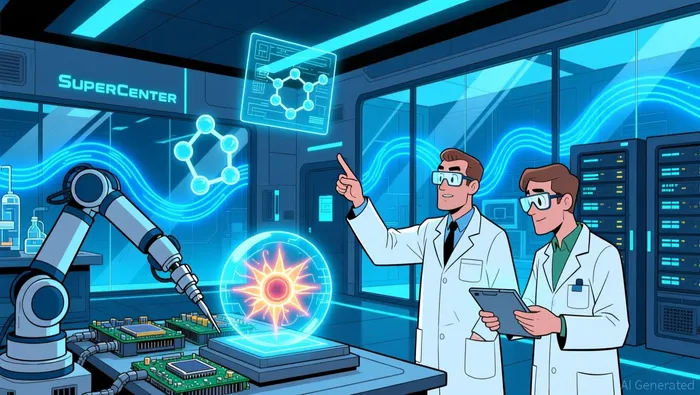 By combining advanced supercomputing capabilities with data from government, academia, and private sectors, the initiative seeks to automate experiment design, accelerate simulations, and develop predictive models for complex scientific challenges such as protein folding and fusion plasma dynamics . White House officials highlighted that this approach could reduce discovery timelines from years to hours, enabling researchers to test "bolder hypotheses" .
To prevent regulatory fragmentation, the administration warned states against enacting independent AI regulations, threatening to withhold federal funding for non-compliant jurisdictions . This aligns with broader efforts to maintain U.S. technological leadership amid global competition, particularly with China . The White House also noted strong interest from private-sector partners, including companies like NvidiaNVDA-- and Dell, to contribute AI supercomputing capacity to the mission .
The initiative coincided with significant private-sector investments in AI infrastructure. Amazon announced a $500 billion commitment to expand AWS's artificial intelligence and supercomputing capabilities for government clients, including constructing Top Secret and GovCloud data centers with 1.3 gigawatts of AI capacity by 2026 . Separately, Meta Platforms reportedly plans to spend billions to purchase Google’s Tensor Processing Units (TPUs) for its data centers . These moves underscore growing corporate alignment with federal priorities in AI development.
To prevent regulatory fragmentation, the administration warned states against enacting independent AI regulations, threatening to withhold federal funding for non-compliant jurisdictions . This aligns with broader efforts to maintain U.S. technological leadership amid global competition, particularly with China . The White House also noted strong interest from private-sector partners, including companies like Nvidia and Dell, to contribute AI supercomputing capacity to the mission .
The initiative coincided with significant private-sector investments in AI infrastructure. Amazon announced a $500 billion commitment to expand AWS's artificial intelligence and supercomputing capabilities for government clients, including constructing Top Secret and GovCloud data centers with 1.3 gigawatts of AI capacity by 2026 . Separately, Meta Platforms reportedly plans to spend billions to purchase Google’s Tensor Processing Units (TPUs) for its data centers . These moves underscore growing corporate alignment with federal priorities in AI development.
The Energy Department already operates "some of the best supercomputing facilities in the world," administration officials acknowledged that additional congressional funding may be required to scale the mission . The lack of immediate clarity on financial mechanisms raises questions about long-term sustainability, though officials expressed confidence in securing legislative support .
The Genesis Mission’s potential impact extends beyond scientific research. By standardizing data access and infrastructure, the platform could streamline collaboration between federal agencies, academic institutions, and private firms. For instance, in healthcare, officials anticipate breakthroughs in disease therapies that could address "unfortunate death sentences" for conditions previously deemed untreatable .
However, the centralized approach also raises governance challenges. The directive’s emphasis on federal coordination may limit state-level innovation, as seen in the threat to cut funding for states adopting independent AI regulations . This tension reflects broader debates about balancing national strategy with regional autonomy in technology policy.
The private-sector responses further illustrate the mission’s economic implications. Amazon’s $500 billion investment in AWS infrastructure and Meta’s TPU procurement highlight the scale of capital required to support federal AI goals. These investments align with the administration’s vision of a "public-private partnership" model, where corporate resources complement government-led initiatives .
Globally, the mission positions the U.S. to counter China’s rising AI capabilities. By accelerating scientific discovery through AI, the Trump administration aims to reinforce America’s position as the leader in next-generation technologies . The integration of supercomputing and data assets mirrors China’s state-backed AI strategies, but the U.S. approach emphasizes collaboration with private innovation rather than direct government control.
As the Genesis Mission progresses, its success will depend on resolving funding uncertainties and ensuring effective coordination across stakeholders. The administration’s focus on reducing research timelines through AI could redefine the pace of scientific advancement, but the long-term impact remains contingent on sustained investment and regulatory alignment.

Tianhao Xu is currently a financial content editor, focusing on fintech and market analysis. Previously, he worked as a full-time forex trader for several years, specializing in global currency trading and risk management. He holds a master’s degree in Financial Analysis.
Latest Articles
Stay ahead of the market.
Get curated U.S. market news, insights and key dates delivered to your inbox.




Comments
No comments yet