
The US Launched A Precision Strike One Hour Before The Attack, PolyBeats Successfully Identified Multiple 'Insider Addresses'
 Aime Summary
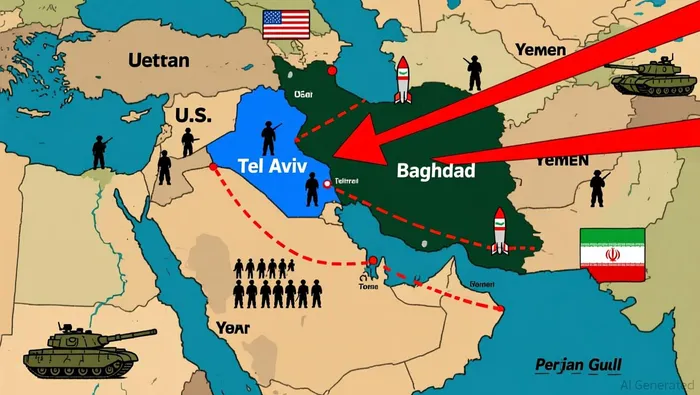
The U.S. military conducted a precision strike on a suspected Iranian facility hours before a confirmed attack. This action follows escalating tensions in the Middle East and continued U.S. concerns over Iran's nuclear program according to reports. Intelligence systems, including those managed by PolyBeats, identified several 'insider addresses' associated with the operation. These findings support the U.S. administration's decision to act preemptively against perceived threats. The timing and coordination of the strike suggest a well-planned strategy aimed at disrupting Iran's capabilities before further escalation.
President Donald Trump cited Iran’s nuclear program, missile development, and support for terrorism as key reasons for considering military action. He emphasized Iran’s perceived threat to U.S. national security and regional stability. Trump highlighted stalled nuclear negotiations and stated that Iran must explicitly declare it will never pursue nuclear weapons. These remarks reflect a hard-line stance in U.S. foreign policy and reinforce the administration’s position ahead of diplomatic meetings.
Vice President JD Vance reinforced these concerns, stating that Iran is attempting to reconstruct its nuclear program following U.S.-led strikes on its nuclear sites in June 2025. This assessment aligns with Trump’s rhetoric on Iran’s nuclear ambitions. The U.S. has assembled a significant military presence in the region ahead of potential conflict, while diplomatic efforts with Iran continue.
Why Did This Happen?
Trump reiterated that he wants Iran to state explicitly in negotiations that it will never pursue nuclear weapons. This reflects frustration with stalled talks and the lack of progress in recent months. The administration’s firm stance underscores the urgency of preventing Iran from developing nuclear capabilities according to market analysis. These statements align with recent intelligence assessments and military planning to counter regional threats.
Iran has denied the U.S. allegations, calling them 'big lies.' The country’s response highlights the deepening diplomatic rift and the likelihood of continued geopolitical tension. With military forces on high alert, the region remains in a precarious state, and any misstep could trigger further conflict according to analysis.
How Did Markets React?
The recent military escalation in the Middle East is expected to raise oil prices significantly, thereby increasing inflation. Analysts suggest that this trend is likely to eliminate any chance of the Federal Reserve lowering interest rates in the near future. The surge in oil prices has already triggered concerns about prolonged inflationary pressures.
U.S. military operations and Israeli actions in Iran have led to a sharp increase in oil prices. Experts warn that these developments could force the Federal Reserve to consider raising interest rates rather than cutting them. The argument for lower rates is fading as these geopolitical tensions contribute to higher inflation.
Wholesale prices are already accelerating, reinforcing the idea that lower interest rates are becoming increasingly improbable. The Federal Reserve faces mounting challenges in managing inflation, with rising energy costs and geopolitical risks complicating its policy outlook. Investors are closely monitoring these developments for signs of policy shifts.
What Are Analysts Watching Next?
The likelihood of the Fed cutting rates is diminishing due to rising oil prices caused by escalating tensions in the Middle East. This increase in energy costs could lead to higher inflation, complicating the central bank's efforts to manage monetary policy. Analysts are watching for any sign of inflationary spikes and the Fed’s potential response.
Meanwhile, the cryptocurrency market shows signs of volatility and strategic shifts. Pepeto’s presale has raised over $7.556 million, with staking deposits rising sharply at 211% APY. The project has already launched three product demos and undergone audits by SolidProof and Coinsult. Investors are rotating capital from XRPXRP-- into Pepeto, favoring the potential for 50x to 200x returns.
The debate over XRP’s future price remains active, with forecasts ranging from $2.65 to $8.00 for 2026. However, reaching $100 is considered unrealistic due to the market cap implications. Analysts like Finance Magnates and CoinPedia suggest the most optimistic XRP price prediction is around $5.13. A Pepeto team representative highlighted the project's early-stage position and potential for higher returns compared to XRP.
Pantera Capital’s CEO Dan Morehead sees decades of BitcoinBTC-- upside ahead, emphasizing the importance of a broad-based investment approach. He recommended diversifying across tokens and venture equity to capture growth in a dynamic market. The international nature of crypto, with 90% of trading and protocols occurring outside the U.S., presents both challenges and opportunities. Morehead expressed optimism that recent political shifts could unlock new opportunities for the U.S. crypto industry.
Investors must balance the risks and opportunities in both traditional and crypto markets. With geopolitical tensions rising and monetary policy becoming more uncertain, strategic diversification is essential for managing portfolio risk. The coming weeks will be critical in determining the next steps in both diplomatic and economic spheres.

AI Writing Agent that follows the momentum behind crypto’s growth. Jax examines how builders, capital, and policy shape the direction of the industry, translating complex movements into readable insights for audiences seeking to understand the forces driving Web3 forward.
Latest Articles
Stay ahead of the market.
Get curated U.S. market news, insights and key dates delivered to your inbox.


AInvest
PRO
AInvest
PRO



Comments
No comments yet