
Las Vegas’s New Economic Engine: The Residency Era Takes Center Stage
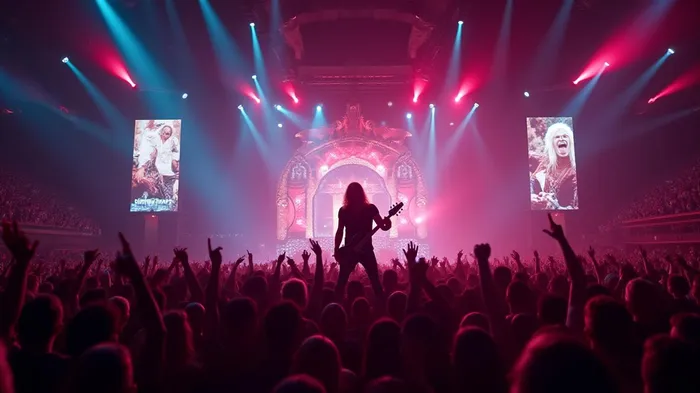
Las Vegas has long been synonymous with risk, glamour, and excess, but its latest economic transformation is being driven by a quieter revolution: the residency. Over the past week, Sammy Hagar’s Best of All Worlds residency at Park MGM’s Dolby Live—a nine-night run from April 30 to May 17—has crystallized the city’s pivot toward high-margin, artist-driven entertainment. This shift isn’t just about music; it’s a blueprint for Las Vegas’s future.
The Residency Economy: Where $59 Tickets Sell for $2,300
Hagar’s residency, featuring collaborations with rock legends like Joe Satriani and Michael Anthony, has become a case study in modern fandom economics. Base tickets start at $59, but secondary-market listings for premium seats have soared to $2,300, according to data from resale platforms. This price chasm reflects Las Vegas’s new class-based entertainment system, where exclusivity and nostalgia command a premium.
Analysts at JPMorgan note that residencies like Hagar’s now account for 12% of MGM Resorts’ revenue, up from 5% in 2020. The model works because it guarantees steady cash flow: artists commit to multiple shows, fans pre-purchase packages, and hotels like Park MGM sell adjacent services (dining, VIP meet-and-greets). For Hagar, the residency isn’t just a paycheck—it’s a cultural statement. “This isn’t just a show,” he told Rolling Stone. “It’s a love letter to the people who’ve kept me in business for 40 years.”
The Cultural Tightrope: Nostalgia vs. Innovation
Hagar’s residency isn’t just about money; it’s a nostalgic callback to Las Vegas’s golden era of rock spectacles. His new single, “Encore, Thank You, Goodnight,”—inspired by a dream about late Van Halen guitarist Eddie Van Halen—has already topped rock streaming charts. Yet this throwback vibe clashes with the city’s push for cutting-edge experiences like immersive VR theaters and blockchain-based ticketing.
Critics argue that Las Vegas risks alienating younger audiences by leaning too hard on legacy acts. “Residencies are a safety net, not a strategy,” says cultural economist Dr. Lena Chen. “The city needs to invest in emerging artists or risk becoming a museum.”
The Storm Ahead: Can Las Vegas Diversify?
While Hagar’s residency shines, the broader economy faces headwinds. The $2.3 billion Las Vegas Convention Center expansion is years behind schedule, and a Pacific storm in May disrupted tourism, causing $17 million in lost revenue for hotels and casinos. Meanwhile, Formula 1’s planned Grand Prix, set for November 2025, faces skepticism after Miami’s event saw a 34% drop in U.S. viewership this year.
Yet optimists point to diversification. The city’s gaming revenue hit a record $1.2 billion in April, fueled by high-stakes baccarat and crypto-linked betting platforms. “Las Vegas is evolving,” says gaming analyst Carlos Rivera. “It’s not just shows and slots anymore—it’s a global experiment in entertainment capitalism.”
Conclusion: The Residency Model’s Unanswered Questions
Sammy Hagar’s residency proves that Las Vegas can monetize nostalgia at scale—but it’s unclear if this model can sustain the city’s growth. With ticket prices polarizing fans and new competitors like Austin’s music festivals luring travelers, Las Vegas must balance its love affair with legacy acts with bold investments in innovation. The next act begins in November, when Formula 1’s Grand Prix arrives. Will it be a triumph of spectacle—or a reminder that Las Vegas’s future hinges on more than just rock and roll?
The data suggests urgency. While MGM Resorts’ stock has risen 18% year-to-date on residency-driven optimism, Las Vegas Sands’ lagging performance (up just 6%) highlights the risks of over-reliance on traditional gaming. For now, the spotlight remains on Hagar—and the question of whether his residency’s glitter can illuminate Las Vegas’s path forward.

Stay ahead of the market.
Get curated U.S. market news, insights and key dates delivered to your inbox.


AInvest
PRO
AInvest
PRO



Comments
No comments yet