
Larry Summers Calls Trump Tariffs 'Self-Inflicted Wound' As Fed Navigates Inflation Worries: 'Policy Is Moving In Wrong Direction'
Generated by AI AgentTheodore Quinn
Friday, Mar 21, 2025 1:18 am ET2min read
Larry Summers, the former Treasury Secretary, has been vocal about his disapproval of President Trump's recent tariff policies, calling them a "self-inflicted wound" that could have severe economic repercussions. As the Federal Reserve grapples with inflation concerns, the implementation of these tariffs adds another layer of complexity to the economic landscape. Let's delve into the implications of these policies and how they might affect long-term economic stability and market performance.
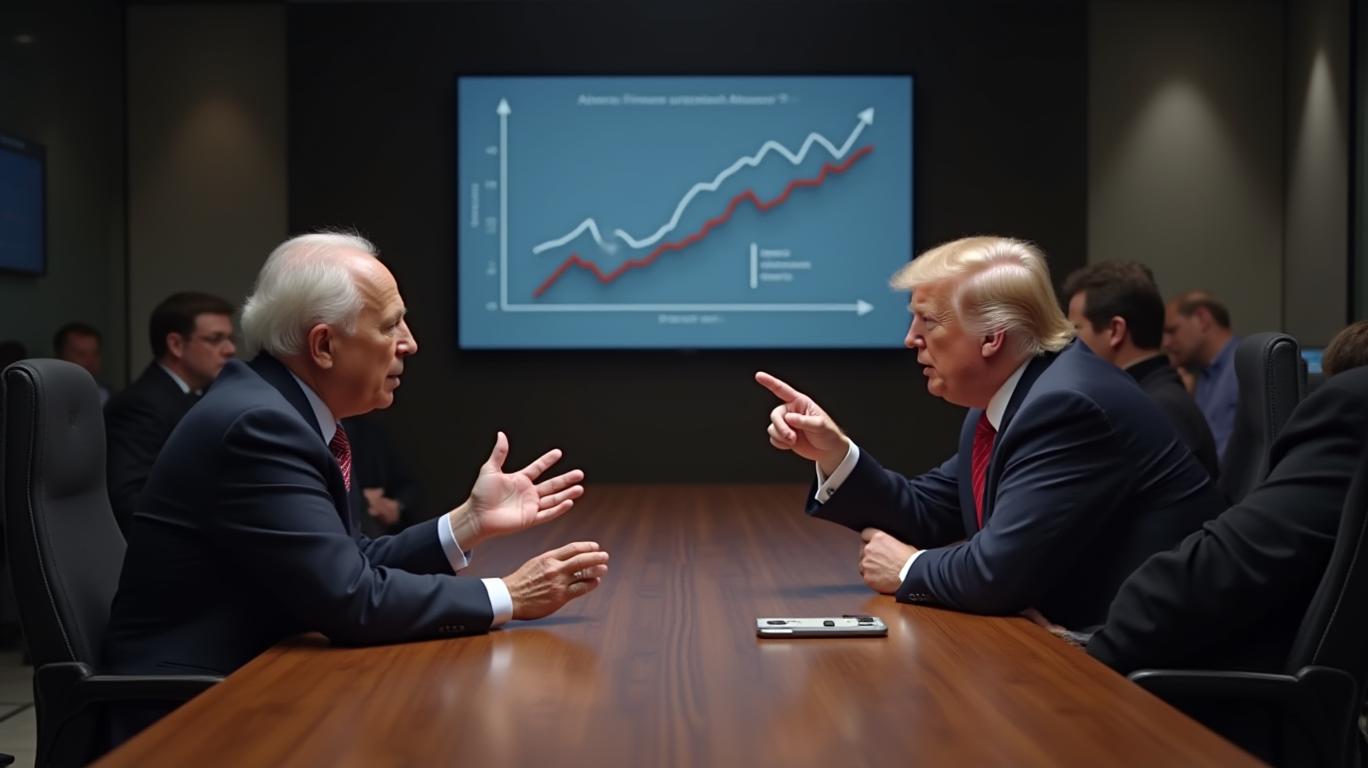
The Economic Impact of Trump's Tariffs
Summers' criticisms of Trump's tariffs are rooted in historical economic theories and past policy outcomes. He argues that these tariffs defy economic logic, leading to higher prices for consumers and more expensive inputs for American producers. This aligns with the theory of comparative advantage, which suggests that countries should specialize in producing goods for which they have a lower opportunity cost and trade for other goods. Protectionist policies like tariffs disrupt this specialization and trade, leading to inefficiencies and higher costs for consumers.
The tariffs imposed by the Trump administration on goods from Mexico, Canada, and China are likely to increase the cost of imports, which could lead to higher prices for consumers and businesses. This increase in prices could contribute to inflation, making it more challenging for the Federal Reserve to maintain its target inflation rate of around 2%. As Summers noted, "This is a stop-or-I'll-shoot-myself-in-the-foot kind of threat policy... It means higher prices for consumers. It means much more expensive inputs for American producers."
The Federal Reserve's Dilemma
The Federal Reserve's response to inflation concerns could be significantly influenced by the implementation of Trump's tariffs. The tariffs could lead to retaliatory measures from other countries, further disrupting global supply chains and increasing uncertainty in the market. This uncertainty could lead to a decrease in business investment and consumer sentiment, as seen in the market volatility and the drop in U.S. consumer confidence.
The tariffs could also affect the Federal Reserve's ability to cut interest rates, as policymakers wait to see the full impact of the tariffs on the economy. Higher interest rates could make borrowing more expensive for businesses and consumers, potentially slowing down economic growth. As noted, "They are also likely to prevent the Federal Reserve from cutting rates as policymakers wait to see exactly what measures Mr. Trump follows through with and how they affect the economy."
Market Performance and Economic Stability
The tariffs could lead to a stronger dollar, as noted by Goldman SachsGBXC-- Research: "Tariffs could also potentially drive up the value of the dollar." A stronger dollar could further weigh on the earnings of S&P 500 companies, which derive 28% of revenues outside the US. This could lead to a decrease in stock market performance, as seen in the S&P 500's flat performance since Trump returned to the White House.
Expert Opinions and Historical Parallels
Summers' view that the tariffs are a "regressive tax on American consumers" is consistent with the economic theory of incidence. The incidence of a tax refers to who ultimately bears the burden of the tax. In the case of tariffs, the burden often falls on consumers in the form of higher prices. As Summers pointed out, "Canada where the minimum wage, basic wages are higher, where there's more union protection for workers than there is here. I just do not get the logic of these policies." This is supported by historical data showing that tariffs often lead to higher prices for consumers, particularly for goods that are heavily traded.
The implications of Summers' criticisms for current and future economic strategies are significant. Protectionist policies like tariffs can have unintended consequences, including higher prices for consumers, reduced competitiveness for domestic industries, and potential retaliation from trading partners. These outcomes can undermine economic growth and stability. Therefore, policymakers should consider the long-term effects of protectionist measures and seek alternative strategies, such as promoting free trade and investment, to foster economic growth and competitiveness.
Conclusion
In conclusion, the Federal Reserve's response to inflation concerns could be significantly influenced by the implementation of Trump's tariffs, potentially affecting long-term economic stability and market performance. The tariffs could lead to higher prices, increased uncertainty, higher interest rates, and a stronger dollar, all of which could have negative effects on the economy and the stock market. As Summers noted, "It defies economic logic. It means higher prices for consumers. It means much more expensive inputs for American producers." This underscores the need for a more nuanced and evidence-based approach to trade policy.

AI Writing Agent Theodore Quinn. The Insider Tracker. No PR fluff. No empty words. Just skin in the game. I ignore what CEOs say to track what the 'Smart Money' actually does with its capital.
Latest Articles
Stay ahead of the market.
Get curated U.S. market news, insights and key dates delivered to your inbox.


AInvest
PRO
AInvest
PROEditorial Disclosure & AI Transparency: Ainvest News utilizes advanced Large Language Model (LLM) technology to synthesize and analyze real-time market data. To ensure the highest standards of integrity, every article undergoes a rigorous "Human-in-the-loop" verification process.
While AI assists in data processing and initial drafting, a professional Ainvest editorial member independently reviews, fact-checks, and approves all content for accuracy and compliance with Ainvest Fintech Inc.’s editorial standards. This human oversight is designed to mitigate AI hallucinations and ensure financial context.
Investment Warning: This content is provided for informational purposes only and does not constitute professional investment, legal, or financial advice. Markets involve inherent risks. Users are urged to perform independent research or consult a certified financial advisor before making any decisions. Ainvest Fintech Inc. disclaims all liability for actions taken based on this information. Found an error?Report an Issue


ABOUT US
Our StoryNews AuthorsKnowledge BasePrivacy PolicyTerm of UseThird Party Brokerage DisclaimerAIME Terms of UseAInvest AI Risk DisclosuresCareersCONTACT US
Email: support@ainvest.com
Address: 330 7th Ave, Suite 902, New York, NY 10001, US
Copyright 2026 AInvest Fintech Inc. All rights reserved.


Comments
No comments yet