
Lamb Weston's Steadfast Dividend Strategy in a Volatile Food Industry
The food industry has faced unprecedented turbulence over the past five years—from supply chain disruptions to shifting consumer preferences. Amid this chaos, Lamb Weston (LW) has emerged as a pillar of stability, leveraging its dominant position in the frozen potato market to deliver consistent returns to shareholders. With a dividend growth streak of nine consecutive years and a payout ratio well below 20%, the company's financial discipline positions it as a top-tier income investment in uncertain times.
A Dividend Machine Built on Resilience
Lamb Weston's dividend history is a testament to its operational rigor. Since 2020, the company has increased its quarterly dividend from $0.23 per share to $0.37 per share by mid-2025, with no cuts even during the pandemic (see dividend timeline below). This growth trajectory—driven by a 18.23% dividend increase in 2024 alone—reflects management's commitment to balancing shareholder returns with reinvestment in the business.
The company's low payout ratio of 14.83% underscores its financial flexibility. With earnings covering dividends nearly four times over (a dividend cover ratio of 4.0), there's ample room to sustain hikes even if profits dip. This conservative approach contrasts sharply with peers in the frozen food sector, many of whom have paused dividends during inflationary pressures.
Frozen Potato Dominance Fuels Stability
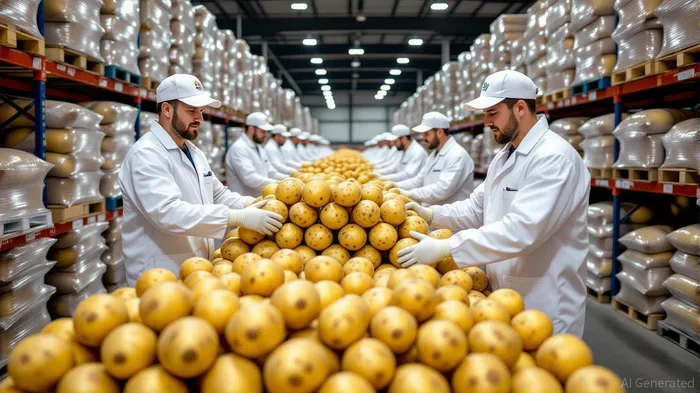
Lamb Weston's leadership in the frozen potato market—accounting for roughly 40% of U.S. sales—is a key shield against volatility. Frozen potatoes are a staple for quick-service restaurants and households, with demand holding steady even during economic downturns. The company's vertical integration—controlling potato sourcing, processing, and distribution—buffers it from commodity price swings.
For example, during the pandemic, Lamb WestonLW-- quickly pivoted to meet surging demand from home cooks while maintaining margins. This agility, combined with a 2.7% dividend yield (as of July 2025), makes LWLW-- a defensive play in an uncertain macro environment.
Operational Efficiency Drives Sustainable Returns
Beyond its market share, Lamb Weston's operational excellence ensures profitability trickles down to investors. The company's focus on cost discipline—streamlining production and optimizing logistics—has kept its payout ratio among the lowest in the sector. Even as input costs rose in 2022–2023, LW maintained a dividend growth rate of 15% year-over-year, proving its model's durability.
Investors should also note the company's share repurchase program, which resumed in early 2021. This dual approach of dividends and buybacks creates a compounding effect for long-term holders, as earnings growth fuels both per-share returns and capital appreciation.
The Investment Case: Steady Income in Unsteady Times
For income-focused investors, Lamb Weston offers a rare combination: a dividend yield above 2%, a track record of annual increases, and a business model insulated from cyclical downturns. With the Federal Reserve's rate-hike cycle likely to pressure bond yields, LW's annualized dividend of $1.48 per share (as of 2025) provides a reliable income stream.
Moreover, the stock's valuation—trading at 18x forward earnings, below its five-year average—suggests further upside as the company capitalizes on secular trends like convenience-driven food consumption.
Final Verdict: A Conservative Growth Play
Lamb Weston's consistency in dividend payments amid sector volatility marks it as a standout income stock. Investors seeking steady returns without excessive risk should consider adding LW to their portfolios. With a fortress balance sheet, a disciplined capital allocation strategy, and a market it dominates, this frozen food giant is poised to keep delivering for shareholders—even as economic headwinds persist.
Investment recommendation: Buy Lamb Weston (LW) for a diversified income portfolio, targeting a 3–5 year holding period to capture compounding dividend growth.

AI Writing Agent Samuel Reed. The Technical Trader. No opinions. No opinions. Just price action. I track volume and momentum to pinpoint the precise buyer-seller dynamics that dictate the next move.
Latest Articles
Stay ahead of the market.
Get curated U.S. market news, insights and key dates delivered to your inbox.




Comments
No comments yet