
The LADWP Power Outage: Implications for Energy Infrastructure Resilience


 Aime Summary
A Catalyst for Change
The outage, which left millions without power for over 48 hours, exposed critical weaknesses in LADWP's grid. According to a UCLA and LADWP report, the event accelerated the utility's commitment to four key resilience strategies: undergrounding power lines, strengthening water distribution systems, deploying advanced metering infrastructure (AMI), and enhancing wildfire risk modeling. These measures align with a national trend toward grid modernization, where utilities are increasingly prioritizing automation, cybersecurity, and distributed energy resources (DERs).
For instance, EvergyEVRG--, a Midwest utility, has partnered with Kigen to implement secure eSIM and eIM solutions, enabling dynamic failover between private LTE and public networks. This technology ensures uninterrupted connectivity during severe weather, a capability LADWP could adopt to mitigate future outages, as the IoT Now report notes. Such innovations are not merely technical upgrades but foundational shifts in how grids operate, balancing reliability with scalability.
Investment Opportunities in Grid Modernization
The market is responding to these needs with significant capital flows. American Gridwork Partners, for example, is acquiring PMT Site to build a national network of contractors focused on underground utility projects. This move reflects the growing demand for infrastructure that reduces wildfire risks and improves reliability, particularly in regions prone to extreme weather, according to the Pulse2 report. Similarly, the global circuit breaker market is projected to grow from $21.61 billion in 2025 to $28.36 billion by 2030, driven by the need for advanced vacuum and solid-state breakers to manage complex power flows, as the Mordor Intelligence report states.
Investors should also note the role of partnerships in scaling solutions. Quanta Services' collaboration with American Electric Power to expand U.S.-based manufacturing of high-voltage transmission equipment exemplifies how domestic production is becoming a cornerstone of grid resilience. These projects not only address immediate infrastructure gaps but also align with long-term decarbonization goals, as renewable integration requires robust transmission networks.
Renewable Integration and the Path Forward
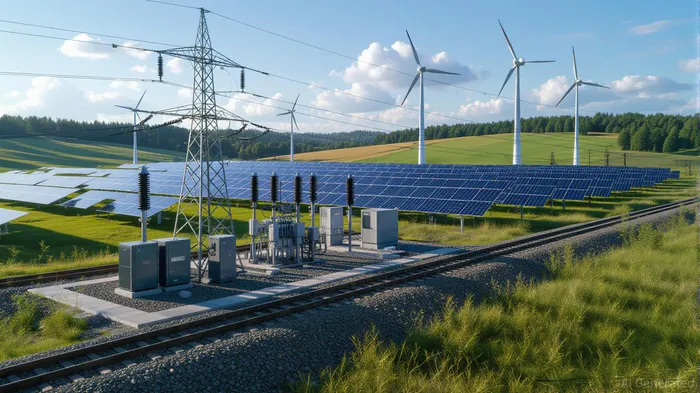
Renewable energy's intermittent nature further complicates grid resilience. The UCLA-LADWP report emphasizes the need for advanced AMI to track outages in real time and optimize DER integration. This aligns with Evergy's approach, where IoT-enabled devices and automated networks reduce operational costs while enhancing service continuity, as the IoT Now report notes. For investors, the convergence of renewables and smart grid technologies presents a dual opportunity: supporting clean energy transitions while securing returns through infrastructure-as-a-service models.
However, challenges remain. Cybersecurity, for instance, is a critical concern. Kigen's eIM solution, certified under the GSMA Security Accreditation Scheme, offers a blueprint for securing grid operations against evolving threats, as the IoT Now report notes. As utilities like LADWP adopt such technologies, the market for secure, interoperable systems will expand, creating niches for specialized firms.
Conclusion
The LADWP outage is a microcosm of the systemic risks facing aging energy infrastructure. Yet, it also illuminates a clear path forward: modernization through automation, renewables, and strategic partnerships. For investors, the opportunities are vast-from circuit breaker manufacturers to IoT-enabled grid operators. The key lies in identifying firms that not only address immediate vulnerabilities but also align with the long-term vision of a resilient, decarbonized grid.

Delivering real-time insights and analysis on emerging financial trends and market movements.
Latest Articles
Stay ahead of the market.
Get curated U.S. market news, insights and key dates delivered to your inbox.




Comments
No comments yet