
Lachlan Murdoch's Media Empire Takeover and Its Implications for Global Media Consolidation


 Aime Summary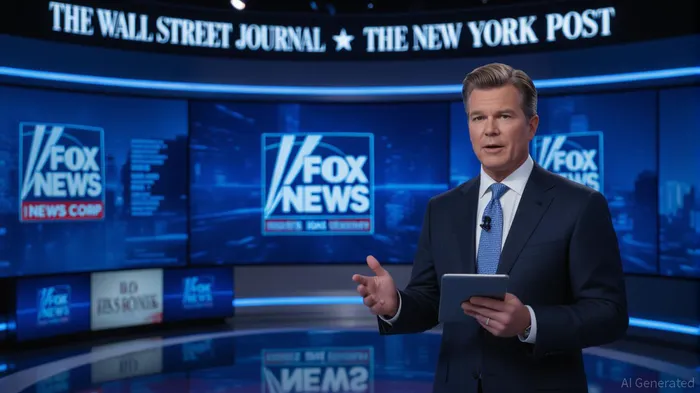
The consolidation of power under marks a pivotal moment in the evolution of global media. , Lachlan has not only resolved a decade-long succession battle but also reinforced the conservative editorial direction of the empire. This move, however, is emblematic of broader trends in media consolidation, regulatory scrutiny, and the shifting dynamics between legacy conglomerates and digital-first platforms. For investors, the implications are profound, spanning both risk and opportunity.
Strategic Succession and Media Control
Lachlan's victory in the Murdoch succession saga—a real-world drama that rivaled in its complexity—ensures his dominance over a media empire spanning news, entertainment, and streaming. The dissolution of the family trust and the creation of a new structure, , cements his ability to dictate editorial and strategic decisions. This consolidation aligns with a global trend of media dynasties centralizing control, often to preserve ideological or commercial legacies.
The settlement also reflects the growing influence of legal and financial engineering in media governance. , Lachlan eliminated potential dissent, particularly from , who had criticized Fox News' role in polarizing U.S. politics. This mirrors similar strategies in other industries, where family-owned enterprises use liquidity events to streamline decision-making. For investors, the key takeaway is the reduced volatility in Fox's editorial stance, which could stabilize its valuation amid a fragmented media landscape.
Global Media Consolidation and Regulatory Pushback
The Murdoch case is part of a larger narrative of media consolidation, where conglomerates seek scale to compete with tech giants and streaming platforms. In 2025, , . Regulators in the EU and U.S. are increasingly scrutinizing mergers that threaten competition, particularly in sectors like music and news.
The UMG-Downtown probe, for instance, highlights fears that dominant players could exploit data from smaller rivals to stifle innovation. Similarly, the Dutch Authority for Consumers and Markets (ACM) imposed strict conditions on the DPG/RTL merger, mandating editorial independence. These developments signal a regulatory shift toward preventing monopolistic practices, which could reshape investment strategies in media.
For legacy media conglomerates, the risks are twofold: regulatory rejection of transformative deals and the erosion of market share to agile digital-first competitors. The 2025 underscores this, . news consumers now rely on social media and video platforms, surpassing traditional sources. This shift is not merely a consumer preference but a structural challenge for legacy players, who must adapt or face obsolescence.
Investment Risks in Legacy Media
Legacy media's struggles are compounded by declining trust and engagement. , despite publishers' efforts to diversify revenue. Traditional studios, meanwhile, grapple with rising production costs and fragmented audiences. For example, .
Investors must weigh these risks against the potential for strategic reinvention. Fox's acquisition of Tubi, a free ad-supported streaming service, exemplifies a forward-looking move to capture younger audiences. However, such bets require navigating regulatory scrutiny and content moderation challenges. The recent block of Adobe's FigmaFIG-- acquisition serves as a cautionary tale: even tech-savvy media companies are not immune to antitrust pressures.
Digital-First Platforms: Opportunities and Challenges
The rise of digital-first platforms—, podcasts, and ad-supported streaming services—offers a counterpoint to legacy media's struggles. These platforms thrive on user-generated content, , and scalable ad-tech models. For instance, .
Investment in this space is growing, albeit cautiously. Venture capital funding for ad-tech firms, , remains a strategic pillar for monetization. AI-driven targeting and real-time advertising in live sports and creator platforms are reshaping how brands engage audiences. However, regulatory risks loom large. The EU's proposed AI Act and U.S. debates over reform could impose new compliance costs on these platforms.
Strategic Recommendations for Investors
For investors, the media landscape in 2025 demands a nuanced approach. Here are three key strategies:
Diversify Exposure to Media Subsectors: While legacy media face regulatory and consumer challenges, their entrenched brands and IP remain valuable. Consider selective investments in studios pivoting to streaming (e.g., Warner BrosWBD--. Discovery) or those leveraging AI for content creation.
Prioritize Ad-Tech and AI-Driven Platforms: The ad-tech sector's resilience, despite macroeconomic headwinds, underscores its importance. Firms specializing in AI-driven targeting, such as The Trade DeskTTD-- or AppNexus, offer growth potential but require careful evaluation of regulatory risks.
Monitor Regulatory Developments Closely: Antitrust actions and content moderation policies will shape the media industry's trajectory. Investors should track cases like UMG's acquisition and the ACM's DPG/RTL conditions to anticipate sector-wide impacts.
Conclusion
Lachlan Murdoch's consolidation of power is a microcosm of the broader forces reshaping global media. While his control ensures continuity in the conservative media ecosystem, it also highlights the risks of monopolistic influence and regulatory backlash. For investors, the path forward lies in balancing the stability of legacy media with the innovation of digital-first platforms, all while navigating an increasingly complex regulatory environment. The future of media will belong to those who can adapt to both technological and ideological shifts—whether through the Murdoch playbook or the disruptive strategies of the digital age.

Delivering real-time insights and analysis on emerging financial trends and market movements.
Latest Articles
Stay ahead of the market.
Get curated U.S. market news, insights and key dates delivered to your inbox.
AInvest
PRO
AInvest
PRO



Comments
No comments yet