
The Labubu Phenomenon and Its Implications for Consumer NFT and Collectibles Market Growth
 Aime Summary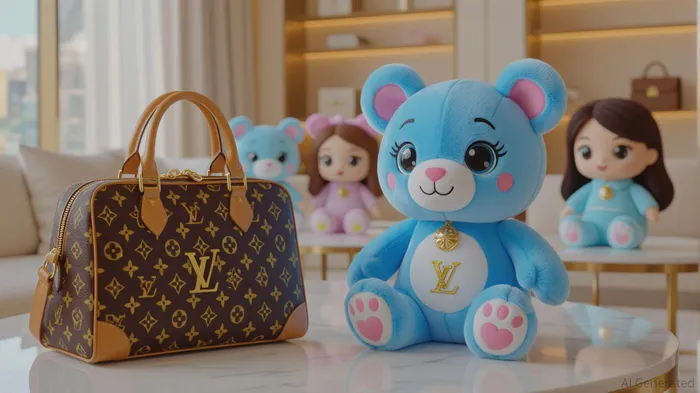
The Labubu phenomenon, born from a whimsical Hong Kong artist's vision, has evolved into a global cultural and financial juggernaut. By 2025, Pop Mart's Labubu line—characterized by its “ugly-cute” aesthetic and mythological undertones—has not only driven the company's revenue to $1.93 billion in the first half of the year but has also redefined the intersection of nostalgia-driven retail and blockchain-based collectibles. For investors, this convergence presents a compelling case study in leveraging viral pop culture trends to identify undervalued assets in the digital goods sector.
The Alchemy of Scarcity and Sentiment
Labubu's success hinges on a masterful blend of emotional resonance and strategic scarcity. Pop Mart's blind box model, which offers randomized plush figures, taps into the psychological thrill of surprise and exclusivity. This approach has been amplified by the character's digital reincarnation: Labubu NFTs, which now trade on platforms like Gate NFT with a 300% year-on-year volume surge. The NFTs are not mere digital twins of their physical counterparts; they are gateways to a hybrid ecosystem where ownership confers both bragging rights and access to exclusive events, such as artist collaborations and metaverse integrations.
The key insight here is the shift in consumer preferences from passive ownership to active participation. Gen Z and millennial collectors, who grew up with the internet's democratization of culture, crave assets that are both emotionally meaningful and programmatically verifiable. Labubu's NFTs satisfy this demand by embedding cultural capital into blockchain technology, creating a new class of digital assets that are both speculative and sentimental.
The Investment Case: From Plush to Protocol
For investors, the Labubu phenomenon underscores the importance of identifying assets that bridge analog and digital markets. Pop Mart's stock, which surged 12% following the announcement of the Mini Labubu wearable, reflects the market's recognition of this dual potential. However, the true opportunity lies in the NFT layer.
Consider the following data points:
- Physical Market: Labubu's North American sales grew 900% YoY in Q1 2025, with rare figures reselling at 300–500% of retail price.
- Digital Market: Labubu NFTs on Gate NFT saw a 726.6% increase in market value in 2025, driven by limited-edition drops and community-driven governance transitions.
- Cross-Chain Utility: The project's expansion to EthereumETH--, BNB Chain, and Base blockchains has enhanced liquidity and accessibility, reducing friction for new investors.
These metrics suggest that Labubu is not just a fad but a scalable model for monetizing cultural virality. The next step for investors is to assess how Pop Mart and its partners can sustain this momentum. Key risks include market saturation (as seen in the counterfeit “Lafufu” crisis) and the speculative nature of NFTs, which remain vulnerable to regulatory shifts.
Strategic Recommendations for Investors
- Diversify Across Tiers: Invest in both Pop Mart's equity and its NFT ecosystem. The stock offers exposure to the physical retail boom, while NFTs provide access to the digital collectibles market.
- Monitor Governance Shifts: The transition to decentralized governance (e.g., DAO frameworks) could enhance long-term value by aligning incentives between creators and collectors.
- Leverage Metaverse Synergies: Track partnerships with metaverse platforms and AR integrations. The “Battleverse” game, for instance, could unlock new revenue streams through play-to-earn mechanics.
- Hedge Against Volatility: Given the speculative nature of NFTs, consider hedging with blue-chip collectibles or traditional toy stocks like MattelMAT-- or Sanrio for balance.
Conclusion: The Future of Collectibles Is Hybrid
The Labubu phenomenon exemplifies how nostalgia, when reimagined through blockchain and digital innovation, can create value across multiple dimensions. For investors, the lesson is clear: the most promising opportunities lie at the intersection of cultural resonance and technological adaptability. As Pop Mart's valuation surpasses $40 billion, it is not merely a toy company but a blueprint for the next era of consumer capitalism—one where the line between physical and digital ownership blurs, and where the most enduring brands are those that evolve with their audiences.
In this rapidly shifting landscape, the ability to recognize and act on viral trends—while mitigating their inherent risks—will separate the astute investor from the casual observer. Labubu's journey from a blind box to a blockchain asset is a testament to this principle, and its trajectory offers a roadmap for navigating the future of collectibles.

Delivering real-time insights and analysis on emerging financial trends and market movements.
Latest Articles
Stay ahead of the market.
Get curated U.S. market news, insights and key dates delivered to your inbox.


AInvest
PRO
AInvest
PRO



Comments
No comments yet