
The Labubu Dolls Seizure and Its Implications for Toy and Intellectual Property Markets


 Aime Summary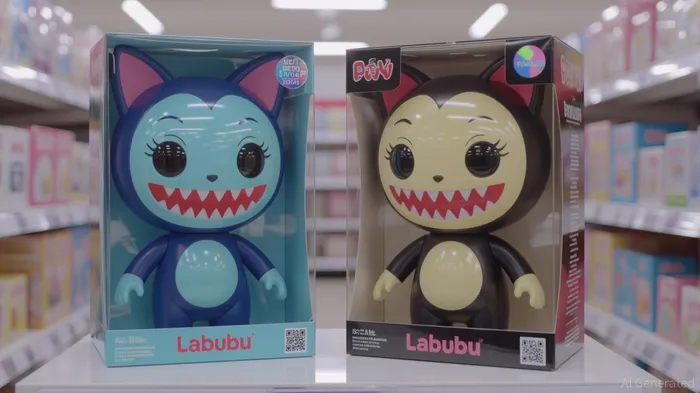
The 2025 Labubu dolls seizure case has become a landmark moment in the global fight against intellectual property (IP) infringement, particularly in the toy industry. Designed by Dutch-Hong Kong artist Kasing Lung and produced by Chinese toymaker Pop Mart, Labubu dolls became a viral sensation, with monthly sales reaching millions. However, their popularity also triggered a surge in counterfeiting, with 1.8 million fake units intercepted by Chinese customs alone in the first half of 2025. The U.S. Consumer Product Safety Commission (CPSC) later issued warnings about dangerous imitations, citing choking hazards and toxic dyes. This case underscores a critical question for investors: How are post-pandemic supply chain shifts reshaping risks and opportunities in toy manufacturing and IP enforcement?
The Labubu Case: A Microcosm of Global IP Challenges
Pop Mart's aggressive IP strategy—70+ copyrights, trademarks, and design rights—has been instrumental in combating counterfeits. The company's use of holographic stickers, QR codes, and UV stamps on authentic products highlights the importance of integrating anti-counterfeiting measures into product design. Legal actions, such as the 144-page lawsuit against 7-Eleven franchises in California, further demonstrate the need for robust enforcement. Yet, the case also reveals vulnerabilities. Counterfeiters are increasingly leveraging digital platforms and 3D printing to replicate designs, bypassing traditional enforcement mechanisms.
For investors, this duality—strong IP protection versus evolving threats—points to a sector where innovation and adaptability are key. Companies that fail to modernize their IP strategies risk losing market share to copycats, while those that invest in digital tools and supply chain resilience stand to gain.
Post-Pandemic Supply Chain Shifts: Risks and Opportunities
The pandemic accelerated structural changes in global supply chains, with toy manufacturers reevaluating reliance on China. Nearshoring to countries like Vietnam and Mexico, reshoring to the U.S., and the rise of e-commerce have created new dynamics. For example, tariffs on Chinese imports (peaking at 145% in 2025) forced companies like MGA Entertainment to pivot sourcing strategies. While this reduces dependency on volatile regions, it also introduces risks: weaker IP enforcement in nearshore hubs and fragmented supply chains that are harder to monitor.
Meanwhile, digital enforcement tools are becoming indispensable. AI-powered monitoring systems, blockchain for provenance tracking, and automated takedown platforms are enabling brands to detect and respond to counterfeits in real time. For instance, Pop Mart's use of AI to scan online marketplaces for infringing listings has proven effective in curbing knockoffs. Investors should note that companies adopting these technologies—such as those in the digital rights management (DRM) space—could see long-term gains as IP enforcement becomes increasingly digitized.
E-Commerce and the Direct-to-Consumer Revolution
The shift to e-commerce has democratized access for small and medium-sized toy manufacturers but has also amplified counterfeit risks. Platforms like AmazonAMZN-- and ShopifySHOP-- allow brands to bypass traditional retailers, but they also host a flood of fake products. The CPSC's warnings about “Lafufus” (a counterfeit variant of Labubu) highlight the dangers of unregulated online sales.
However, this shift also creates opportunities. Brands that prioritize transparency—such as using QR codes to verify authenticity or leveraging social media for direct engagement—can build trust and loyalty. For example, Pop Mart's blind-box model thrives on collectibility and exclusivity, which counterfeiters struggle to replicate. Investors might consider companies that blend digital innovation with physical product design, such as STEAM-focused toy startups or eco-friendly brands leveraging blockchain for sustainability claims.
Investment Implications: Where to Focus
- IP Enforcement Tech Providers: Companies offering AI-driven counterfeit detection, blockchain authentication, or digital watermarking are well-positioned to benefit. These tools are becoming table stakes for toy manufacturers.
- Nearshoring-Focused Manufacturers: Firms like The Rodon Group, which are investing in U.S. automation and robotics, could gain traction as tariffs and labor costs shift.
- Brands with Strong IP Portfolios: Pop Mart's success in protecting Labubu underscores the value of comprehensive IP strategies. Investors should look for companies with diversified IP protections (trademarks, copyrights, design rights) and proactive enforcement.
- E-Commerce Platforms with Robust Compliance: Marketplaces that prioritize IP enforcement—such as Amazon's IP reporting tools—may attract more brands seeking to mitigate counterfeit risks.
Conclusion: Navigating a Complex Landscape
The Labubu case is a cautionary tale and a blueprint. It shows that while virality drives demand, it also invites imitation. For investors, the key is to identify companies that balance innovation with vigilance. The post-pandemic toy industry is not just about manufacturing—it's about securing digital supply chains, leveraging technology for IP enforcement, and adapting to consumer demands for transparency and safety. Those who master this trifecta will thrive in a market where creativity and compliance are equally critical.
As the global toy market is projected to reach $133 billion by 2025, the winners will be those who treat IP not as a legal formality but as a strategic asset. The Labubu dolls seizure may be a single incident, but its lessons resonate across an industry at a crossroads.

Stay ahead of the market.
Get curated U.S. market news, insights and key dates delivered to your inbox.


AInvest
PRO
AInvest
PRO



Comments
No comments yet