
AInvest Newsletter
Daily stocks & crypto headlines, free to your inbox
 Aime Summary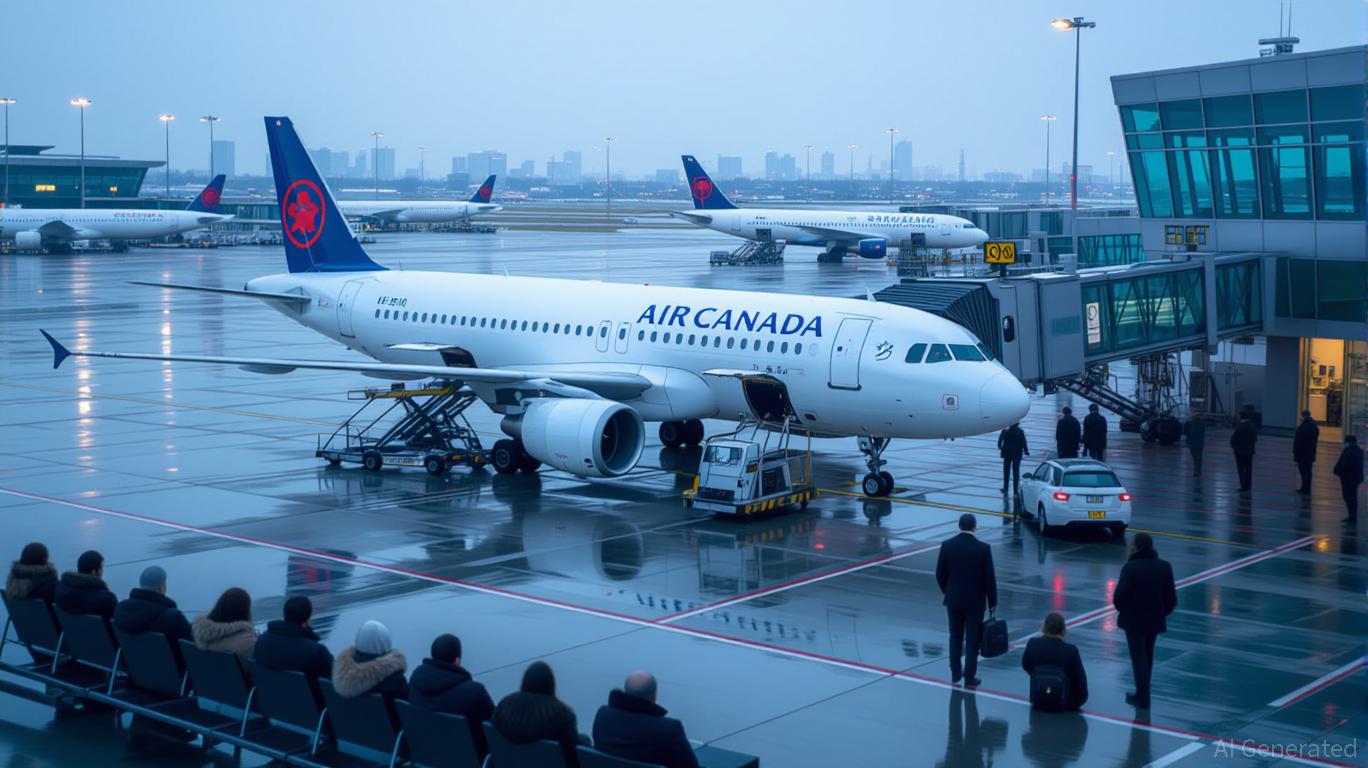
The 2025 Air Canada strike, involving 10,000 flight attendants represented by the Canadian Union of Public Employees (CUPE), has become a case study in how labor disputes can amplify stock volatility in the airline sector. The abrupt cancellation of 700 daily flights and the Canadian government's rapid intervention under Section 107 of the Canada Labour Code highlight the interplay between regulatory action, investor sentiment, and financial resilience. For investors, this event underscores the critical need to assess labor risk as a material factor in airline valuations.
The strike, which began on August 16, 2025, was triggered by a deadlock over compensation for unpaid ground work, including safety checks and boarding duties. Air Canada's 38% four-year pay offer was rejected by the union, which argued it failed to address a 69% inflationary wage gap since 2000. Within hours, the Canadian government intervened, mandating binding arbitration to end the strike and restore operations. This move, while stabilizing the immediate crisis, exposed deeper vulnerabilities in Air Canada's financial structure.
The stock plummeted 14.25% in August alone, outpacing U.S. peers like
Regulatory intervention, while averting prolonged operational chaos, introduced new uncertainties. The government's use of Section 107 to override union bargaining power raised concerns about eroding labor rights, a red flag for investors prioritizing corporate governance. Meanwhile, the strike's public fallout—stranded passengers and reputational damage—fueled a shift in capital toward airlines with proactive labor strategies.
U.S. carriers like Delta and Alaska, which had already secured wage packages ahead of the 2025 inflation spike, saw inflows as investors sought less volatile exposure. Air Canada's stock, meanwhile, became a “Moderate Buy” for some analysts, contingent on its ability to manage rebooking chaos and restore customer trust. The arbitration process itself became a proxy for broader sector risks: would the outcome set a precedent for future strikes, or signal a shift toward employer-centric labor policies?
The strike's ripple effects extended
Canada. The Competition Bureau's 2025 market study revealed that Air Canada and WestJet control 56–78% of domestic passenger traffic at major airports, amplifying the sector's susceptibility to labor disruptions. Investors began hedging against volatility through put options on Air Canada and volatility ETFs, while favoring airlines with diversified cost structures and robust liquidity.
WestJet, which had outperformed Air Canada by 12 percentage points in 2025, became a proxy for risk mitigation. Its proactive wage negotiations and higher leverage ratio (2.1) demonstrated the value of preemptive labor strategies in an inflationary environment. For investors, the lesson is clear: airlines with strong liquidity and transparent labor relations are better positioned to weather strikes and regulatory shifts.
The Air Canada-CUPE strike illustrates that labor disputes are not isolated events but systemic risks that can reshape sector dynamics. For short-term investors, the key is to monitor arbitration outcomes and liquidity metrics. For long-term players, the focus should be on airlines that prioritize proactive wage negotiations and operational efficiency.
In the post-pandemic era, where inflation and labor tensions are likely to persist, the aviation sector demands a nuanced approach. Regulatory interventions, while stabilizing in the short term, may not address underlying vulnerabilities. Investors who prioritize resilience over short-term gains will find themselves better positioned as the sector navigates the next wave of labor challenges.

Tracking the pulse of global finance, one headline at a time.

Dec.20 2025

Dec.20 2025

Dec.20 2025

Dec.20 2025

Dec.20 2025
Daily stocks & crypto headlines, free to your inbox





Comments
No comments yet