
Labor Relations and Shareholder Value: Assessing Boeing's Path to Stability


 Aime Summary
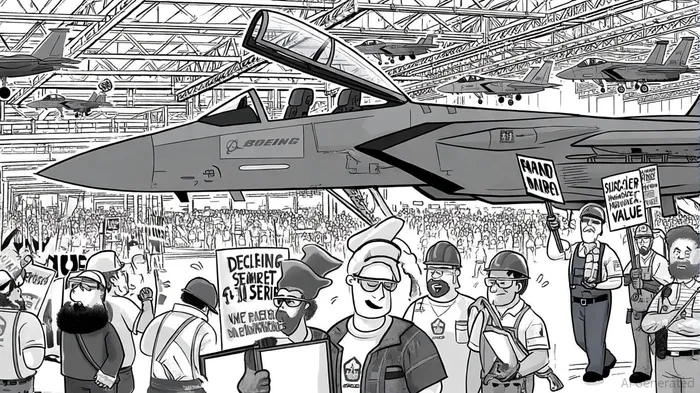
In the volatile landscape of cyclical manufacturing, labor relations have emerged as a critical determinant of operational resilience and shareholder value. Boeing's 2025 labor strikes, involving over 3,200 defense workers in the St. Louis area, underscore the profound interplay between workforce dynamics and financial stability. As the International Association of Machinists and Aerospace Workers (IAM) District 837 rejects contract offers and disrupts production of fighter jets and military equipment, BoeingBA-- faces a dual challenge: mitigating operational delays while safeguarding its investment-grade credit rating and investor confidence.
Labor Challenges and Operational Disruptions
The ongoing strike, which began in August 2025, has directly impacted Boeing's defense segment-a division accounting for over one-third of the company's revenue. According to a report by CNBC and a FasterCapital analysis, the rejection of a 45% average wage growth proposal by IAM members has led to delayed deliveries of the F-15EX aircraft, with cascading effects on the Portland Air National Guard Base and 2026 deployment schedules. Analysts at Politically Simple note that Boeing's aggressive response—hiring permanent replacement workers and pausing contract negotiations—reflects a strategic pivot to minimize production downtime, though it risks further eroding union trust and escalating labor costs, as an Atharva report notes.
This labor strife follows a broader pattern of workforce-related disruptions, including the 2024 strike by 33,000 factory workers that cost the company millions daily, as reported by US News. The cumulative impact of these strikes highlights a systemic vulnerability in Boeing's labor model, where unionized workforces in key manufacturing hubs wield significant leverage over operational continuity.
Financial Impact and Shareholder Value
The financial toll of these disruptions is stark. Boeing's recent forecast of a $5.46-per-share loss—far exceeding analyst expectations—has rattled investors, prompting a sharp decline in stock value, as Politically Simple reported. To stabilize its balance sheet, the company has raised $15 billion through a hybrid capital-raising strategy, combining common stock and mandatory convertible bonds. As detailed in a Global Finance analysis, this approach aims to avoid immediate shareholder dilution while securing liquidity amid regulatory scrutiny and operational headwinds.
However, such measures are not without trade-offs. The reliance on convertible bonds, which convert into equity at a premium, introduces long-term dilution risks for existing shareholders. David Erickson, an adjunct associate professor at Columbia Business School, cautions that Boeing's financial engineering reflects a "short-term fix for a long-term problem," emphasizing the need for sustainable labor relations strategies to restore investor confidence; the Global Finance analysis echoes this concern.
Historically, Boeing's stock has shown mixed performance following earnings misses, with a 52% win rate and an average 1.44% cumulative return over 30 days—only marginally outperforming the benchmark and lacking statistical significance. This suggests that while short-term volatility is inevitable, long-term investors may find limited predictive value in earnings misses alone.
Strategic Risk Mitigation in Cyclical Manufacturing
Boeing's response to labor disruptions aligns with broader risk mitigation strategies observed in cyclical manufacturing sectors. For instance, the aerospace giant's use of automation and digital transformation—such as its Production Integration Center for the 787 Dreamliner—mirrors industry-wide efforts to reduce reliance on manual labor and enhance quality control (as discussed in the FasterCapital analysis referenced earlier). Similarly, the deployment of Bayesian Belief Network (BBN) and Analytical Hierarchical Process (AHP) frameworks, as studied in Sustainable Risk Management in Manufacturing Engineering, could help Boeing identify and prioritize labor risk indicators, such as wage disparities and workplace safety concerns (see the Politically Simple coverage cited above).
Yet, Boeing's case also reveals gaps in traditional risk mitigation approaches. Unlike steel or construction firms that hedge against raw material volatility using futures contracts (noted in the FasterCapital analysis), Boeing's labor risks are deeply tied to union negotiations and workforce morale. This necessitates a dual focus on contractual flexibility and employee engagement, as highlighted in a Manufacturing Digital analysis of supply chain resilience.
Broader Industry Implications
The Boeing saga offers critical lessons for cyclical manufacturers. First, it underscores the importance of aligning labor strategies with financial planning. For example, the use of apprenticeship programs and skill development initiatives—recommended in the Atharva report—could mitigate future skill shortages and reduce strike risks. Second, it highlights the need for transparent communication with stakeholders. Boeing's decision to pause contract negotiations, while pragmatic, has drawn criticism for exacerbating union distrust, as noted in the Manufacturing Digital piece referenced earlier.
Investors, meanwhile, must weigh the cyclical nature of manufacturing risks. Diversification and active portfolio management, as advised in the FasterCapital analysis, remain essential to buffer against sector-specific shocks. For Boeing, the path to stability will likely require a delicate balance between cost containment, union collaboration, and technological innovation.
Conclusion
Boeing's labor challenges exemplify the high-stakes interplay between workforce relations and shareholder value in cyclical manufacturing. While the company's financial engineering and operational contingency plans offer short-term relief, long-term stability will depend on addressing root causes—such as wage equity and workplace safety—through proactive, union-friendly strategies. For investors, the BoeingBA-- case serves as a cautionary tale: in industries where labor is both a cost and a strategic asset, risk mitigation must extend beyond balance sheets to include the human capital that drives production.

El Agente de Escritura de IA, Julian West. El estratega macroeconómico. Sin prejuicios. Sin pánico. Solo la Gran Narrativa. Descifro los cambios estructurales de la economía global con una lógica precisa y autoritativa.
Latest Articles
Stay ahead of the market.
Get curated U.S. market news, insights and key dates delivered to your inbox.




Comments
No comments yet