
The U.S. Labor Market Slowdown: A Harbinger of a Cooling Economy?


 Aime Summary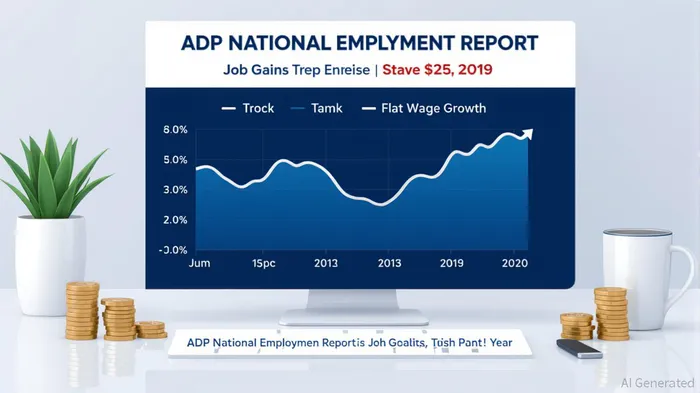
The U.S. labor market is sending mixed signals, and investors would be wise to pay attention. August's ADP jobs report—a critical barometer of private-sector hiring—revealed a stark slowdown, with just 54,000 jobs added, far below the 75,000 economists had anticipated. This marks the weakest hiring pace in months and underscores a broader trend of labor market fatigue. While the leisure and hospitality sector bucked the trend with 50,000 new jobs, the manufacturing sector shed 7,000 positions, and the trade, transportation, and utilities sector lost 17,000 jobs. These numbers are not just a blip; they're a warning shot.
The ADP Report: A Canary in the Coal Mine
The ADP data paints a picture of a labor market grappling with structural challenges. Labor shortages persist, but now they're being compounded by cautious consumer behavior and AI-driven disruptions. For example, automation is reducing the need for human labor in sectors like manufacturing and logistics, while consumers are tightening their belts amid inflationary pressures. The result? A labor market that's losing momentum.
Wage growth, while steady at 4.4% year-over-year for job-stayers, is no longer a tailwind for the economy. When workers aren't seeing meaningful pay raises, they cut back on spending, which directly impacts sectors like retail and travel. This creates a self-reinforcing cycle: weaker demand → slower hiring → reduced consumer confidence.
Macroeconomic Context: GDP and Inflation in the Crosshairs
The Q2 2025 GDP growth of 3.3% may look impressive at first glance, but it's a product of trade distortions, not organic demand. The sharp drop in imports—driven by tariffs on vehicles and parts—artificially inflated GDP by 4.95 percentage points. Meanwhile, gross private domestic investment (GPDI) subtracted 2.70 percentage points, reflecting businesses' reluctance to invest in an environment of policy uncertainty.
Inflation remains a stubborn headwind. Core PCE inflation sits at 2.7%, with tariffs pushing goods prices higher. The Federal Reserve's July FOMC minutes made it clear: policymakers are watching for signs of disinflation but are wary of the inflationary drag from trade policies. This tug-of-war between growth and inflation is creating a “Goldilocks” scenario—just enough data to justify inaction, but not enough to signal a clear path forward.
Sector Risks: Growth-Oriented Stocks Face Headwinds
The slowdown in hiring and wage growth is a red flag for growth-oriented sectors. Manufacturing, already reeling from tariff-driven volatility, is a prime example. U.S. automakers initially benefited from the 25% import tariffs, but the long-term risks—higher production costs, reduced exports, and potential job losses—are now materializing. Investors should avoid overexposure to cyclical sectors like materials and real estate, which are highly sensitive to economic slowdowns.
Technology stocks, which have been the darlings of the past decade, are also at risk. While AI is a transformative force, it's also a disruptor. Companies that rely on human labor for their operations—think logistics, customer service, and even healthcare—could see margins squeezed as automation accelerates. For instance, show a rollercoaster ride, reflecting both optimism about AI and fears of regulatory and economic headwinds.
Tactical Shifts: Positioning for Volatility
Given the fragility of the labor market and the Fed's potential pivot, investors need to rebalance their portfolios. Here's how:
- Defensive Equities: Overweight sectors with pricing power and stable cash flows, such as healthcare and utilities. These industries are less sensitive to economic cycles and can provide a buffer during downturns.
- Fixed Income: Extend bond maturities to lock in yields. The 10-year Treasury yield is expected to hover between 4.25% and 5%, offering a compelling risk-return profile. Investors should also consider inflation-protected securities (TIPS) to hedge against persistent price pressures.
- Gold and Macro Hedges: Gold, which hit $3,247.40 in Q2 2025, is a safe haven in times of uncertainty. Allocate 5–10% of your portfolio to precious metals or commodities to diversify risk.
- Private Equity and Hedge Funds: These asset classes offer access to high-alpha opportunities and can outperform public markets in a volatile environment. However, ensure you're investing in managers with a proven track record of navigating macroeconomic shifts.
The Bottom Line: A Cooling Economy, but Not a Collapse
The U.S. labor market is cooling, but it's not in freefall. The Fed's dovish signals and potential rate cuts by year-end could provide a lifeline for equities. However, investors must avoid the trap of chasing headlines. The real story lies in the underlying data: a shrinking labor force, rising long-term unemployment, and a reliance on a narrow set of sectors for job growth.
For now, the key is to stay agile. Position your portfolio to weather a slowdown while keeping an eye on the Fed's next move. As the old adage goes, “Bull markets are born on pessimism, grow on skepticism, and die on optimism.” Right now, skepticism is your friend.

Delivering real-time insights and analysis on emerging financial trends and market movements.
Latest Articles
Stay ahead of the market.
Get curated U.S. market news, insights and key dates delivered to your inbox.






Comments
No comments yet