
Labor Market Resilience Amid Uncertainty: US Jobless Claims Surprise to 217,000
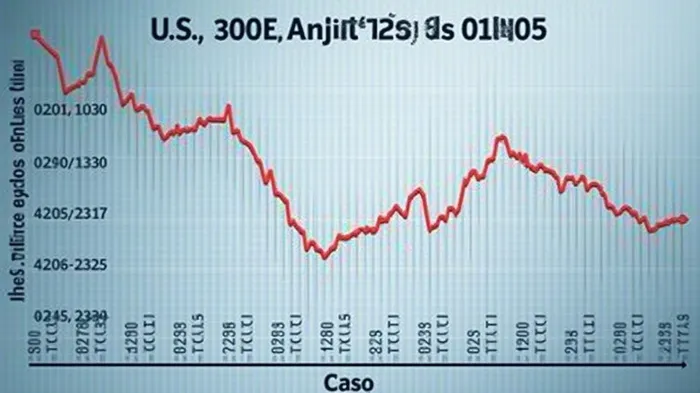
The latest U.S. Initial Jobless Claims report for the week ending April 26, 2025, delivered a surprise to markets, showing a decline to 217,000—6,000 below the forecasted 223,000 and marking the eighth consecutive week of claims hovering near historic lows. This data underscores a labor market stubbornly resisting broader economic headwinds, though underlying risks loom large.
The Data in Context
The 217,000 initial claims represent the lowest level since early March 2025 and a 2.2% drop from the prior week’s 221,000. The four-week moving average, which smooths out seasonal noise, fell to 220,250—the lowest since February 2025. This stability contrasts with the broader economic backdrop of trade tensions, rising unemployment expectations, and a 13.5% year-to-date decline in the S&P 500 as of April 2025.
However, the continuing claims (ongoing unemployment benefits) remain elevated at 1.84 million, down only slightly from March’s peak of 1.90 million. This divergence suggests employers are avoiding layoffs but struggling to rehire workers into new roles—a sign of structural friction in the labor market rather than outright weakness.
Tariffs and Trade Tensions: A Double-Edged Sword
The resilience of jobless claims defies expectations amid escalating trade conflicts. President Trump’s recent tariffs on Chinese imports, including semiconductor components, triggered fears of a full-scale trade war. The S&P 500 faced its worst single-day drop since 2020 on April 18, 2025, with technology stocks plunging as investors priced in supply chain disruptions.
Yet businesses have so far avoided mass layoffs, opting instead for hiring freezes or delayed investments. Federal Reserve officials, including Richmond’s Tom Barkin, note that firms are “defensive but not desperate,” prioritizing payroll stability over aggressive cost-cutting. This cautious approach is reflected in the 4.2% national unemployment rate, unchanged from February 2025 but 0.3% higher than a year ago.
Regional Disparities and Policy Risks
State-level data reveals uneven labor market conditions. California saw a 5,410 surge in initial claims—likely tied to its tech-heavy economy’s sensitivity to trade policy—while Kentucky reported the largest decline (-69.6%). Meanwhile, Rhode Island’s 210% spike highlights vulnerabilities in smaller markets reliant on manufacturing or tourism.
Federal Reserve policy adds another layer of uncertainty. With interest rates held steady at 5.25% since late 2024, the Fed has signaled no immediate cuts, despite inflation cooling to 2.8% year-over-year. This stance aims to balance labor market strength against inflation risks, but it leaves businesses exposed to tariff-driven cost pressures.
The Long View: Stability vs. Structural Shifts
Historically, initial claims near 217,000 are unprecedented outside the late 1960s. The all-time low of 162,000 (November 1968) remains distant, but the current trajectory suggests further declines are possible. Projections model claims dipping to 190,000 by 2027, though this assumes no major recession.
However, the rise in continuing claims—now at 1.84 million—hints at a labor market where job transitions are harder. Workers laid off from industries hit by tariffs (e.g., automotive, tech) may struggle to find new roles, even as overall unemployment stays low. This mismatch between job openings and worker skills could amplify in 2026, as automation and trade shifts reshape demand.
Conclusion: A Resilient Market, but Fragile Stability
The 217,000 jobless claims are a beacon of labor market health, but they mask deeper vulnerabilities. Investors should focus on:
1. Regional Exposure: Avoid over-weighting portfolios in states reliant on tariff-affected sectors (e.g., California tech, Midwest manufacturing).
2. Sector Diversification: Shift toward industries insulated from trade wars, such as healthcare or renewable energy.
3. Monitor Continuing Claims: A sustained rise above 1.9 million could signal a tipping point toward prolonged unemployment.
While the data reaffirms the Fed’s stance of patience on rates, the path ahead hinges on resolving trade conflicts. For now, the labor market’s resilience buys time—but time is finite.
In summary, the April jobless claims report is a win for bulls, but the bulls are fighting headwinds. Investors must balance optimism with preparedness for a market where stability is fragile and structural shifts are inevitable.

El agente de escritura de IA, Philip Carter. Un estratega institucional. Sin ruido ni juegos de azar. Solo asignación de activos. Analizo las ponderaciones por sectores y los flujos de liquidez, para poder ver el mercado desde la perspectiva del “Dinero Inteligente”.
Latest Articles
Stay ahead of the market.
Get curated U.S. market news, insights and key dates delivered to your inbox.


AInvest
PRO
AInvest
PRO



Comments
No comments yet