
U.S. Labor Market Resilience Supports Fed Pause, Bolstering Rate-Sensitive Sectors
The U.S. labor market has defied expectations in June 2025, posting an unemployment rate of 4.1%—near historic lows—and adding 147,000 nonfarm payrolls. This resilience, despite headwinds like federal workforce cuts and trade policy uncertainty, is reshaping Federal Reserve policy expectations and creating opportunities in rate-sensitive sectors like real estate and consumer discretionary.
A Strong, but Fraying, Labor Market
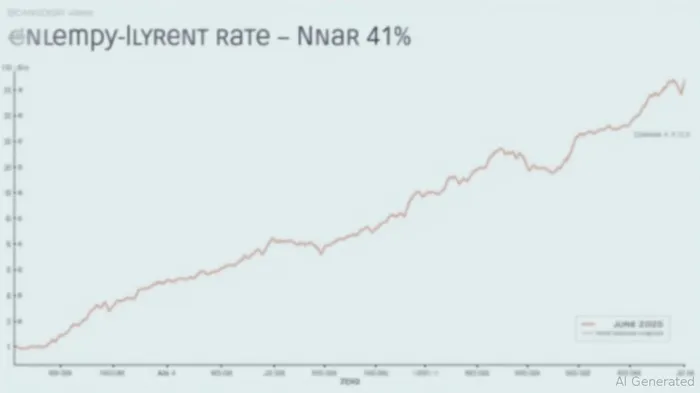
The June jobs report reveals a labor market caught between optimism and vulnerability. Unemployment fell to 4.1%, the lowest since February 2025, while job growth in healthcare (+39,000) and state government education (+47,000) offset declines in federal hiring and manufacturing. Yet, the labor force participation rate dipped to 62.3%, as 329,000 workers left the labor force entirely. Meanwhile, long-term unemployment surged by 190,000, signaling persistent challenges for some job seekers.
Fed Policy: Pausing to Avoid Precipice
The Fed now faces a crossroads. While inflation remains elevated due to tariffs and geopolitical risks, the labor market's strength argues against aggressive rate hikes. Federal Reserve Chairman Jerome Powell has emphasized a “patient” approach, noting the economy's resilience. The June jobs report—exceeding forecasts—has all but eliminated the possibility of a July rate cut, with traders now pricing in less than a 5% chance.
Internal Fed debates persist. Hawks like Christopher Waller argue for cuts to counter tariff-driven inflation, while doves like Raphael Bostic urge caution, citing the time needed to assess trade policy impacts. The consensus leans toward a pause, with any cuts likely delayed until late 2025 or 2026.
Rate-Sensitive Sectors: Winners in a Fed Hold
A paused Fed removes a key headwind for sectors sensitive to borrowing costs.
- Real Estate: Lower rate hike risks could stabilize housing demand. REITs like Equity ResidentialEQR-- (EQR) and homebuilders such as LennarLEN-- (LEN) may benefit from reduced mortgage rate volatility.
Consumer Discretionary: Companies reliant on consumer spending, like AmazonAMZN-- (AMZN) and Target (TGT), gain as lower borrowing costs boost household budgets.
Financials: Banks like JPMorganJPM-- (JPM) might face margin pressure if rates stall, but the sector's resilience to moderate inflation could offset this.
Investment Strategy: Focus on Stability and Leverage
Investors should prioritize companies with pricing power and exposure to housing or consumer spending. Consider:
- REITs: Buy EQREQR-- or Simon Property GroupSPG-- (SPG) for exposure to rental demand.
- Consumer Staples: Procter & Gamble (PG) or Coca-ColaKO-- (KO) offer defensive stability.
- Tech Dividends: MicrosoftMSFT-- (MSFT) or CiscoCSCO-- (CSCO) provide yield in a low-rate environment.
Avoid overexposure to sectors tied to cyclical hiring (e.g., industrials) and monitor Fed minutes for shifts in inflation outlook.
Risks to the Outlook
While the Fed's pause is likely, risks loom. A sudden spike in inflation—or a sharp rise in long-term unemployment—could force a hawkish pivot. Investors must also watch trade policy developments, as tariff-related supply chain disruptions could reignite price pressures.
Conclusion
The U.S. labor market's strength in June 2025 has solidified the case for a Fed pause, creating a tailwind for rate-sensitive sectors. Investors should capitalize on this by favoring real estate and consumer discretionary stocks, while maintaining vigilance for shifts in inflation or policy. In a market where patience is the Fed's mantra, it's a lesson investors would do well to heed.

Stay ahead of the market.
Get curated U.S. market news, insights and key dates delivered to your inbox.
AInvest
PRO
AInvest
PRO



Comments
No comments yet