
U.S. Labor Market Resilience: Sector-Specific Investment Implications Amid Nonfarm Payroll Strength
 Aime Summary
The U.S. labor market has defied expectations once again. In November 2025, . These numbers, though modest, signal a labor market that remains stubbornly resilient despite a broader economic slowdown. For investors, the implications are clear: sector-specific dynamics are diverging, and positioning must reflect both the strengths and vulnerabilities of a market in transition.
Healthcare: A Defensive Anchor in a Volatile Landscape
The healthcare sector has emerged as a standout performer, . This growth, driven by ambulatory health care services and hospitals, underscores the sector's structural demand. An aging population, coupled with ongoing investments in medical infrastructure, has created a tailwind that few other industries can match. For investors, this resilience is reflected in the performance of healthcare ETFs such as XLV and XLMD, .
. Even as the broader market grapples with inflation and policy shifts, healthcare stocks have maintained their appeal. This is not merely a function of earnings growth but also of cash flow stability. Companies like UnitedHealth GroupUNH-- and CVS HealthCVS-- have demonstrated consistent revenue streams, even in downturns. For long-term investors, the sector offers a compelling blend of defensive qualities and growth potential.
Transportation and Warehousing: A Cautionary Tale
In stark contrast, . The decline, concentrated in warehousing and couriers, reflects broader supply chain challenges and a shift in consumer behavior. E-commerce, once a growth engine, is now a double-edged sword as companies optimize logistics and reduce labor costs.
Investors in this sector must tread carefully. While companies like FedEx and DHL Express have shown operational efficiency, their earnings growth has plateaued. . For now, the data suggests a need for selective exposure, favoring firms with strong balance sheets and digital transformation initiatives.
Technology and AI: A Tale of Two Markets
The tech sector presents a paradox. On one hand, is reshaping industries, with companies like Nvidia and Google leading the charge. On the other, the sector faces headwinds from labor market bifurcation. Entry-level tech jobs are being displaced by automation, while demand for high-skill roles remains robust.
The September payroll data did not explicitly highlight tech employment, but the broader economic context is telling. . However, valuations remain stretched, .
For investors, the key is to distinguish between speculative plays and companies with durable competitive advantages. Firms like Microsoft and Amazon, with their AI infrastructure and cloud services, are better positioned to weather volatility than pure-play AI startups. A “selective positioning” strategy—favoring high-quality, cash-generative tech stocks—may offer a balanced approach.
The Fed's Role and Market Behavior
The Federal Reserve's December 2025 meeting looms large. , investors are pricing in a dovish pivot. This has already spurred inflows into AI and tech stocks, as lower rates reduce the cost of capital for high-growth companies. However, the delayed October and November labor data—due to a government shutdown—introduce uncertainty.
The market's reaction to the September payroll report was mixed. , . This volatility reflects a tug-of-war between optimism over rate cuts and concerns about overvaluation.
Strategic Implications for Investors
The labor market's “slow hiring, slow firing” dynamic has created a unique investment environment. For healthcare, the case for long-term exposure is strong. For transportation, caution is warranted. In tech, the focus should be on quality over hype.
- Healthcare: Overweight in defensive ETFs and blue-chip names.
- Transportation: Underweight, with a focus on firms with digital transformation and cost efficiency.
- Tech: Selective exposure to high-quality AI infrastructure plays, avoiding speculative ventures.
The broader lesson is clear: a one-size-fits-all approach is no longer viable. Sector-specific strategies, grounded in labor market data and policy trends, will be the key to navigating the next phase of the economic cycle. As the Fed's December decision approaches, investors must balance the allure of rate cuts with the realities of a labor market that, while resilient, is far from immune to structural shifts.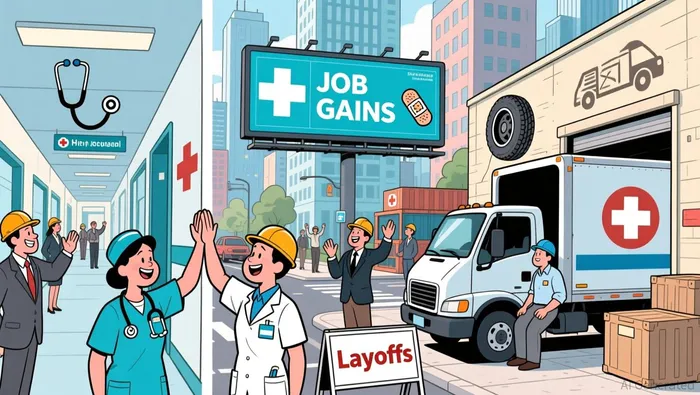

Stay ahead of the market.
Get curated U.S. market news, insights and key dates delivered to your inbox.
AInvest
PRO
AInvest
PRO



Comments
No comments yet