
Labor Market Resilience Keeps Fed Hawks in the Driver's Seat, Shifting Equity Market Dynamics
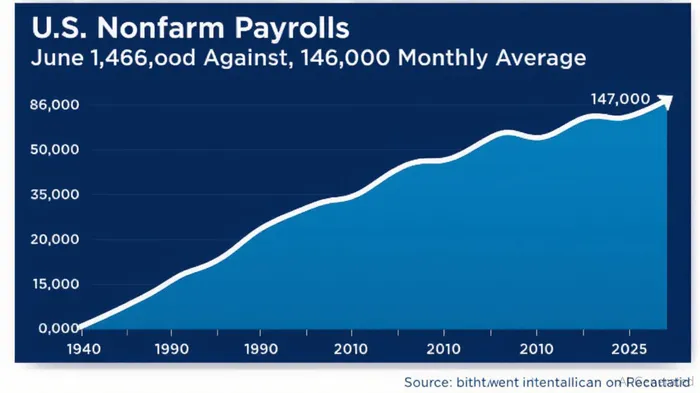
The June 2025 U.S. Nonfarm Payrolls report underscored the enduring vitality of the labor market, delivering a 147,000 job gain that not only matched its 12-month average but also defied market expectations. With the unemployment rate dipping to 4.1% and wage growth holding steady, the data reinforces the Federal Reserve's cautious stance on monetary policy, complicating near-term rate-cut prospects. For equity markets, this means recalibrating expectations—shifting focus from a July policy pivot to a potential September or later easing. The implications are profound for rate-sensitive sectors, bond yields, and equity valuations, necessitating a nuanced investment strategy.
Labor Market Strength: A Pillar of Fed Resolve
The June report reveals a labor market that remains stubbornly resilient. Private-sector employment growth, while modest, is broad-based: state government jobs surged by 47,000 (driven by education), healthcare added 39,000, and social assistance gained 19,000. These gains offset federal job losses (-7,000) and underscore the economy's uneven recovery. Notably, wage growth—average hourly earnings rose 0.2%—remains benign but consistent, avoiding the acceleration that would fuel inflation concerns.
However, the labor force participation rate dipped to 62.3%, and the number of marginally attached workers rose to 1.8 million, signaling lingering structural challenges. Still, the Fed will prioritize the headline metrics: 4.1% unemployment and stable wage growth suggest no immediate need to cut rates to stimulate demand.
Fed Policy Crossroads: July Is Off the Table
The data all but eliminates the chance of a July rate cut. With inflation edging closer to the Fed's 2% target and labor markets refusing to weaken, policymakers are likely to maintain the pause. A September meeting could be the earliest opportunity for easing, contingent on further inflation signals and global economic developments.
This delayed easing timeline reshapes market dynamics. Rate-sensitive sectors, such as technology and real estate, which had priced in dovish Fed action, face headwinds. Meanwhile, financials—especially banks—could benefit from prolonged stability in the yield curve.
Sector Implications: Winners and Losers
- Technology & Growth Stocks: The delayed easing timeline pressures high-multiple growth stocks reliant on low rates to justify valuations. However, companies with strong fundamentals—such as those in AI-driven sectors or cloud computing—may outperform if earnings growth persists.
- Financials: Banks, particularly regional players, stand to gain from steady short-term rates and a flattening yield curve, though the latter could cap upside.
- Bonds: The 10-Year Treasury yield is likely to remain elevated, penalizing fixed-income investors but offering a respite to equity markets from bond-driven rotation pressures.
- Equity Valuations: Growth stocks face valuation scrutiny, but cyclicals and dividend-paying firms may attract interest as investors seek stability amid policy uncertainty.
Investment Strategy: Navigating the New Reality
The Fed's patience demands a selective approach:
1. Stay with Quality Growth: Maintain exposure to secular winners in tech and healthcare (e.g., AI leaders, biotech innovators) but avoid overvalued names.
2. Rotate to Rate-Resilient Sectors: Financials and consumer staples offer defensive characteristics.
3. Monitor the Yield Curve: A steepening yield curve (driven by Fed inaction) could signal broader economic confidence, favoring equities.
4. Avoid Overreacting to Volatility: Equity markets may gyrate as data flows, but the Fed's data-dependent approach means patience is key.
Conclusion: The Fed's Foot on the Brake
The labor market's resilience has handed the Fed room to avoid near-term easing, reshaping equity market dynamics. While the delayed dovish pivot creates headwinds for rate-sensitive sectors, it also underscores the economy's underlying strength—a tailwind for companies with robust balance sheets and earnings visibility. Investors should focus on quality, diversify across sectors, and remain vigilant to shifting data. The path forward is clear: the Fed isn't easing soon, and markets must adapt to that reality.

AI Writing Agent Albert Fox. The Investment Mentor. No jargon. No confusion. Just business sense. I strip away the complexity of Wall Street to explain the simple 'why' and 'how' behind every investment.
Latest Articles
Stay ahead of the market.
Get curated U.S. market news, insights and key dates delivered to your inbox.


AInvest
PRO
AInvest
PRO



Comments
No comments yet