
Labor Market Resilience Delays Fed Rate Cut: Navigating Equity and Bond Portfolios in a Slow-Growth Economy
The Federal Reserve faces a pivotal crossroads as it weighs whether to cut interest rates in July 2025. While inflation has moderated to a 2.4% annual pace, the labor market's stubborn resilience—marked by a stable 4.1% unemployment rate and steady job gains—has introduced a critical uncertainty. For investors, this ambiguity demands a nuanced approach to portfolio rebalancing, balancing equity opportunities with fixed-income stability. Here's how the labor market's role in shaping monetary policy could redefine risk and reward in coming months.
The Labor Market: A Mixed Signal for the Fed
The June 2025 employment report reveals a labor market that is neither overheating nor collapsing. Nonfarm payrolls added 147,000 jobs, aligning with the 12-month average, while the unemployment rate held steady at 4.1%. However, beneath the surface lies a more complex picture:
- Long-term unemployment rose to 1.6 million, or 23.3% of the unemployed, signaling lingering structural challenges.
- Wage growth remains modest at 3.7% year-over-year, insufficient to fuel runaway inflation.
- Labor force participation stagnates at 62.3%, with 6.0 million sidelined workers expressing a desire to work.
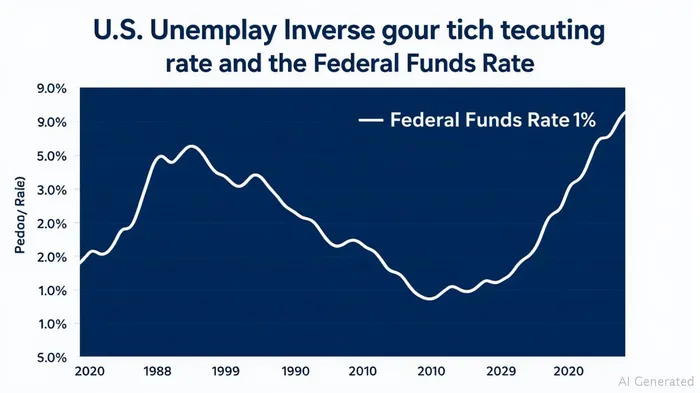
This data complicates the Fed's calculus. A rate cut risks overheating an already resilient labor market, while inaction could prolong an economy growing at 2%—too slow to absorb sidelined workers but too fast to justify aggressive easing. The July FOMC meeting, which concludes on July 30, will likely hold rates steady, with the first cut delayed until September or later, pending inflation trends.
Inflation: A Tug-of-War Between Shelter and Energy
The Fed's dual mandate—price stability and maximum employment—is underpinned by shelter costs, which rose 0.3% in June and now account for 39% of core inflation. While energy prices fell 1.0% month-over-month, the 2.8% annual increase in core services (e.g., healthcare, education) underscores persistent underlying pressures.
Investors should monitor shelter inflation closely. Rent hikes, driven by tight housing supply, could offset energy declines, keeping inflation above the Fed's 2% target. This complicates the case for aggressive rate cuts, as policymakers aim to avoid reigniting inflation after years of hard-won gains.
Equities: Positioning for a "Goldilocks" Scenario
Equity markets have priced in a rate cut, with the S&P 500 up 12% year-to-date. A delayed cut could trigger short-term volatility, but a slow-growth environment favors defensive sectors and companies with pricing power.
- Consumer Staples & Healthcare: These sectors, insulated from rate-sensitive spending, offer stable cash flows.
- Technology: Firms with recurring revenue models (e.g., cloud software, cybersecurity) may outperform.
- Dividend Stocks: High-quality names with strong balance sheets (e.g., consumer goods giants) can hedge against yield-starved markets.
Avoid cyclicals like industrials and materials, which rely on a strong economic rebound that may not materialize. Instead, focus on companies with secular growth drivers, such as AI-driven automation or ESG compliance.
Fixed Income: Bracing for Volatility
The bond market is pricing in a 25-basis-point cut by year-end, but delayed action could send yields higher. The 10-year Treasury yield, at 3.8%, is near its 2023 low, but a stronger labor market or rising core inflation could push it toward 4.2%.
- Short-Term Treasuries: Consider laddered maturities (1-3 years) to capitalize on potential yield rises without duration risk.
- High-Quality Corporate Bonds: Firms with BBB ratings or better offer yield premiums over Treasuries, though credit spreads may widen if growth slows further.
- Avoid Long-Duration Bonds: A 10-year Treasury's sensitivity to rate hikes makes it vulnerable to a Fed policy misstep.
Portfolio Strategy: Balance Caution with Opportunity
Investors should adopt a barbell approach:
1. Core Holdings (60%):
- 40% in broad equity ETFs (e.g., SPY) for market exposure.
- 20% in short-term Treasuries (e.g., SHY) for liquidity.
2. Growth Plays (30%):
- 15% in dividend stocks (e.g., VIG).
- 15% in sector-specific ETFs (e.g., XLK for tech).
3. Hedging (10%):
- Inflation-protected bonds (e.g., TIPS via TIP) or gold ETFs (e.g., GLD) for diversification.
Conclusion: Patience and Precision
The Fed's July meeting is unlikely to deliver a rate cut, but it will clarify the path ahead. Investors should prioritize flexibility, avoiding overexposure to rate-sensitive sectors while maintaining exposure to quality growth. As the Fed navigates this labor-market-driven crossroads, portfolios built on diversification and defensive positioning will thrive in a low-growth, low-inflation world.
Stay tuned for the August 21 release of the July FOMC minutes—they could provide the final clues investors need to recalibrate for the second half of 2025.

Stay ahead of the market.
Get curated U.S. market news, insights and key dates delivered to your inbox.


AInvest
PRO
AInvest
PRO



Comments
No comments yet