
Labor Market Resilience vs. Bond Market Volatility: Navigating H2 2025 Risks
The U.S. labor market's stubborn strength has become both an asset and a liability for investors in 2025. While May's nonfarm payrolls report showed 139,000 new jobs—above forecasts—underlying cracks in sectors like manufacturing and federal employment, combined with rising bond yields, have created a precarious balance for portfolios. This tension between labor market resilience and bond market volatility demands a strategic shift toward sector rotation and fixed-income hedging to navigate the second half of 2025.
The Labor Market's Dual Signals
The May jobs report underscored a resilient core but revealed vulnerabilities. Healthcare (+62,000 jobs), leisure and hospitality (+48,000), and social assistance (+16,000) drove growth, while federal government employment dropped by 22,000—the largest decline since 2020. Manufacturing also shed 8,000 jobs, signaling fallout from trade policy uncertainties and fiscal austerity.
Crucially, wage growth accelerated, with average hourly earnings rising 0.4% month-over-month and 3.9% annually—the highest since early 2024. This has kept inflationary pressures alive, even as the unemployment rate held steady at 4.2%, a level last seen in the late 1960s.
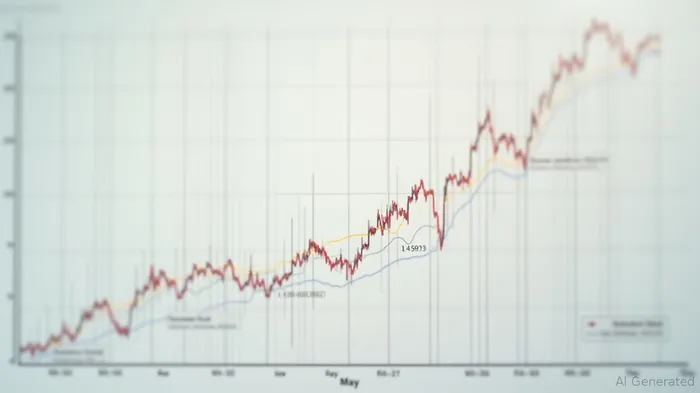
Bond Market Volatility: The Fed's Tightrope
The jobs report sent Treasury yields surging. The 10-year yield climbed to 4.49%, its highest since the Federal Reserve's last rate hike in March 2025, while the 2-year yield spiked to 4.61%. This reflects reduced expectations for near-term rate cuts: traders now price only a 70% chance of a September easing, down from 90% pre-report.
The Fed, however, remains cautious. Chair Jerome Powell emphasized in a June 15 speech that “labor market strength must be balanced against broader economic risks,” notably fiscal deficits and tariff-driven inflation. With public debt projected to hit 134% of GDP by 2035, the Treasury's need to issue more bonds could further strain fixed-income markets.
Sector Rotation: Overweight Cyclicals with Wage Discipline
Investors should lean into sectors benefiting from labor market resilience while avoiding rate-sensitive assets. Key plays include:
- Healthcare & Leisure:
- Healthcare (+62,000 jobs in May) thrived in ambulatory services and hospitals, driven by aging populations and post-pandemic demand.
- Leisure & hospitality (+48,000 jobs) reflects consumer spending resilience.
Target stocks: Companies with pricing power and exposure to discretionary spending, like Marriott International (MAR) or UnitedHealth Group (UNH).
Manufacturing & Federal Cuts:
Avoid sectors like manufacturing (-8,000 jobs) and federal-linked industries. Instead, focus on companies mitigating wage pressures through automation or efficiency, such as Caterpillar (CAT), which has invested in AI-driven supply chains.
Wage-Management Metrics:
Prioritize companies with low wage inflation (<3.5% annual growth) and strong margins. Use metrics like labor cost per unit or operating margin trends to identify defensive plays.
Fixed-Income Hedging: Shorten Duration, Target Inflation
Rate-sensitive bonds face headwinds as yields rise. Investors should:
- Underweight long-dated Treasuries: The 30-year yield's climb to 4.83% makes duration risk costly.
- Overweight short-term bonds: The 2-year Treasury's higher yield (4.61%) offers better protection against Fed policy uncertainty.
- Inflation-linked securities: TIPS (Treasury Inflation-Protected Securities) or iShares TIPS ETF (TIP) hedge against wage-driven inflation.
Risks to Monitor
- Labor Force Participation: The dip to 62.4% hints at structural underemployment, which could weaken demand.
- Trade Policy: Federal government job cuts (-22,000 in May) may accelerate if deficit concerns persist.
- Equity Valuations: High bond yields pressure high-growth stocks; favor value or dividend-paying cyclicals instead.
Conclusion: A Balanced Play for H2 2025
The labor market's resilience is a double-edged sword: it supports economic activity but fuels bond volatility. Investors should rotate toward sectors with pricing power and wage discipline while hedging fixed-income exposure with short-term bonds and inflation hedges. The May jobs report reinforces that 2025's winners will be those who parse the data's nuances—and bet on sectors that thrive in a tight, yet uneven, labor market.
Nick Timiraos is an award-winning journalist specializing in macroeconomic analysis. His work appears in major financial publications, focusing on policy, markets, and geopolitical trends.

Stay ahead of the market.
Get curated U.S. market news, insights and key dates delivered to your inbox.


AInvest
PRO
AInvest
PRO



Comments
No comments yet