
The Labor Market's Fragile Edge: Navigating Systemic Risk Through Strategic Sector Rotation


 Aime Summary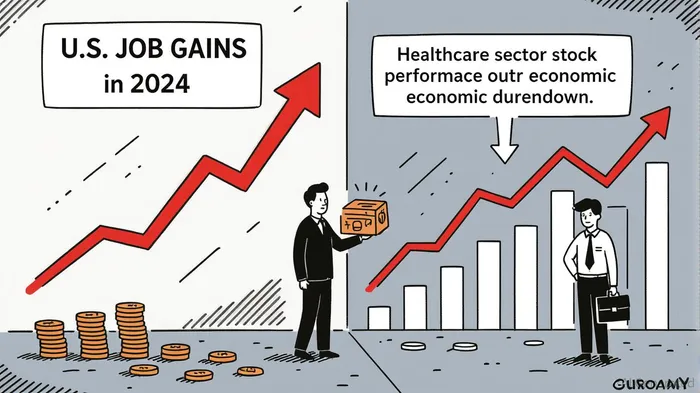
The U.S. labor market is teetering on a knife's edge. , far below expectations—has become a canary in the coal mine for systemic economic risk. , , , the cracks in the labor market are widening. These signals are not isolated anomalies but part of a broader pattern of fragility that investors must confront head-on.
Early Warning Signals: A Labor Market in Retreat
The data paints a stark picture. , while the 7.4 million unemployed Americans now face a labor market increasingly shaped by automation and policy-driven distortions. , , underscores a generational crisis. Meanwhile, is hollowing out entry-level roles, with companies substituting human labor for algorithmic efficiency.
The 's inaction—holding rates steady since December 2023—has compounded these challenges. , betting on a weaker dollar and a gold rally. Yet, as the deflects blame onto the Fed and touts tariffs as a silver bullet, economists warn that protectionist policies are exacerbating supply chain chaos and manufacturing job losses.
Historical Sector Rotation: Lessons from Past Downturns
History offers a roadmap for navigating such turbulence. During the 2008 financial crisis and the 2020 pandemic crash, defensive sectors like , , and outperformed cyclical industries. For example, the healthcare sector's resilience—driven by inelastic demand for medical services—allowed it to weather economic storms while discretionary sectors like industrials cratered.
The 2025 labor market mirrors these conditions. . Healthcare, for instance, is adapting to gains, with tools reducing clinician burnout and optimizing hospital workflows. Similarly, utilities, with their stable cash flows and , offer a hedge against volatility.
Strategic Sector Rotation: Balancing Defense and Growth
A disciplined approach to sector rotation is critical. Defensive allocations should prioritize:
1. Healthcare Services: Companies like (UNH) and CignaCI-- (CI) benefit from aging demographics and AI-driven cost savings.
2. Utilities: (NEE) and Dominion EnergyD-- (D) provide steady dividends and low volatility.
3. Consumer Staples: Procter & Gamble (PG) and Coca-ColaKO-- (KO) thrive in uncertain times due to inelastic demand.
Policy-driven sectors also present opportunities. The (IIJA) and Inflation Reduction Act (IRA) have spurred demand for construction and engineering firms. Companies like Bechtel Group and AECOMACM--, leveraging AI-driven scheduling and (BIM), are expanding margins despite labor shortages.
Productivity-enhancing technologies— (ABB), (C3.ai), and (Zoom)—are another frontier. These tools enable businesses to maintain output amid labor shortages, making them ideal for a low-growth environment.
The Risks of Inaction
like automobiles and industrials are increasingly vulnerable. , . Overexposure to these industries could amplify losses as the labor market weakens further.
A Sample Portfolio for 2025
A balanced approach might allocate:
- : (e.g., Bechtel, AECOM)
- : (e.g., UnitedHealthUNH--, Cigna)
- : (e.g., NextEraNEE--, Dominion)
- : (e.g., ABB, C3.ai)
- : Short-duration bonds or TIPS
This strategy combines defensive resilience with growth potential, aligning with historical patterns and structural trends.
Conclusion: Preparing for the Inevitable
The labor market's deterioration is not a distant threat but a present reality. By heeding early warning signals and rotating into defensive and policy-driven sectors, investors can mitigate systemic risk while capitalizing on long-term opportunities. The key lies in proactive management, macroeconomic vigilance, and a willingness to adapt to a shifting landscape. As the Fed contemplates rate cuts and the labor market teeters, the time to act is now.

Stay ahead of the market.
Get curated U.S. market news, insights and key dates delivered to your inbox.




Comments
No comments yet