
U.S. Labor Market Fractures: Navigating Sector-Specific Risks in a Deteriorating Jobs Landscape
 Aime Summary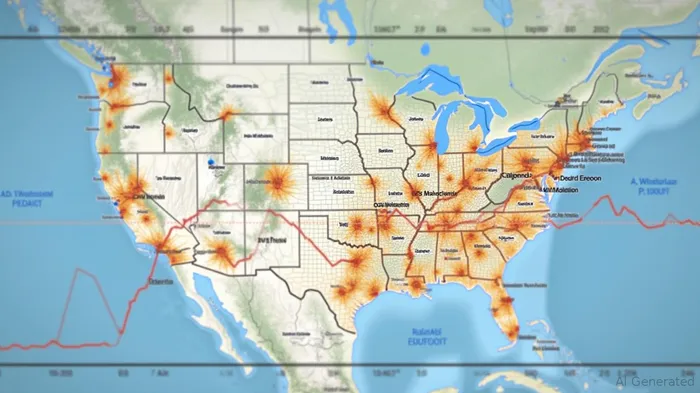
The U.S. labor market is showing signs of structural strain, with recent data painting a picture of uneven resilience and emerging vulnerabilities. Initial jobless claims surged to 235,000 in the week ending August 16, 2025—the largest increase in three months and a clear signal of a labor market under pressure. This surge, coupled with a 30,000 rise in continuing claims to 1.972 million, suggests a shift from tepid hiring to a more pronounced slowdown. For investors, the implications are stark: sector-specific risks are no longer abstract concerns but actionable red flags.
The Anatomy of a Weakening Labor Market
The data reveals a labor market bifurcated by policy and geography. President Trump's protectionist trade policies, which have pushed import duties to century highs, are now manifesting in corporate behavior. Businesses are cutting costs, delaying hiring, and accelerating automation, particularly in sectors exposed to global supply chains. The retail sector, for instance, has seen a 12.5% drop in job openings, a direct consequence of tariffs eroding consumer confidence and business margins. Similarly, manufacturing and professional services—industries reliant on imported inputs—face a perfect storm of rising costs and stagnant demand.
Meanwhile, the federal workforce reduction agenda has created localized crises. The District of Columbia, Virginia, and Maryland—states with high concentrations of federal jobs—have seen employment gains fall far below historical averages. California's labor market, already reeling from wildfires and hurricanes, lost 54,000 jobs in Q1 2025 alone. These regional shocks compound national trends, creating a mosaic of vulnerabilities that investors must dissect with surgical precision.
Sector-Specific Vulnerabilities: Where to Avoid Exposure
Retail and Manufacturing: The 12.5% decline in retail job openings is a harbinger of deeper trouble. Tariffs have not only raised costs but also dampened consumer spending, forcing retailers to downsize. For example, reveal a 15% average decline, with companies like WalmartWMT-- and Target underperforming. Manufacturing, too, is at risk, as show a plateauing trend. Investors should consider hedging against these sectors via short positions or defensive alternatives.
Federal Employment-Dependent Regions: The DMV (D.C.-Maryland-Virginia) area is a case study in policy-driven fragility. With federal job cuts projected to deepen, local economies reliant on government contracts face prolonged stagnation. Real estate and professional services in these regions are particularly exposed.
Natural Disaster-Prone Areas: California's labor market is a cautionary tale. Beyond job losses, the state's infrastructure and insurance sectors are under strain, creating a ripple effect. Investors should monitor for early warning signs.
Strategic Opportunities in a Shifting Landscape
While the labor market's weaknesses are clear, they also highlight opportunities for contrarian investors.
Healthcare and Social Assistance: These sectors have added 55,000 and 18,000 jobs, respectively, in July 2025 alone. Aging demographics and policy tailwinds (e.g., expanded Medicaid) ensure long-term growth. Companies like UnitedHealth GroupUNH-- and CignaCI-- are well-positioned to benefit.
Automation and Logistics: As businesses cut labor costs, demand for automation and AI-driven solutions is surging. has outpaced the S&P 500 by 20% in 2025.
Tax Reform Plays: The Trump administration's proposed tax abolition could create a $1 million jobs boost. While politically uncertain, sectors like small-cap retail and construction may see near-term gains if the policy passes.
The Road Ahead: Positioning for Uncertainty
The labor market's trajectory hinges on two key variables: the Federal Reserve's ability to engineer a soft landing and the resolution of the tariff war. If the Fed fails to curb inflation without triggering a recession, sectors like leisure and hospitality could face sharp contractions. Conversely, a resolution to the tariff dispute could unlock pent-up demand in manufacturing and retail.
For now, investors should adopt a defensive posture. Overweighting healthcare, automation, and tax-reform beneficiaries while underweighting retail and federal-dependent regions offers a balanced approach. Additionally, monitoring will provide critical clues about the labor market's near-term direction.
In a world of divergent sectoral fates, the key to outperformance lies not in broad generalizations but in granular, data-driven positioning. The labor market's fractures are not just economic signals—they are investment blueprints.

Stay ahead of the market.
Get curated U.S. market news, insights and key dates delivered to your inbox.




Comments
No comments yet