
The Label Industry’s Quiet Revolution: What Investors Should Know in 2025
 Aime Summary
The Label and Packaging Industry: A Quiet Revolution
The label and packaging industry may not sound like the most glamorous corner of the market, but it's quietly undergoing a transformation that could have meaningful implications for investors. With demand rising, new technologies emerging, and global supply chains adjusting to shifting dynamics, this sector is showing signs of resilience and potential. From ethical labeling to smart packaging, the industry is evolving in ways that could affect not just niche players but also larger supply chain and tech firms.
A Booming Market Driven by Ethics and Technology
The global ethical label market has hit a significant milestone, valued at $1082.66 billion in 2025. Projections show this could reach $1962.5 billion by 2034, growing at a compound annual growth rate (CAGR) of 6.83%. This rise is being fueled by a growing consumer demand for transparency, sustainability, and ethical production—driven in part by the rise of organic, halal, and "clean label" movements 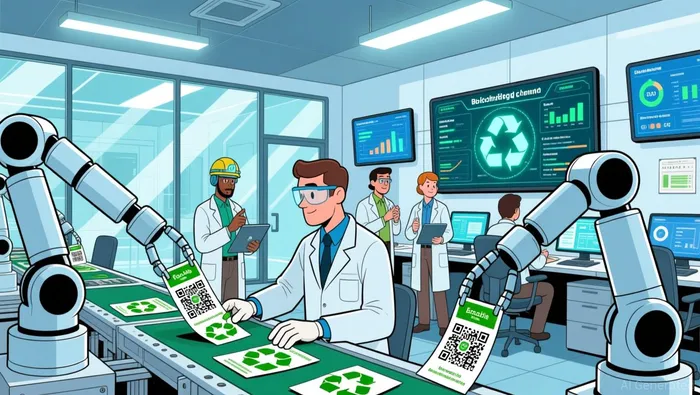 according to industry data.
At the same time, technological advancements are reshaping how labels are made and used. Innovations such as blockchain for supply chain transparency, QR code integration for product tracking, and eco-friendly printing technologies are gaining traction. These aren't just buzzwords—they're real tools that are helping companies meet modern consumer expectations while also cutting costs and improving efficiency as reported by industry sources.
Breaking News and Real-World Applications
Recent events further highlight the sector's momentum. Japan's SATO Corporation, a leader in auto-ID and labeling solutions, launched a new flagship industrial label product, reinforcing its leadership in the field. Meanwhile, Labelexpo Asia 2025 reports a 14% increase in visitors, with over 30,560 attendees from 114 countries. The event featured cutting-edge technologies and sustainability-focused initiatives, such as recyclable show floor materials and innovative digital printing solutions. These developments aren't just academic—they're happening now, and they're being adopted by companies of all sizes.
What This Means for Investors and the Market
For investors, the label industry's evolution offers both opportunity and caution. On one hand, companies at the forefront of innovation—like SATO and others involved in smart labeling and digital printing—are positioning themselves to benefit from the growing demand for sustainable and ethically sourced products. On the other hand, traditional players who fail to adapt may find themselves left behind. This is especially true as North America dominates the ethical label market now, but the Asia-Pacific region is expected to see some of the fastest growth in the coming years.
Moreover, the broader implications for the economy are worth noting. The U.S. Federal Reserve's recent rate cuts and economic projections signal a growing focus on supporting consumer and business activity, including sectors like packaging and logistics as noted in recent financial reports. If this trend continues, it could provide a tailwind for companies operating in the label and packaging space. That said, investors should watch for potential headwinds, such as rising material costs or logistical bottlenecks that could affect margins.
A Future Fueled by Innovation and Ethics
Looking ahead, the label industry is likely to remain at the intersection of technology and consumer values. As more companies adopt sustainable practices and digital tools become more accessible, the market is expected to grow. This could open doors for investors in both traditional manufacturing and newer tech-driven sectors. At the same time, regulatory changes, especially around labeling laws and environmental compliance, will play a major role in shaping the landscape.
For now, the key takeaway is clear: while the label industry might not be the most talked-about sector, it's quietly becoming a significant player in the broader economic and technological picture. Investors who keep an eye on this space may find themselves well-positioned for future growth.
Footnotes
https://www.globenewswire.com/news-release/2025/12/16/3206510/0/en/Ethical-Label-Market-Manufacturers-Suppliers-in-United-States.html: Ethical Label Market Manufacturers & Suppliers in United Stateshttp://www.labelsandlabeling.com/news/labelexpo/labelexpo-asia-2025-reports-visitor-growth: Labelexpo Asia 2025 reports visitor growthhttps://www.sato-global.com/news/release/2025/20251216/: SATO Launches Next-Generation Flagship Industrial Labelhttps://whattheythink.com/news/128738-labelexpo-asia-2025-reports-14-visitor-growth/: Labelexpo Asia 2025 Reports 14% Visitor Growthhttps://www.nasdaq.com/articles/federal-reserve-just-delivered-incredible-news-stock-market-investors: The Federal Reserve Just Delivered Incredible News for Stock Market Investors

Delivering real-time insights and analysis on emerging financial trends and market movements.
Latest Articles
Stay ahead of the market.
Get curated U.S. market news, insights and key dates delivered to your inbox.


AInvest
PRO
AInvest
PRO



Comments
No comments yet