
Label Industry 2025: Market Shifts, Ethical Trends, and What Investors Should Watch


 Aime Summary
The Label Industry in 2025: A Transformation in Motion
The label industry is quietly undergoing a transformation in 2025, driven by a mix of ethical consumerism, trade policy shifts, and technological innovation. As the global ethical label market is projected to grow to $1.96 trillion by 2034, from $1.08 trillion in 2025, investors are taking note. But the road isn't without bumps—tariff volatility, changing investor sentiment, and evolving consumer preferences are all shaping the landscape according to financial reports.
Ethical Labeling Gains Momentum
In 2025, ethical and sustainability-focused labels, such as halal, organic, and clean-label certifications, have seen a surge in consumer demand. This growth is most pronounced in North America, where the label market already leads, and is expected to accelerate in the Asia-Pacific region in the coming years according to market analysis. The shift reflects a broader trend among consumers who are willing to pay a premium for transparency, traceability, and environmental responsibility. For investors, this means opportunities in companies that produce, supply, or benefit from such labeling systems.
That said, the industry is also vulnerable to trade-related disruptions. The so-called 'Liberation Day' tariff announcement in April 2025 caused significant market jitters, with firms having higher tariff exposure seeing sharp declines in abnormal stock returns. The impact was most pronounced for firms with high leverage, strong growth, and low earnings quality, suggesting that financial health is a key buffer against trade policy uncertainty as research shows.
Broader Market Implications for Label-Related Firms
Beyond tariffs, the broader economic environment has had a major effect on the label industry in 2025. The U.S. stock market saw a dramatic reset in early 2025, with major indices briefly entering bear territory in April before rebounding as the Federal Reserve began to cut interest rates. While the label industry itself isn't directly tied to the stock market's performance, companies within the sector are affected by changes in consumer spending and borrowing costs.
The Fed's rate cuts and revised economic projections—forecasting U.S. GDP growth between 2.2% and 2.5% for 2026—are expected to support consumer demand and business investment in the label sector. This could especially benefit firms that rely on small and medium-sized businesses (SMBs), which are more sensitive to interest rate changes according to Nasdaq analysis.
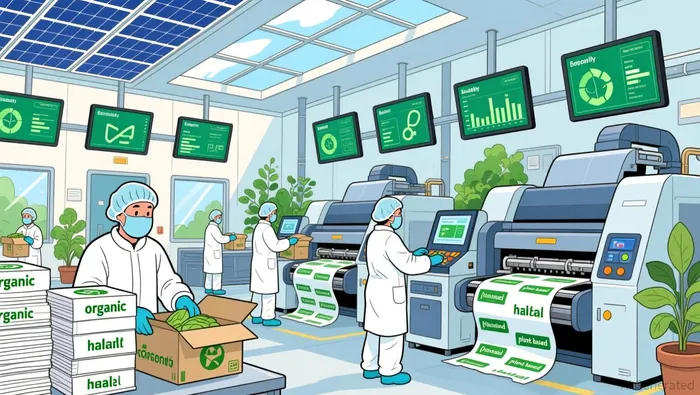
Technological advancements and changing consumer preferences are also shaping the label industry. The Labelexpo Asia 2025 event saw a 14% increase in attendees, with over 30,500 people from 114 countries. The event showcased innovations such as subscription-based printing models and sustainability-focused materials, signaling a shift toward more scalable and eco-conscious label production.
Meanwhile, the plant-based food market has evolved beyond meat substitutes, with clean-label products and functional ingredients gaining popularity. This shift could create new demand for label solutions that emphasize transparency and health benefits. For investors, it suggests that the label industry may expand into new categories beyond traditional packaging.
What Investors Should Watch
Looking ahead, several factors will be critical for investors to monitor:
Tariff and Trade Policy Developments: Trade uncertainty remains a risk, especially for firms with high exposure to international supply chains. Investors should watch for further trade policy shifts and assess their impact on company valuations and margins.
Interest Rates and Consumer Spending: The Federal Reserve's easing monetary policy supports economic activity and could lead to stronger consumer demand, which in turn benefits the label industry. However, the pace of rate cuts will matter more than the cuts themselves.
Ethical and Clean-Label Trends: Companies that adapt to changing consumer preferences, particularly in sustainability and transparency, may see long-term gains. Firms that fail to respond could lag behind.
Innovation and Tech Adoption: The label industry is evolving, and firms that adopt new technologies—like digital printing or AI-driven customization—may gain a competitive edge.
The Road Ahead
While the label industry is not glamorous, it is essential. As the global ethical label market continues to expand and consumer expectations evolve, the industry is poised for significant transformation. Investors who keep a close eye on trade policies, consumer trends, and technological innovation will be well-positioned to navigate the opportunities and risks in 2026 and beyond.

Delivering real-time insights and analysis on emerging financial trends and market movements.
Latest Articles
Stay ahead of the market.
Get curated U.S. market news, insights and key dates delivered to your inbox.


AInvest
PRO
AInvest
PRO



Comments
No comments yet