
The LA Power Outage: A Wake-Up Call for Energy Resilience Investments


 Aime Summary
Grid Vulnerabilities in a Climate-Changed World
Ukraine's energy crisis underscores a critical truth: centralized grids are inherently susceptible to cascading failures, as detailed in a Bloomberg report. Russian strikes on power plants, transmission lines, and gas infrastructure have forced emergency outages lasting up to 18 hours daily, compounding the challenges of winter heating demands. In Los Angeles, where aging infrastructure and climate-driven wildfires already strain the grid, similar risks loom. According to a 2023 report by the California Energy Commission, , as reported by the .
The Los Angeles Department of Water and Power (LADWP), the largest municipal utility in the U.S., has long been criticized for its slow modernization. While the agency has pledged to achieve 100% clean energy by 2035, its grid remains heavily dependent on fossil fuel peaker plants and long-distance transmission lines-both of which are vulnerable to cyberattacks, wildfires, and physical sabotage.
The Investment Opportunity in Energy Resilience
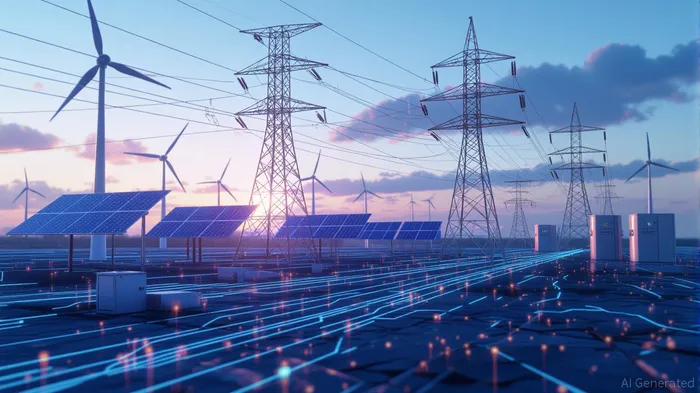
The Ukraine crisis has accelerated global interest in decentralized energy solutions. In response to outages, Ukrainian cities are rapidly deploying microgrids, battery storage, and rooftop solar to insulate critical infrastructure from grid failures, as noted by the Bloomberg report. This shift mirrors a growing trend in the U.S., where investors are increasingly prioritizing technologies that enhance grid resilience.
For Los Angeles, the path forward lies in three key areas:
1. Battery Storage: Companies like TeslaTSLA-- (TSLA) and Fluence (a joint venture between Siemens and AES) are leading the charge in utility-scale battery deployment. With lithium-ion costs dropping 89% since 2010, according to , storage is now a cost-effective hedge against outages.
2. Smart-Grid Technologies: Firms such as Schneider Electric (SCHN) and Siemens (SI) are developing AI-driven grid management systems that predict and isolate faults in real time. , per a 2024 McKinsey analysis.
3. Distributed Energy Resources (DERs): Solar-plus-storage systems and community microgrids are gaining traction in Southern California. The LADWP's recent pilot program with Sunrun and LG Chem highlights the potential for residential and commercial users to generate and store their own power, reducing strain on the central grid, as reported by the California Energy Commission.
Strategic Implications for Investors
The Ukraine crisis has reshaped risk perceptions in the energy sector. Utilities with outdated infrastructure now face higher insurance premiums and regulatory scrutiny, while those investing in resilience are seeing valuation premiums. For example, NextEra EnergyNEE-- (NEE), a leader in grid modernization, has outperformed the S&P 500 by 22% year-to-date, reflecting investor confidence in its proactive approach, as noted by McKinsey.
Meanwhile, the battery storage sector is poised for explosive growth. According to Wood Mackenzie, , driven by regulatory mandates and falling costs. Los Angeles's push for 1,000 megawatts of new storage by 2027 aligns it with this trajectory, creating opportunities for firms like Enphase EnergyENPH-- (ENPH) and Stem, Inc. (STEM).
Conclusion: From Vulnerability to Opportunity
Los Angeles stands at a crossroads. The recent outages in Ukraine are a sobering reminder of what happens when energy resilience is neglected. Yet they also illuminate a path forward: by investing in decentralized solutions, smart-grid innovation, and battery storage, the city can transform its grid from a liability into a model of sustainability and security. For investors, the message is clear-energy resilience is no longer a niche concern but a core component of long-term value creation.

Delivering real-time insights and analysis on emerging financial trends and market movements.
Latest Articles
Stay ahead of the market.
Get curated U.S. market news, insights and key dates delivered to your inbox.
AInvest
PRO
AInvest
PRO



Comments
No comments yet